
The Quiet Intelligence of Everyday Objects
From the humble kitchen peeler to iconic furniture and lighting, exploring the design decisions that make ordinary things extraordinary.
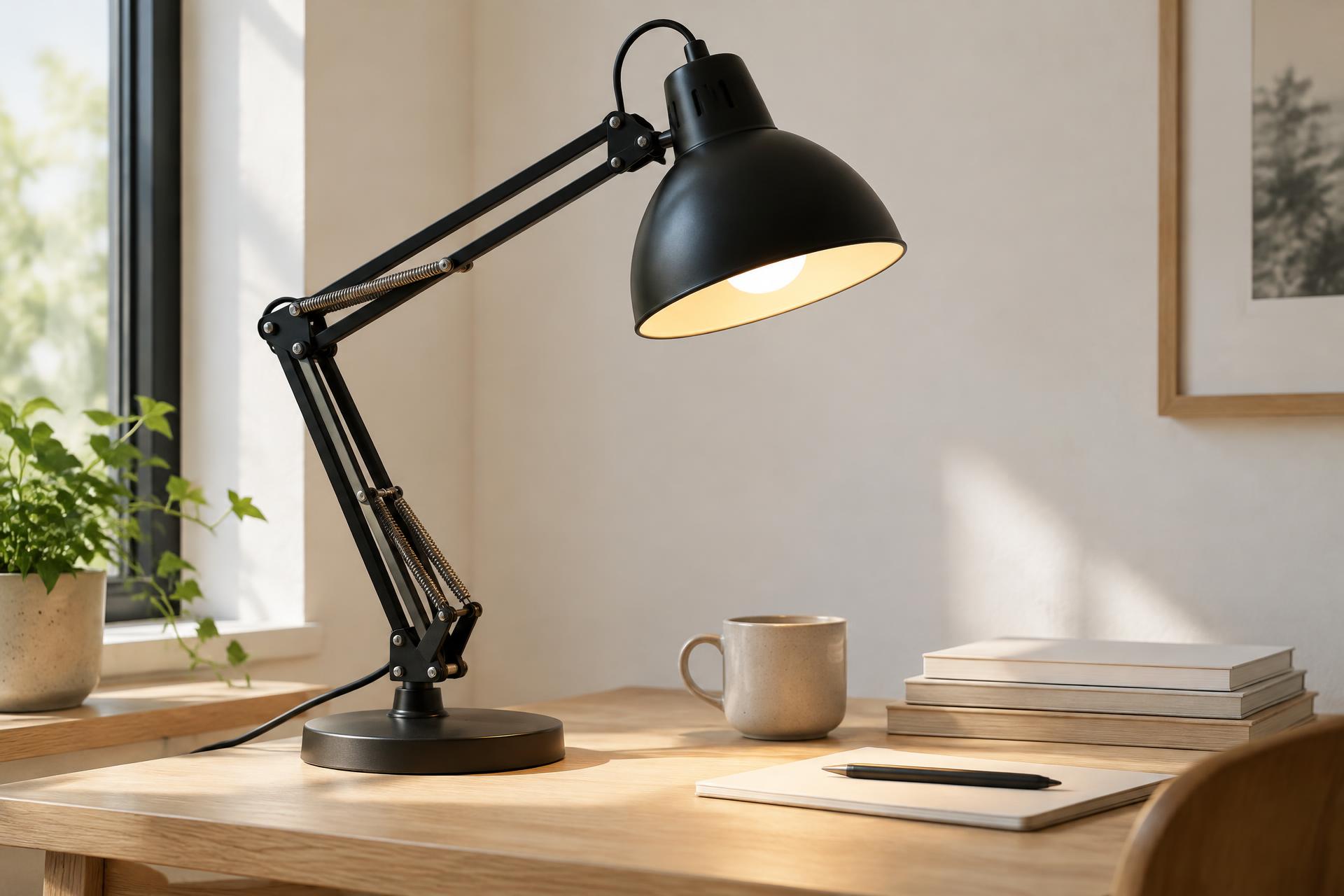
Some of the most successful designs in the world are also the least remarkable at first glance.
A door handle fits naturally into the hand. A desk lamp moves precisely where it is needed. A well-designed chair supports the body without demanding attention.
We encounter hundreds of designed objects every day, yet rarely consider the decisions behind them.
Their shapes, materials, proportions and mechanisms have been carefully considered, often refined through years of experimentation.
And when those decisions are successful, the result can appear almost effortless.
Good design has a curious quality. The better something works, the less likely we are to think about it.
Yet behind the simplest everyday objects are stories of observation, invention and an understanding of how people interact with the physical world.
The Problem Nobody Noticed
Design innovation does not always begin with advanced technology or an ambitious creative vision.
Sometimes, it begins with a small frustration.
In the late 1980s, American entrepreneur Sam Farber noticed that his wife, Betsey, who experienced arthritis in her hands, struggled to use a traditional metal vegetable peeler.
The narrow handle was uncomfortable to grip, particularly during repetitive tasks.
The problem was ordinary, but its implications were significant.
Kitchen utensils had been manufactured for generations with relatively little consideration for people who found them difficult to hold.
Farber saw an opportunity to reconsider something most people had simply accepted.
The result was the development of OXO's Good Grips range, distinguished by its comfortable, oversized handles and non-slip surfaces.
The tools were designed to make everyday kitchen activities easier, particularly for people with limited hand strength or dexterity.
But their appeal extended far beyond that original audience.
The handles were comfortable for almost everybody.
This illustrates one of design's most valuable principles: improving accessibility for a particular group can produce better experiences for everyone.
The vegetable peeler did not need to become more complicated.
It simply needed somebody to reconsider how it was being used.
When Simplicity Changes Everything
In 1931, London Underground engineering draughtsman Harry Beck began rethinking the way the city's expanding railway network was represented.
Traditional transport maps attempted to maintain a relationship with geographical reality.
As London's Underground grew, these representations became increasingly crowded and difficult to understand.
Beck recognised that passengers did not necessarily need an accurate picture of the physical distance between stations.
They needed to understand connections, routes and where to change trains.
His solution was radical in its simplicity.
Instead of reproducing the geographical network faithfully, Beck organised the railway lines into a clear diagram using horizontal, vertical and diagonal connections.
Stations were spaced more evenly, and the complex network became easier to navigate.
The first version of his diagrammatic map was published in 1933.
Its influence would extend far beyond London, helping establish a visual language used by transport networks around the world.
What makes Beck's work remarkable is not simply its appearance.
It demonstrates how design can improve understanding by deciding what information matters most.
The map became more useful precisely because it stopped attempting to show everything.
In this case, simplification was not a reduction in quality.
It was the essential design achievement.
A Lamp That Understands Movement
Another enduring example of thoughtful design emerged from an entirely different field.
During the early 1930s, British engineer George Carwardine developed a spring mechanism that would eventually transform the adjustable desk lamp.
His invention allowed a lamp to be moved easily into different positions while remaining balanced.
The resulting Anglepoise lamp became one of Britain's most recognisable examples of industrial design.
The Original 1227, introduced in 1935, brought this mechanism into a form suitable for domestic interiors.
Its exposed springs, articulated arms and distinctive shade created a recognisable silhouette.
Yet these features were not merely decorative.
The mechanical components allowed the user to position the light accurately, without repeatedly tightening joints or adjusting clamps.
The lamp responded directly to the movement of the hand.
Its appearance grew naturally from the way it worked.
More than nine decades after Carwardine's initial invention, the Anglepoise remains relevant because the problem it addressed has barely changed.
People still need light that can be adjusted easily and precisely.
The surrounding technologies may evolve, but the underlying human requirement remains familiar.
This is one reason certain designs endure.
They solve a problem so effectively that their basic principles require little reinvention.
The Relationship Between Form and Function
Few questions have occupied designers more persistently than the relationship between appearance and usefulness.
Should the form of an object be determined by its function? Can something beautiful be impractical? Is simplicity always preferable to decoration?
There are no universal answers.
A beautifully sculpted chair may succeed as a visual object while providing little comfort over an extended period.
A functional kitchen tool may perform its task perfectly without offering much aesthetic pleasure.
And an elaborately decorated object may be valued precisely because of the emotional or cultural meaning carried by its appearance.
Design must negotiate between these different expectations.
Materials, manufacturing processes, costs, environmental considerations and human behaviour all influence the outcome.
A product intended for a hospital will face different requirements from a decorative object in a private home.
Even within similar categories, priorities can vary.
Some people value durability above all else. Others prioritise comfort, visual character, adaptability or price.
Successful design is therefore not necessarily the pursuit of a single ideal form.
It is the ability to understand competing needs and arrive at a thoughtful resolution.
The result may be visually restrained or highly expressive.
What matters is whether its decisions serve a meaningful purpose.
Why Some Objects Never Seem to Age
Walk into a carefully furnished interior and you may encounter objects designed many decades apart.
A contemporary table might sit beside a mid-century chair. A vintage lamp may illuminate a recently designed desk.
Despite the differences in age, these objects can feel surprisingly compatible.
Their lasting appeal is often attributed to timeless design, but the term deserves closer examination.
Nothing exists entirely outside its historical context.
Even the most celebrated design classics reflect the technologies, materials and cultural preferences of their time.
What allows certain objects to remain relevant is often their ability to continue serving human needs while retaining a distinctive identity.
A chair must still accommodate the body.
A lamp must still provide useful light.
A kitchen utensil must still fit comfortably into the hand.
When those fundamental relationships are well considered, a design can remain useful long after the circumstances of its creation have changed.
Durability also matters.
Objects that can be repaired, maintained and adapted have opportunities to develop longer relationships with their owners.
Their surfaces acquire marks. Materials change with age. Familiarity can create attachment.
An object that has been used for thirty years may carry a significance that a newly purchased replacement cannot immediately reproduce.
Longevity is not simply about resisting physical deterioration.
It is also about remaining useful, meaningful and worth keeping.
The Details We Feel Rather Than See
Many of design's most important qualities are experienced physically.
The weight of a ceramic cup affects how it feels in the hand.
The resistance of a mechanical switch influences our impression of quality.
The texture of a fabric changes how an upholstered chair feels against the body.
These details rarely dominate a product photograph or showroom presentation.
Yet they can determine how successfully an object fits into everyday life.
A handle that feels uncomfortable may make an otherwise attractive product frustrating to use.
A beautifully proportioned chair can disappoint if its dimensions fail to support the person sitting in it.
Good design requires attention to experiences that are not always obvious from appearance alone.
This is particularly relevant in a world where so many products are first encountered through screens.
Digital photographs can communicate colour, silhouette and surface finishes, but they rarely convey balance, weight, resistance or tactile comfort.
Some qualities can only be understood through use.
That experience remains an essential part of the designer's responsibility.
Looking Again at the Ordinary
It is tempting to associate great design with expensive furniture, celebrated designers or objects displayed in museums.
But meaningful design exists at every scale and price point.
A comfortable handle, a clear information sign or an adjustable reading lamp can demonstrate the same fundamental qualities as a much more prestigious object.
Each represents an attempt to understand a human need and respond through thoughtful decisions.
And perhaps that is what makes everyday design particularly interesting.
Its achievements are often hidden within familiar routines.
We reach for a tool without considering its shape. We follow a map without studying its visual logic. We adjust a lamp without noticing the mechanical ingenuity that makes the movement possible.
These objects quietly remove difficulties from daily life.
Their success becomes apparent when something fails — when a handle is uncomfortable, instructions are confusing or a simple task becomes unnecessarily complicated.
At those moments, the importance of good design becomes unmistakable.
The next time an ordinary object feels particularly satisfying to use, it may be worth looking a little closer.
Consider its proportions, its materials and the decisions that shaped it.
Because behind even the most unremarkable object, there may be an extraordinary amount of thought.
And sometimes, the greatest achievement of design is making that effort almost impossible to notice.
Further Reading

The Art of Seeing Differently
A closer look at how creativity changes our understanding of familiar places, everyday objects and the world we inhabit.
By Culturefold Editors