
From Function to Fashion
How denim, trench coats, T-shirts and trainers became cultural icons — and why their influence continues to shape the way we dress.
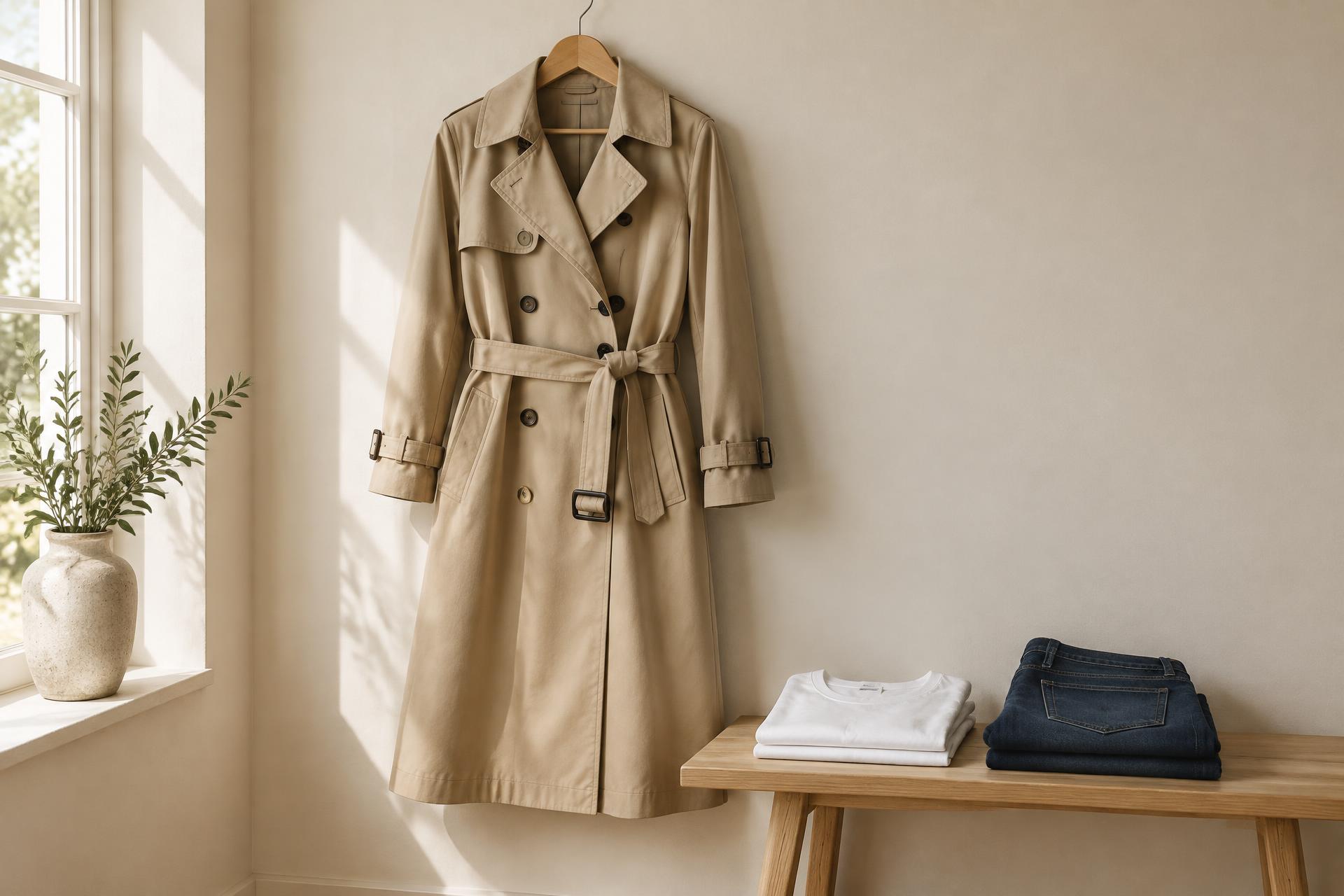
Walk through almost any major city and you will encounter clothing with origins far removed from the fashion industry.
Denim jeans developed for demanding physical work. Trench coats evolved from protective outerwear and military clothing. T-shirts began as undergarments. Trainers were designed to support athletic movement.
Today, these garments appear in designer collections, fashion editorials and everyday wardrobes around the world.
Their original purposes have not necessarily disappeared, but their meanings have changed dramatically.
What began as practical clothing has become a language of personal expression, cultural belonging and, occasionally, luxury.
The transformation reveals something fascinating about fashion.
Some of its most enduring ideas were never intended to be fashionable at all.
Denim: From the Workshop to the World
Few garments have experienced a transformation quite like blue jeans.
In nineteenth-century America, durable work trousers were essential for people engaged in physically demanding occupations.
Clothing needed to withstand repeated movement, abrasion and heavy use. Appearance was generally secondary to practicality.
In 1873, businessman Levi Strauss and tailor Jacob Davis received a US patent for reinforcing work trousers with metal rivets at points of strain.
The innovation was straightforward but effective.
By strengthening areas particularly vulnerable to tearing, the rivets helped create trousers better suited to demanding working conditions.
The resulting garments would eventually develop into the blue jeans recognised around the world.
But their influence extended well beyond their practical origins.
During the twentieth century, denim gradually moved from industrial and agricultural workwear into mainstream popular culture.
Western films helped associate jeans with independence and ruggedness. Young people adopted them as symbols of informality and, at times, rebellion.
Musicians, actors and emerging cultural movements gave denim new meanings.
By the late twentieth century, jeans had become a familiar part of wardrobes across generations, genders and social backgrounds.
What makes their evolution remarkable is their adaptability.
The same basic garment can appear as inexpensive everyday clothing, carefully crafted heritage workwear or an expensive designer piece.
Its shape changes. Its fabric is washed, faded, distressed or left untreated. Its proportions respond to the preferences of different decades.
Yet the essential characteristics remain recognisable.
Denim demonstrates that a garment does not need to lose its original identity to acquire entirely new meanings.
The Trench Coat: A Military Legacy
The trench coat offers another example of practical design becoming part of fashion history.
Its development is closely connected to innovations in waterproof outerwear during the nineteenth century.
British manufacturers including Burberry and Aquascutum helped advance protective clothing designed for challenging weather conditions.
Thomas Burberry's development of gabardine fabric in 1879 was particularly influential, providing a breathable, weather-resistant material suitable for outerwear.
During the First World War, trench-style coats became associated with British military officers.
Their distinctive features reflected practical requirements.
Shoulder epaulettes accommodated military insignia. Adjustable cuffs provided protection against the weather. Storm flaps, belts and generous pockets contributed to the garment's functionality.
These details gradually became defining elements of the coat's appearance.
After the war, the trench coat established a lasting place in civilian wardrobes.
Its association with military service gave way to new cultural interpretations.
Cinema contributed to its image of sophistication and mystery, while fashion designers repeatedly adapted its proportions, materials and styling.
The trench became equally familiar in formal wardrobes and contemporary streetwear.
Its silhouette could be tailored or oversized, traditional or experimental.
Yet many of the details that once served practical military purposes remained.
The remarkable thing about the trench coat is how successfully it has carried its history into new settings.
It can look entirely contemporary while retaining features developed for circumstances more than a century ago.
The T-Shirt: From Underwear to Expression
Few pieces of clothing appear less complicated than the ordinary T-shirt.
A relatively simple construction, short sleeves and a familiar neckline have made it one of the world's most widely worn garments.
Yet its cultural history is surprisingly rich.
The T-shirt evolved from practical undergarments worn beneath other clothing, with naval and military use contributing to its development and wider adoption.
For much of its early history, it was not generally considered an appropriate replacement for more formal outerwear.
That began to change through shifts in popular culture.
During the 1950s, actors including Marlon Brando and James Dean helped transform the plain T-shirt into a symbol of youthful independence.
What had previously been associated with underwear or manual work acquired an entirely different cultural meaning.
The simplicity of the garment became part of its appeal.
It rejected some of the conventions associated with formal dressing and offered a less restrictive expression of personal style.
Over subsequent decades, the T-shirt became an increasingly powerful means of communication.
Printed slogans, band identities, political messages and graphic artwork transformed the garment into a wearable canvas.
Fashion designers also recognised its possibilities, experimenting with construction, proportions, materials and presentation.
Today, a plain white T-shirt can appear in almost any context.
Its value might be determined by fabric quality, fit, craftsmanship, cultural association or the name attached to its label.
The garment itself remains relatively simple.
What changes is the meaning people assign to it.
When Sportswear Entered the Street

The evolution of trainers provides an especially clear example of fashion moving beyond its original purpose.
Early athletic footwear was developed around the practical requirements of sport.
Flexible soles, supportive construction and improved grip helped athletes perform particular movements.
Different sports encouraged different approaches to footwear design, creating specialised products for running, basketball, tennis and other activities.
Over time, these shoes moved into everyday life.
But their transition was not driven solely by comfort.
Music, youth culture and urban communities played an important role in establishing trainers as objects of personal identity.
During the 1970s and 1980s, particular styles became closely associated with basketball, hip-hop, breakdancing and street culture.
Shoes originally developed for sporting performance began to communicate cultural affiliations well beyond the court.
The Puma Clyde, associated with basketball player Walt Frazier, became popular within emerging urban cultural scenes.
Adidas basketball trainers also developed strong connections with hip-hop, notably through artists such as Run-DMC.
These relationships helped transform athletic footwear into an increasingly influential part of fashion.
By the time luxury designers began incorporating trainers into their collections, the cultural groundwork had already been established.
Today, footwear can occupy several identities simultaneously.
A trainer may be a practical everyday shoe, a fashion statement, a collector's item or a reference to a particular sporting or musical era.
Its appeal can depend as much on the stories surrounding it as on the way it performs.
Who Decides What Becomes Fashion?
These examples reveal an important characteristic of the fashion industry.
Designers and manufacturers do not always determine the meaning of the clothing they create.
Often, that meaning emerges through the people who wear it.
A practical garment might be adopted by a cultural movement. A uniform may become a symbol of rebellion. Clothing associated with one generation can acquire an entirely different identity among the next.
Fashion is shaped by this ongoing exchange.
The runway is only one part of the process.
Music, cinema, sport, street culture and everyday human behaviour continually influence what people choose to wear.
Sometimes a garment becomes fashionable because a designer reimagines it.
Elsewhere, it gains influence because an unexpected group adopts it for reasons unrelated to its original purpose.
The relationship is rarely one-directional.
Streetwear influences luxury fashion. Luxury fashion reinterprets workwear. Historic military clothing returns through contemporary collections.
Each adaptation adds another layer to a garment's cultural history.
And occasionally, the people responsible for popularising a style receive less recognition than the labels that later commercialise it.
Understanding fashion therefore requires looking beyond individual collections and examining the broader communities that shape clothing's meaning.
Why Certain Garments Endure
Fashion is often defined by change.
Collections arrive and disappear. Silhouettes expand and contract. Colours gain popularity before giving way to new preferences.
Yet some garments continue to appear decade after decade.
Their persistence is not necessarily evidence that fashion has stopped evolving.
Instead, it suggests that certain designs are flexible enough to accommodate changing cultural expectations.
Jeans can be altered through cut, colour and finish. Trench coats can be reinterpreted through proportion and fabric. T-shirts can express almost any visual identity. Trainers can combine technical innovation with cultural symbolism.
These garments provide familiar foundations upon which new ideas can develop.
Their success also reflects practical qualities.
Comfort, durability, adaptability and ease of use remain important considerations regardless of changing trends.
But endurance should not be confused with sustainability.
A familiar garment is not automatically environmentally responsible simply because its design has existed for generations.
The materials used, manufacturing processes, working conditions and eventual lifespan of the product all matter.
Still, clothing that remains useful and desirable over time can offer something valuable in a culture frequently encouraged to replace rather than retain.
It provides the possibility of a longer relationship between a garment and its owner.
The Stories We Wear
Look closely at an ordinary wardrobe and it becomes possible to recognise fragments of fashion history.
A pair of jeans carries the legacy of nineteenth-century workwear.
A trench coat retains details shaped by military requirements.
A T-shirt reflects changing ideas about informality, identity and public expression.
A pair of trainers connects athletic innovation with decades of popular culture.
These histories are rarely considered when getting dressed in the morning.
Yet they demonstrate how clothing moves between different environments, purposes and social meanings.
Fashion is not created exclusively in design studios or presented only on runways.
It develops wherever people reinterpret what they wear.
Sometimes that process is deliberate, driven by designers seeking to challenge conventions.
More often, it happens gradually, through countless individual choices that eventually reshape collective expectations.
A garment designed for one purpose becomes useful for another.
A practical detail becomes a recognisable aesthetic feature.
A piece of ordinary clothing becomes a cultural symbol.
And perhaps that is why some of fashion's most influential garments remain so familiar.
Their designs have survived, but the stories attached to them continue to change.
What we wear today may have been created for a very different world.
Tomorrow, it may mean something else entirely.
Further Reading

The Art of Seeing Differently
A closer look at how creativity changes our understanding of familiar places, everyday objects and the world we inhabit.
By Culturefold Editors