
The Second Life of Buildings
Why some of the most interesting architecture begins with something that already exists.
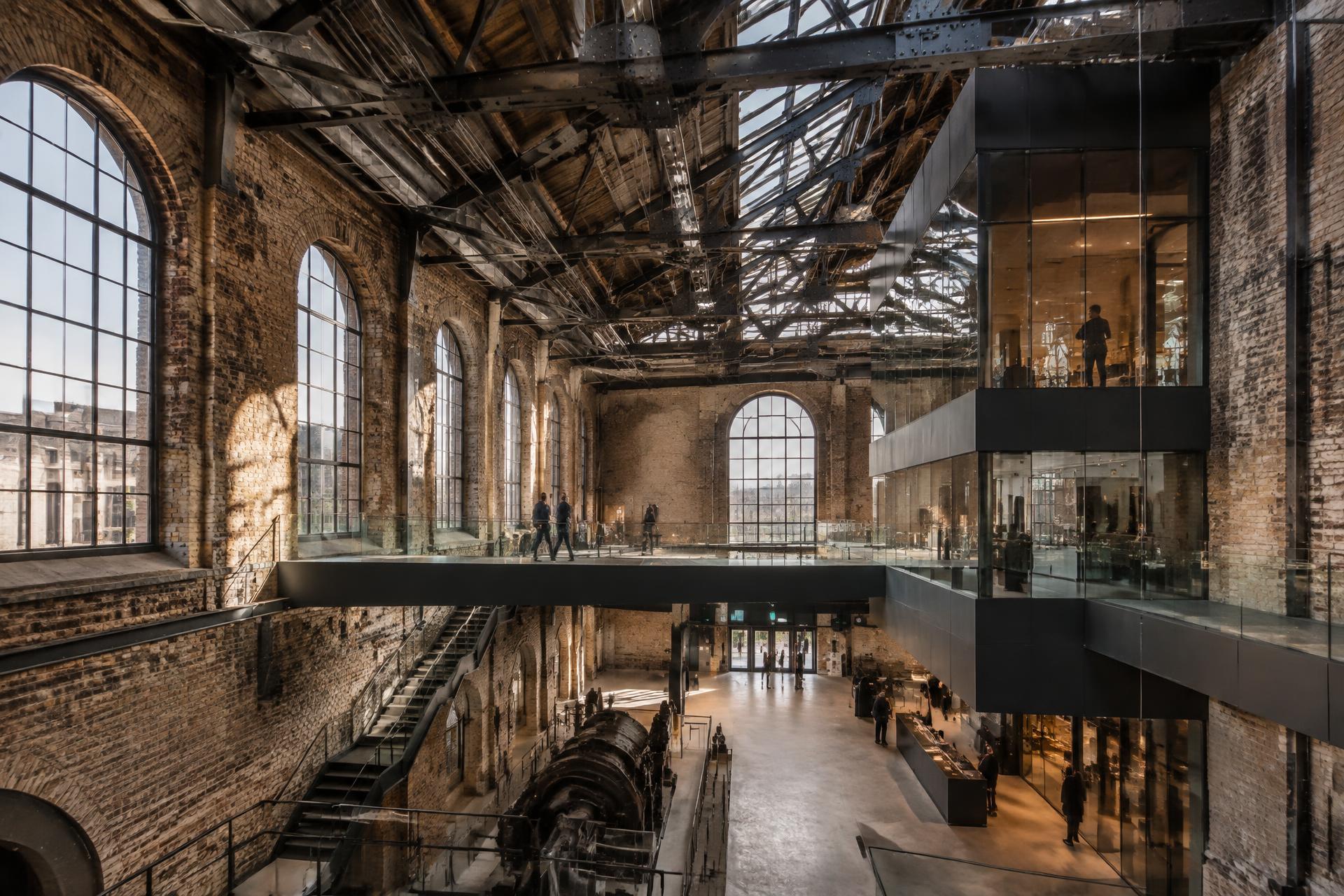
Architecture has always been fascinated by the new. New materials, new technologies, new skylines and new ways of imagining the spaces in which we live.
Yet some of the most compelling architectural projects of recent decades have begun not with an empty plot of land, but with a building that already exists.
An abandoned factory becomes a contemporary art gallery. A disused railway warehouse finds a new purpose as a public gathering place. An industrial building, once considered obsolete, becomes a defining feature of its neighbourhood.
These transformations belong to a practice known as adaptive reuse: the process of giving existing buildings new functions while retaining significant elements of their original structure.
It is an approach that asks a different architectural question.
Rather than beginning with what could be built, it begins with what is already there.
Buildings Carry Memory
Every building reflects the period in which it was created.
Its materials reveal available technologies. Its proportions suggest particular ideas about function and beauty. Its location offers clues about how a city developed and how people once worked, travelled or lived.
Industrial buildings are particularly revealing.
Large windows once provided essential daylight for workers. Heavy brick walls supported demanding manufacturing processes. High ceilings accommodated machinery, ventilation and movement.
When the original activity disappears, these architectural features remain.
A former warehouse may no longer store goods, but its unusually generous spaces can accommodate a gallery, studio or cultural venue. An old railway building may have lost its transport function, yet its distinctive structure can become an asset in a completely different setting.
Adaptive reuse allows these characteristics to remain visible.
Rather than erasing a building's previous identity, architects can make its history part of a new experience.
The result is often something difficult to reproduce through entirely new construction: a place that feels connected to more than one moment in time.
Tate Modern: From Industry to Art
Few buildings demonstrate this transformation more clearly than London's Tate Modern.
The museum occupies the former Bankside Power Station, an imposing industrial building beside the River Thames, originally designed by Sir Giles Gilbert Scott.
When the power station ceased operating in 1981, its future became uncertain.
The building was eventually selected as the home of a new museum of modern art, with Swiss architects Herzog & de Meuron appointed to oversee its transformation.
Tate Modern opened in 2000.
Rather than completely disguising the building's industrial origins, the architects retained much of its imposing character.
The enormous Turbine Hall, once occupied by electricity-generating machinery, became one of the museum's most recognisable spaces.
Its extraordinary scale created opportunities for installations that would have been difficult to accommodate in a conventional gallery.
Visitors entering the building encounter something more than a collection of exhibition rooms. They experience the dimensions, materials and atmosphere of a former power station.
The building's earlier life remains an essential part of its identity.
What was once a place of industrial production has become a place of cultural exchange.
And that continuity is central to its architectural success.
When Old and New Meet
Not every conversion requires an old building to remain visually untouched.
Some of the most interesting examples deliberately place contemporary design alongside historic structures.
Coal Drops Yard in London's King's Cross offers one such example.
Originally constructed in the nineteenth century to receive and distribute coal arriving by railway, its Victorian brick buildings later served a variety of industrial and commercial purposes.
By the late twentieth century, much of the site had fallen into disuse.
Heatherwick Studio transformed the buildings into a retail and public destination, completed in 2018.
The project retained significant elements of the original brick and iron structures while introducing a dramatic contemporary intervention.
Two existing roof forms rise and curve towards one another, meeting above the central space.
The result establishes an unmistakably modern architectural identity without completely concealing the site's industrial past.
Old brickwork, historic railway infrastructure and contemporary construction exist within the same composition.
It is an approach that treats architectural history not as something untouchable, but as something capable of continuing to evolve.
There is a delicate balance involved.
Too much intervention can erase the character that made a building worth preserving. Too little can leave it unable to fulfil its new purpose.
Successful adaptive reuse depends on understanding which qualities matter and how they can remain relevant.
The Environmental Argument
The appeal of reusing buildings extends beyond aesthetics and history.
Construction requires enormous quantities of materials and energy. Demolishing an existing building and replacing it involves removing materials already in place and producing new ones.
Much of a building's environmental impact is associated with the extraction, manufacture and transportation of construction materials.
This is often described as embodied carbon.
Retaining structural elements can reduce the need for new materials and avoid some of the emissions associated with demolition and reconstruction.
However, preservation is not automatically the most sustainable answer in every situation.
Older buildings may require substantial improvements to insulation, ventilation, accessibility and energy performance. Some may contain hazardous materials or need extensive structural reinforcement.
A successful project must consider both the environmental cost of the renovation and the performance of the building throughout its future life.
Even so, the principle raises an important question for contemporary architecture.
Before deciding what to demolish, should we spend more time understanding what could be retained?
Preservation Without Nostalgia
There is a temptation to treat old buildings as inherently valuable simply because they have survived.
But age alone does not guarantee architectural quality, and preserving a building does not automatically produce a successful public space.
An attractive industrial conversion can still be inaccessible, commercially exclusive or disconnected from the needs of its surrounding community.
There is also the risk of reducing architectural history to a visual style.
Exposed brick, weathered concrete and steel beams have become familiar features of contemporary interiors. Yet preserving a few decorative traces is not necessarily the same as respecting a building's identity.
Meaningful reuse requires more than borrowing the appearance of the past.
It involves understanding why the building mattered, how it functioned and what role it might play in the future.
That consideration should extend to the people who use it.
A beautifully restored building has limited social value if the communities around it can no longer participate in its new life.
The best transformations offer more than attractive interiors. They give existing places a credible and useful future.
Architecture as Continuation
Cities are never finished.
They evolve through countless decisions, additions, adaptations and losses. Buildings change purpose, streets acquire new identities and neighbourhoods respond to shifting patterns of life.
Adaptive reuse recognises that architecture participates in this ongoing process.
It challenges the assumption that progress always requires replacement.
Sometimes, progress involves recognising the possibilities within something that has already been built.
An old factory may become a cultural institution. A warehouse may find a new community. A forgotten structure may become one of a city's most valued spaces.
The transformation does not erase what came before.
At its best, it gives the past a meaningful place in the present.
And perhaps that is one of architecture's most interesting possibilities: not simply creating the next generation of buildings, but discovering what the existing ones might still become.
Further Reading
Mexico City: A City of Many Lives
From ancient Tenochtitlan to Bellas Artes, Barragán and the canals of Xochimilco, Mexico City reveals itself in layers.
By Culturefold Editors
The Art of Seeing Differently
A closer look at how creativity changes our understanding of familiar places, everyday objects and the world we inhabit.
By Culturefold Editors
The Architecture of the Courtyard
From Roman atriums and Moroccan riads to Beijing homes, courtyards bring light, privacy and a connection to the open sky into everyday life.
By Culturefold Editors