
Seeing Isn't Believing: The Art of Illusion
From Renaissance paintings with hidden secrets to optical art and impossible swimming pools, exploring how artists have spent centuries challenging the way we see the world.
Imagine standing in front of a painting that appears to be moving.
The canvas is completely still. There are no electronic components, moving parts or hidden projections.
Yet the surface seems to bend, pulse and shift before your eyes.
Look away and the sensation disappears. Look back, and it begins again.
This is one of art's most fascinating qualities.
What we see is not always what exists.
For centuries, artists have explored the space between physical reality and human perception. They have painted windows that open onto imaginary landscapes, created objects that appear three-dimensional and developed compositions that change according to where the viewer stands.
Some illusions are playful.
Others carry deeper meanings, encouraging us to question the reliability of our own senses.
From ancient Roman villas to contemporary art museums, the history of illusion reveals something remarkable about the relationship between art and the human mind.
The artist does not always need to change reality.
Sometimes, it is enough to change the way we perceive it.
When Walls Became Windows
Long before photography or digital technology, Roman artists were creating extraordinary illusions inside private homes.
During the first century BC, a style of interior decoration developed that transformed ordinary walls into imagined architectural environments.
Today, historians describe it as the Second Pompeian Style.
Rather than treating the wall as a flat surface, painters depicted columns, balconies, doorways and distant buildings.
Carefully arranged lines suggested perspective.
Shadows created an impression of depth.
Architectural elements appeared to extend beyond the physical boundaries of the room.
The result could be astonishing.
A relatively modest interior might appear to open onto a grand courtyard or an elaborate collection of buildings.
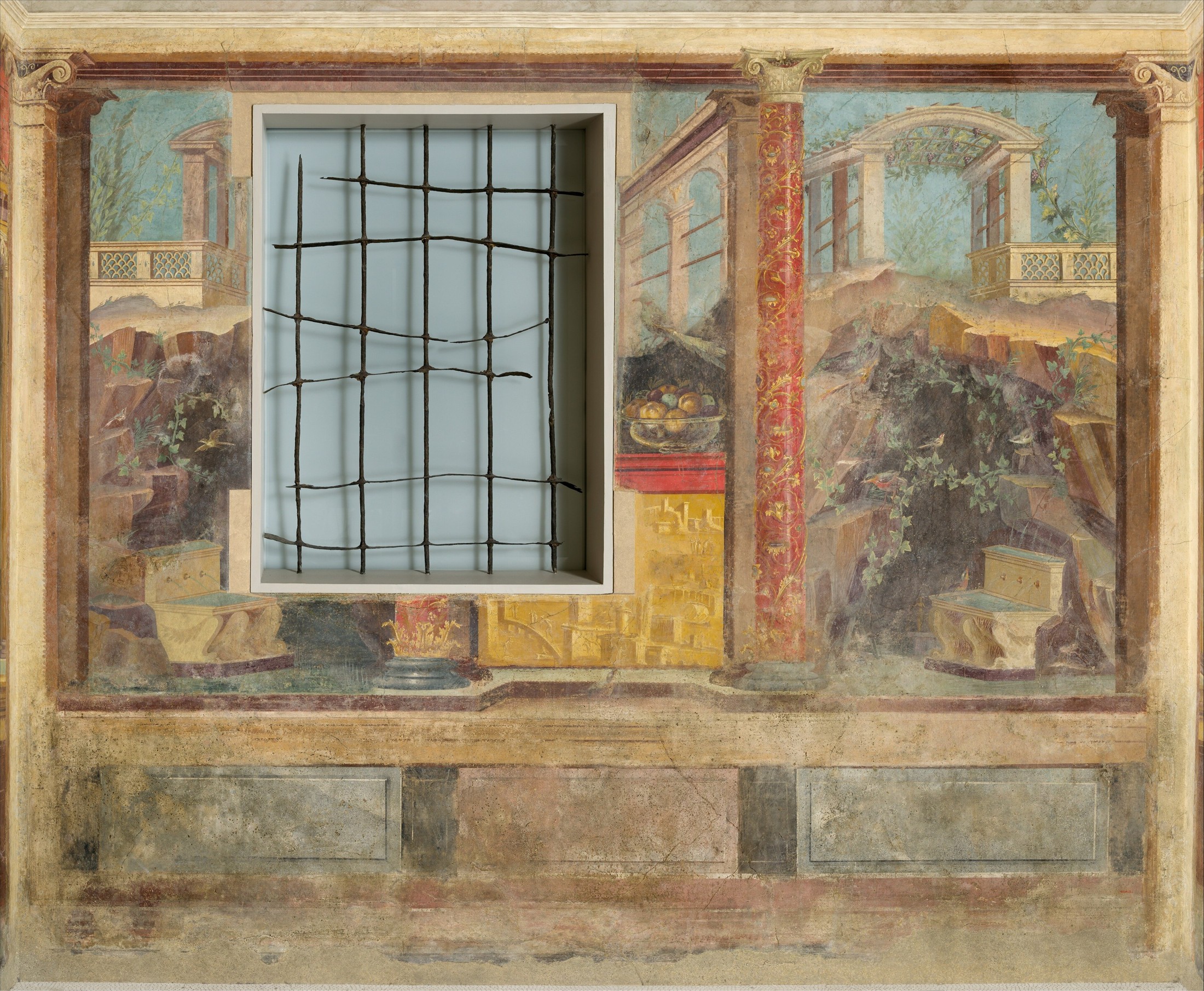
One remarkable example survives from the Villa of Publius Fannius Synistor at Boscoreale, near Pompeii.
Its painted rooms contained elaborate architectural scenes that seemed to dissolve the surrounding walls.
Columns projected into imaginary spaces, while painted doorways suggested rooms and landscapes beyond.
The surfaces were flat.
But the experience was anything but.
This form of illusion was not simply decorative.
It allowed the owner to transform the atmosphere of an interior and communicate an impression of architectural grandeur.
The paintings created a world larger than the building could physically contain.
Nearly two thousand years later, the same principle remains familiar.
Artists continue to use perspective, shadow and carefully controlled detail to make flat surfaces appear deeper than they are.
The Painting With a Hidden Skull
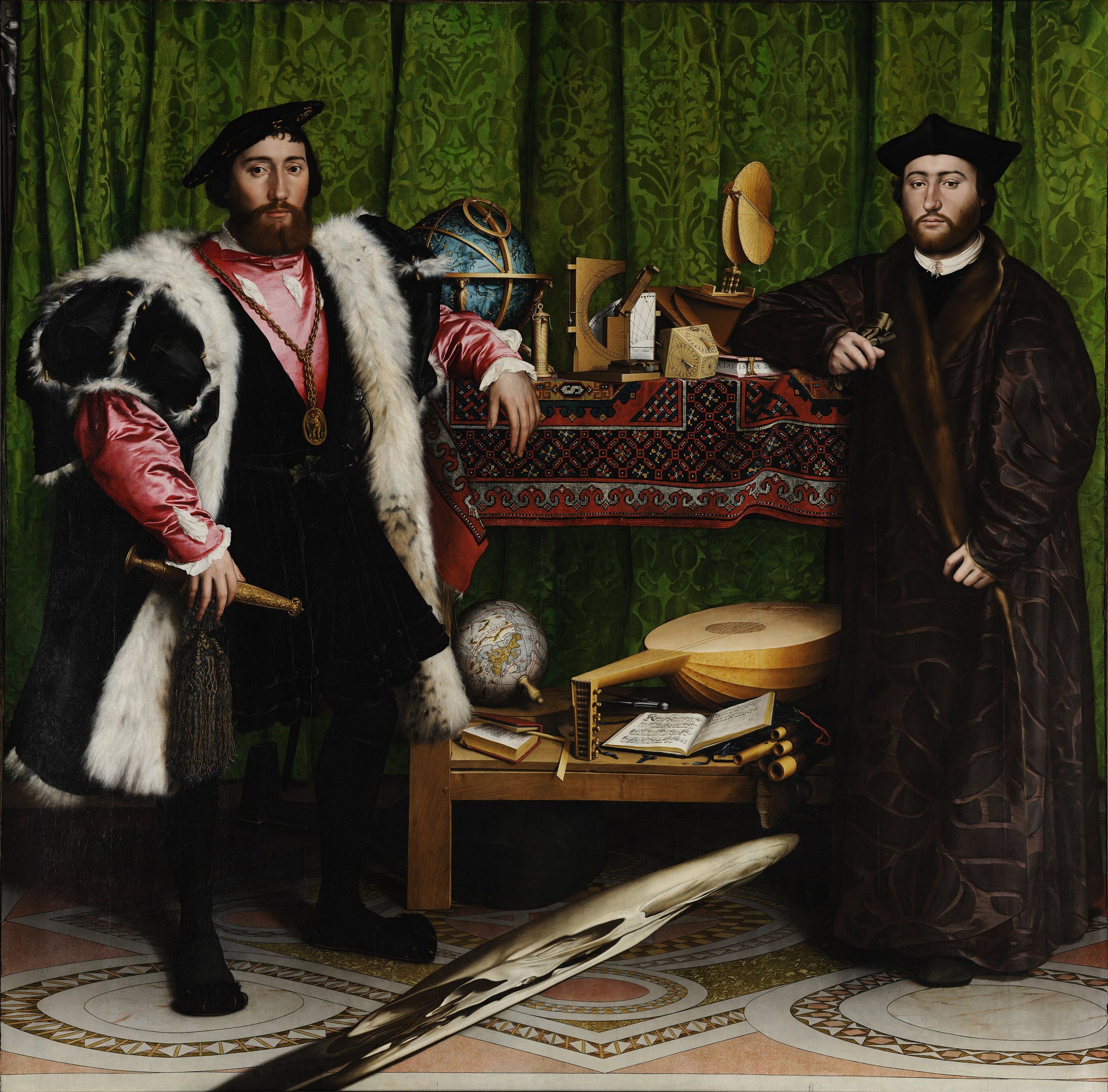
In 1533, German artist Hans Holbein the Younger created one of the Renaissance's most extraordinary demonstrations of visual illusion.
His painting The Ambassadors depicts two elegantly dressed men standing beside a collection of scientific instruments, books and other objects.
The composition is filled with remarkable detail.
Fabrics appear richly textured. Metal surfaces reflect light. A carefully painted carpet reveals the artist's extraordinary technical skill.
Yet something strange occupies the foreground.
Between the men's feet, an elongated, pale shape stretches diagonally across the floor.
Viewed directly, it appears almost unrecognisable.
It resembles an accidental distortion within an otherwise meticulously realistic painting.
But move to the correct viewing position, approaching the image from a sharp angle, and something remarkable happens.
The unfamiliar shape becomes a human skull.
The technique is known as anamorphosis.
An image is deliberately distorted so that it appears recognisable only from a particular perspective or through a specially arranged viewing method.
Holbein used this technique to introduce a powerful symbolic message.
The objects surrounding the two men suggest knowledge, achievement and worldly status.
The skull introduces the inevitability of death.
It is a reminder that even the most accomplished lives are temporary.
The effect also changes the relationship between artwork and viewer.
Understanding the painting requires physical movement.
Its meaning cannot be appreciated entirely from one position.
The artist has turned looking into an active experience.
A Painting That Shows Its Own Back
More than a century later, Flemish artist Cornelis Norbertus Gijsbrechts developed a very different kind of visual trick.
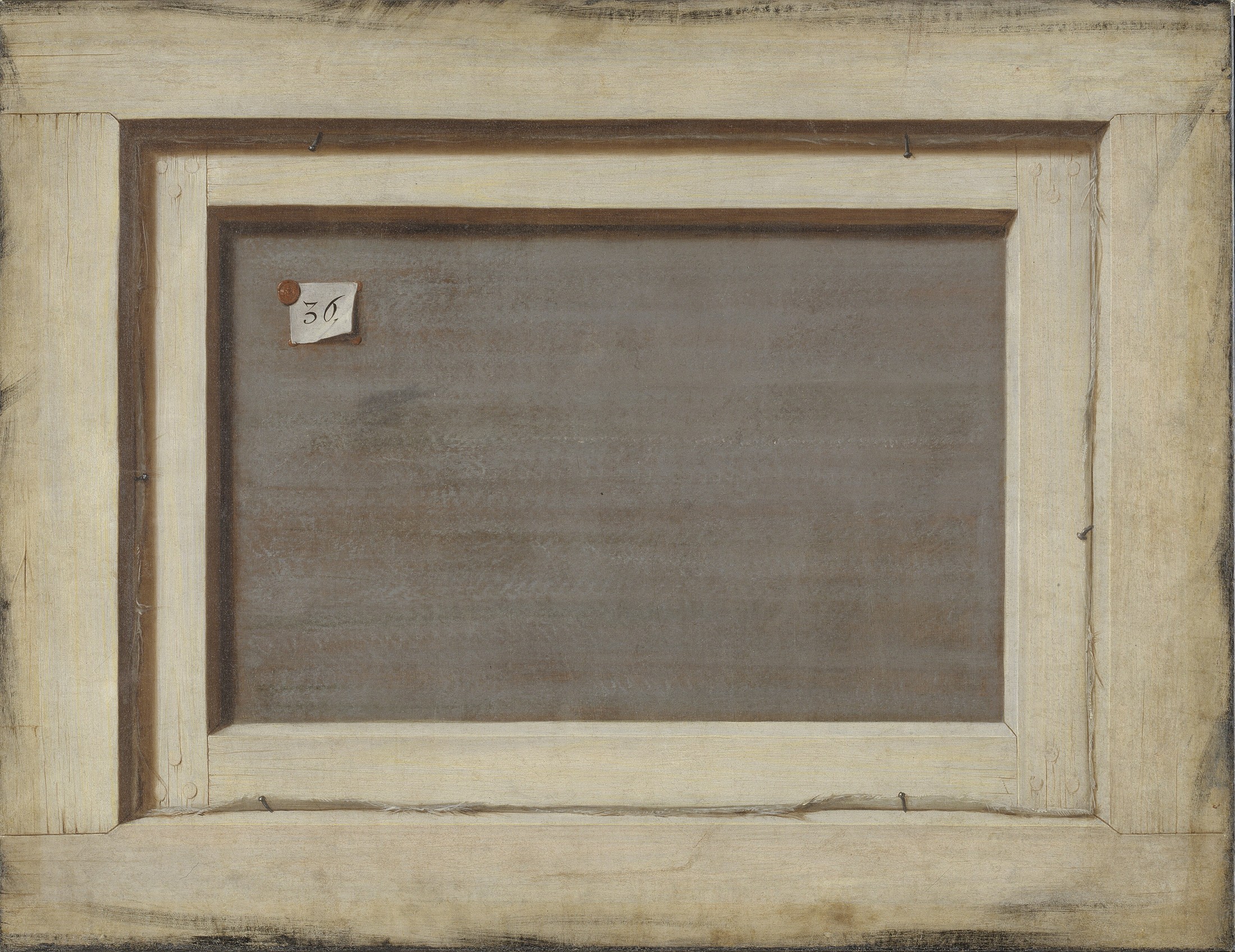
His painting The Reverse of a Framed Painting, created around 1670, appears to show the back of an ordinary framed canvas.
There is no portrait, landscape or religious scene.
Instead, the viewer encounters a wooden stretcher, the reverse of a canvas and a small paper label.
The details are extraordinarily convincing.
Nails appear to cast tiny shadows.
The wooden framework seems to project from the surface.
The fabric looks slightly worn.
At first glance, it can appear as though somebody has simply turned a painting around and left its back facing the room.
But everything is painted.
Even the apparent frame is an illusion.
The work belongs to the tradition of trompe-l'œil, a French expression meaning to deceive the eye.
Artists working in this tradition attempted to represent objects with such convincing realism that viewers might briefly mistake painted surfaces for physical things.
Gijsbrechts took the idea further.
Rather than creating an illusion inside a conventional framed painting, he made the entire artwork resemble an ordinary object.
The painting questions its own identity.
Is it a picture?
Is it an object?
Or is it something existing between the two?
The work is now held by the National Gallery of Denmark in Copenhagen.
More than 350 years after its creation, its deception remains surprisingly effective.
It also contains a wonderful sense of humour.
The artist has created an artwork that appears to be facing the wrong way.
Yet turning it around would reveal nothing more interesting.
The illusion is the artwork.
The Ceiling That Disappeared
Some artists have used illusion on a much larger scale.
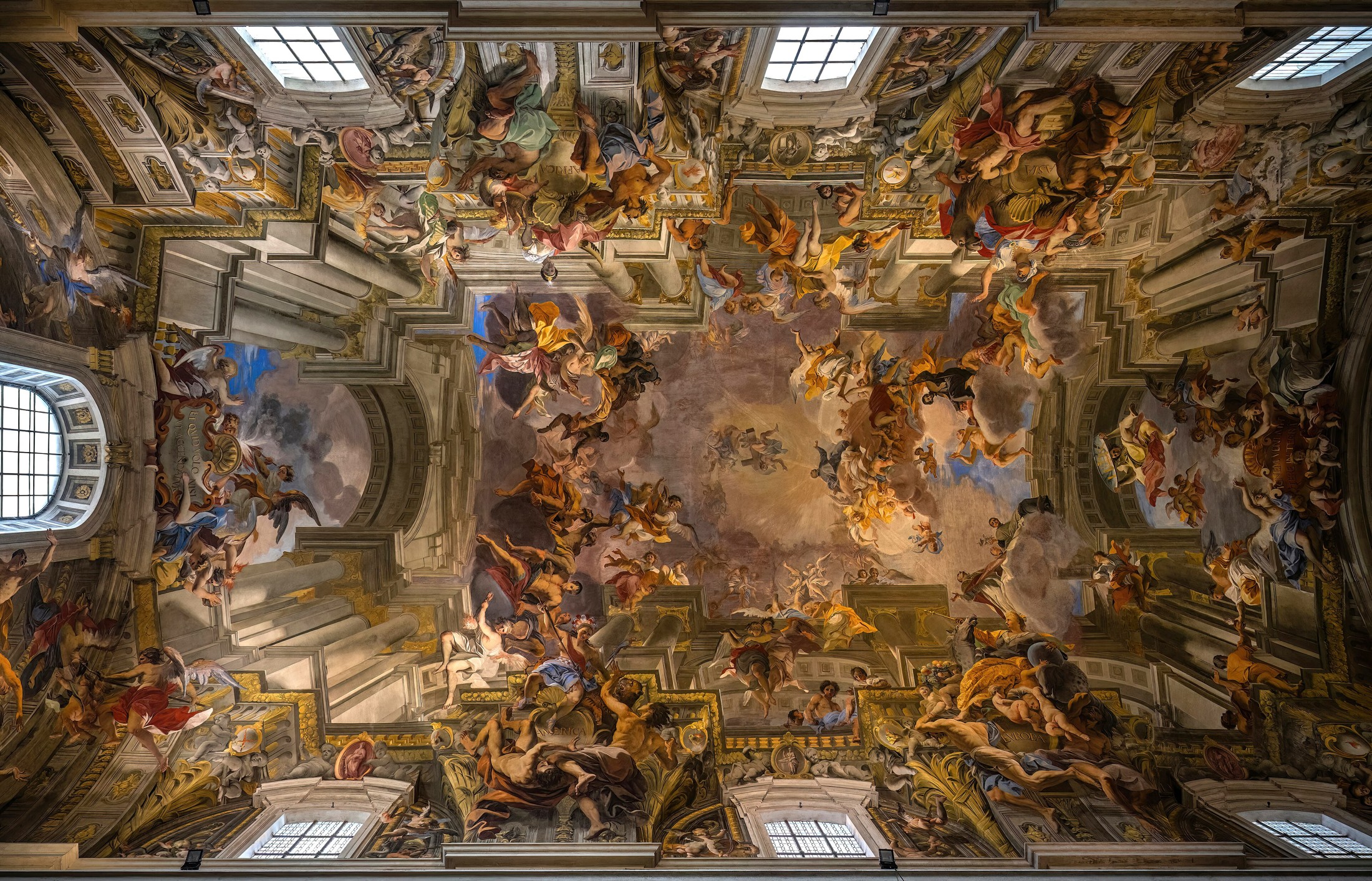
In Rome, the Church of Sant'Ignazio contains one of the great achievements of Baroque perspective painting.
During the late seventeenth century, artist and Jesuit brother Andrea Pozzo created an extraordinary painted ceiling.
His fresco depicts an elaborate architectural environment opening towards the heavens.
Columns, arches and figures appear to rise beyond the actual roof of the church.
From the correct position, the painted architecture seems to continue the real architecture below it.
The physical ceiling almost disappears.
Pozzo also created a remarkable illusion of a dome.
The church's planned architectural dome was never constructed.
Instead, Pozzo produced a painted substitute that gives the impression of a substantial structure rising overhead.
Stand at a particular point inside the church and the illusion becomes convincing.
Move away, however, and its geometry begins to reveal the deception.
The effect demonstrates the importance of perspective.
A painting can create an extraordinary impression of depth, but that impression depends on the relationship between the artwork and the viewer's position.
Pozzo understood this relationship with remarkable precision.
He used mathematical principles and artistic skill to transform a fixed architectural surface into an imagined extension of space.
The church remains a place of worship.
But its ceiling is also an extraordinary lesson in how easily the eye can be persuaded to see what is not physically there.
When a Still Image Begins to Move
By the twentieth century, artists were exploring illusion through increasingly abstract approaches.
Rather than painting convincing objects or imaginary architecture, some began investigating how lines, colours and repeated shapes influence visual perception.
The movement became known as Optical Art, or Op Art.
British artist Bridget Riley emerged as one of its most important figures.
In 1961, she created Movement in Squares, a black-and-white painting composed of carefully arranged geometric forms.
At first glance, the work resembles a simple grid.
But the squares gradually narrow towards part of the composition.
The repeated pattern appears to compress and bend.
The surface seems to fold inward, creating an impression of movement and depth.
Nothing actually moves.
The effect emerges from the relationship between neighbouring shapes and the way our visual system interprets them.
The simplicity is extraordinary.
There are no recognisable objects.
No elaborate details.
No attempt to imitate a conventional three-dimensional scene.
Yet the painting can produce an intense physical sensation of instability.
Riley demonstrated that abstraction could affect the viewer directly.
The work did not need to represent movement.
It could create the experience of movement.
Why Our Eyes Can Be Fooled
Visual illusions reveal that seeing is not a purely mechanical activity.
Light enters the eye, but the brain must interpret the information it receives.
It identifies shapes, estimates distance and makes assumptions about the position of objects.
Our experience of the world depends partly on these interpretations.
Artists can exploit them.
A carefully painted shadow suggests that an object projects from a surface.
Converging lines create an impression of depth.
Repeated patterns can make stationary shapes seem unstable.
Mirrors can suggest that an object exists somewhere other than its actual location.
These effects are possible because our visual system constantly attempts to make sense of incomplete information.
Most of the time, those processes help us navigate the world effectively.
But art can place familiar visual cues in unfamiliar combinations.
The result exposes a gap between what physically exists and what we think we see.
This is why an illusion can remain compelling even after its mechanism has been explained.
We may understand that a surface is flat.
Yet the experience of depth remains.
Knowledge does not always eliminate perception.
And that contradiction is part of the fascination.
The Swimming Pool That Isn't Full
In Kanazawa, Japan, contemporary artist Leandro Erlich has created an installation that transforms visual illusion into a shared physical experience.
His work The Swimming Pool, created in 2004, is permanently installed at the 21st Century Museum of Contemporary Art.
At first glance, it appears to be an ordinary swimming pool filled with clear blue water.
Visitors standing around its edge can look down and see other people apparently standing beneath the surface.
The scene seems impossible.
The people below appear completely dry.
Their clothing moves normally.
They look upwards through the shimmering water.
The explanation is surprisingly simple.
The pool contains a transparent glass surface supporting a shallow layer of water approximately ten centimetres deep.
Beneath it is an accessible room painted in the familiar blue-green colours of a swimming pool.
Visitors can enter this lower space, creating the impression that they are standing underwater.
From above, the illusion is convincing.
From below, the experience is equally strange.
The water becomes a luminous ceiling, distorting the appearance of people looking down.
Erlich's work is especially interesting because it makes the viewer part of the artwork.
The installation requires participation.
People above and below the glass respond to one another, creating moments of surprise and amusement.
Unlike a traditional painting, the work changes according to who enters it.
Its illusion becomes a social experience.
The Building That Turned Sideways
Erlich explored a related idea in London in 2013.
His installation Dalston House, commissioned by the Barbican, transformed an empty site in East London into an extraordinary visual experience.
A detailed representation of a Victorian terraced-house facade was constructed horizontally on the ground.
Above it stood a large mirror, positioned at an angle.
Visitors could lie, sit or stand on the horizontal facade.
When viewed through the mirror, their reflections appeared to occupy the front of a vertical building.
People seemed to hang from windows, climb across walls or balance on architectural details.
The illusion produced photographs that appeared to defy gravity.
But the most interesting aspect was how quickly visitors understood the possibilities.
They began creating their own poses and interactions.
The installation became playful and collaborative.
Its success depended not only on the artist's design, but on the imagination of the people taking part.
The work also demonstrated how illusion could transform an ordinary urban setting.
An empty plot became a temporary architectural fantasy.
The city provided the context.
The visitors completed the artwork.
The Pleasure of Being Fooled
Why do we enjoy visual illusions even when we know they are not real?
Part of the attraction lies in surprise.
An illusion briefly interrupts our expectations.
Something ordinary becomes unfamiliar.
A flat painting appears three-dimensional.
A ceiling seems to disappear.
A swimming pool reveals people standing beneath the water.
These moments create a small conflict between knowledge and experience.
Our minds recognise that something is impossible, while our eyes continue presenting evidence to the contrary.
But illusion in art is not simply entertainment.
It can communicate ideas about uncertainty, identity and the limitations of perception.
Holbein's hidden skull reminds viewers that reality contains meanings which may not be immediately visible.
Pozzo's painted architecture demonstrates how space can be transformed through perspective.
Riley's geometric paintings reveal the instability of visual experience.
Erlich's installations encourage visitors to question assumptions about familiar environments.
Each approaches illusion differently.
Yet all depend upon the viewer discovering that appearance and reality are not always the same.
The Art of Looking Again
One of the most valuable things art can offer is a reason to look twice.
In everyday life, we depend on quick visual judgements.
We recognise objects, interpret surroundings and move through familiar spaces without examining every detail.
This efficiency is essential.
But it can also make the world appear more straightforward than it really is.
Illusion interrupts that certainty.
It asks us to reconsider something we thought we understood.
A painted wall becomes an imaginary landscape.
A distorted shape reveals a hidden symbol.
A stationary pattern appears to move.
A swimming pool turns out to be something entirely different.
The experience encourages curiosity.
And perhaps that is the enduring appeal of illusionistic art.
It demonstrates that extraordinary possibilities can emerge from ordinary materials.
Paint, canvas, mirrors, glass and carefully arranged shapes are enough to create experiences that challenge our expectations.
The technology may change.
The artistic ambition remains surprisingly familiar.
For thousands of years, artists have explored what happens when appearance no longer corresponds neatly with reality.
And the resulting works continue to fascinate because they reveal something about us.
We do not simply see the world.
We interpret it.
Sometimes correctly.
Sometimes imperfectly.
And sometimes, an artist knows exactly how to make us see something that was never there.
Further Reading
The Art of Repetition
Some of the most influential artists in history returned to the same subject again and again — and found extraordinary possibilities in doing so.
By Culturefold Editors
The Beauty of the Unfinished
We tend to think of great art as something complete. Yet throughout art history, some of the most compelling works have remained unfinished — and they often reveal more because of it.
By Culturefold Editors
When Art Leaves the Gallery
From Chicago's Cloud Gate to Berlin's East Side Gallery, public art turns streets, parks and squares into places of unexpected encounter.
By Culturefold Editors