
The Art of Repetition
Why Monet, Hokusai, Morandi and Warhol discovered extraordinary possibilities in painting the same things again and again.
Originality is often considered one of art's greatest qualities.
We celebrate artists for introducing unfamiliar subjects, challenging established conventions and creating images unlike anything that came before.
Yet some of the most influential artists in history achieved something remarkable by doing almost the opposite.
They returned to the same subject repeatedly.
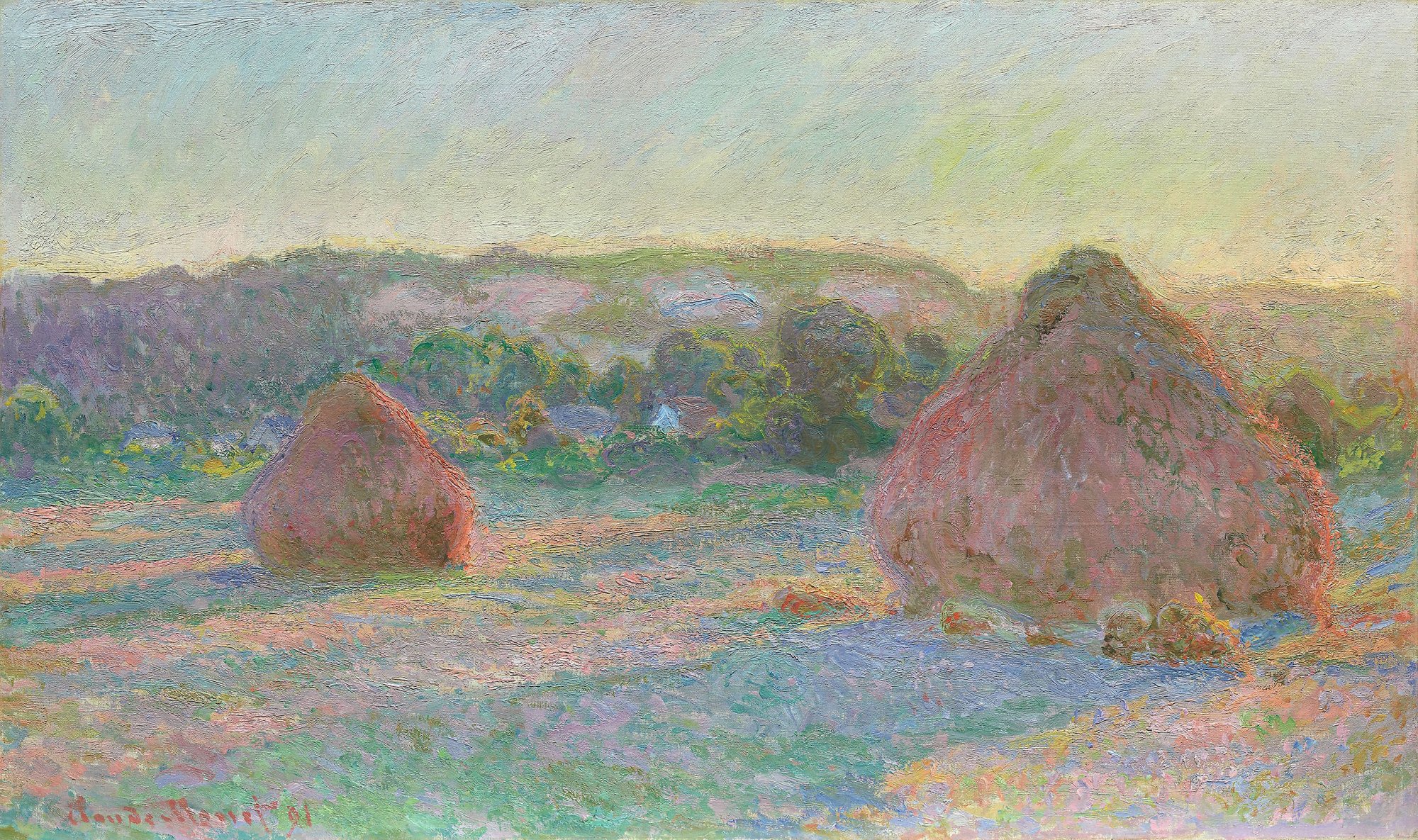
Claude Monet painted stacks of harvested grain through changing seasons. Katsushika Hokusai depicted Mount Fuji from dozens of perspectives. Giorgio Morandi spent decades arranging familiar bottles and household objects. Andy Warhol transformed an ordinary soup can into one of the defining images of twentieth-century art.
At first glance, their approaches appear to have little in common.
One pursued the changing effects of natural light. Another explored the relationship between landscape and everyday life. A third investigated subtle differences in form and composition. The fourth questioned the visual culture of mass production.
But each recognised something important.
A familiar subject does not necessarily become less interesting through repetition.
Sometimes, returning to the same image reveals possibilities that a single encounter could never provide.
Monet and the Changing Light
In the countryside near Giverny, France, Claude Monet found an unlikely subject for one of his most important artistic experiments.
Stacks of harvested grain.
They were ordinary agricultural structures, positioned in fields near his home.
Few people would have considered them especially remarkable.
Yet between 1890 and 1891, Monet created an extensive series of paintings examining these familiar forms under different atmospheric conditions.
The compositions frequently share similar arrangements.
A grainstack occupies the foreground. Trees and fields establish the surrounding landscape. The basic structure remains recognisable from one painting to another.
But the images are never quite the same.
In one, warm sunlight turns the stack into a glowing arrangement of orange and gold.
In another, winter transforms the landscape into delicate blues, whites and purples.
Elsewhere, the changing light of evening softens the boundaries between the structure and its surroundings.
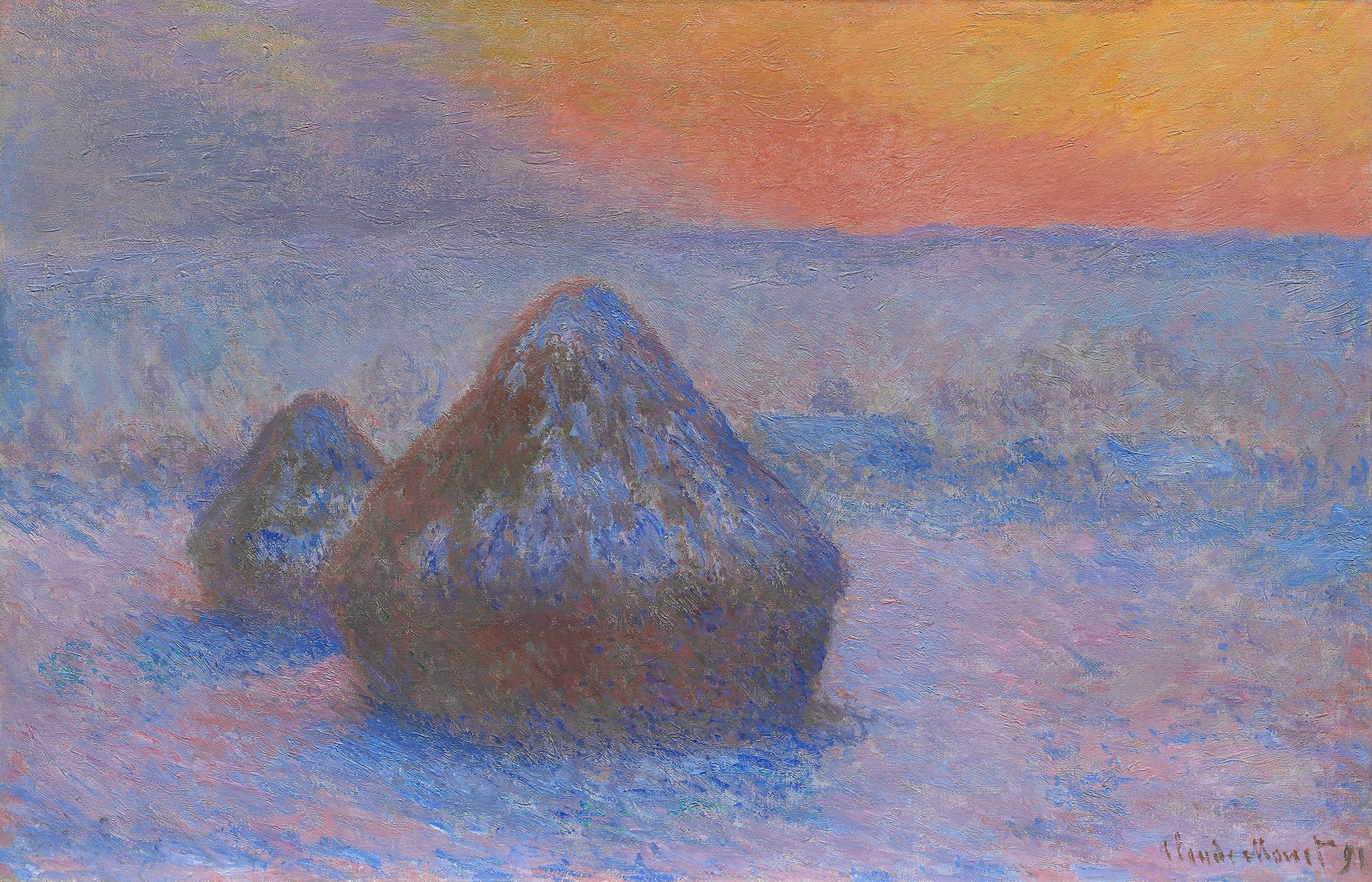
Monet was not simply recording the appearance of an agricultural object.
He was studying the relationship between colour, light, atmosphere and perception.
The grainstack provided a relatively stable subject against which these changes could be observed.
Its familiarity became an advantage.
Rather than introducing a new composition every time, Monet could concentrate on the qualities that made each moment different.
In 1891, fifteen paintings from the series were exhibited together in Paris.
Seen as a collection, they communicated something more complex than any individual canvas.
The subject remained largely consistent.
The experience of looking at it changed continuously.
One Mountain, Many Worlds
Several decades before Monet's experiments, Japanese artist Katsushika Hokusai developed another extraordinary exploration of repetition.
His celebrated series Thirty-six Views of Mount Fuji, produced during the early 1830s, depicted Japan's famous mountain from different locations and under varying conditions.
The original series eventually expanded to forty-six woodblock prints.
Some compositions present Mount Fuji as a prominent feature of the landscape.
In others, the mountain becomes a distant presence, almost hidden behind the activities taking place in the foreground.
Perhaps the most internationally recognisable image from the series is The Great Wave off Kanagawa.
An enormous wave rises above small boats, its curved form threatening to overwhelm the people beneath it.
Far in the distance, Mount Fuji appears surprisingly small.
Its familiar triangular outline is visible beneath the powerful movement of the sea.
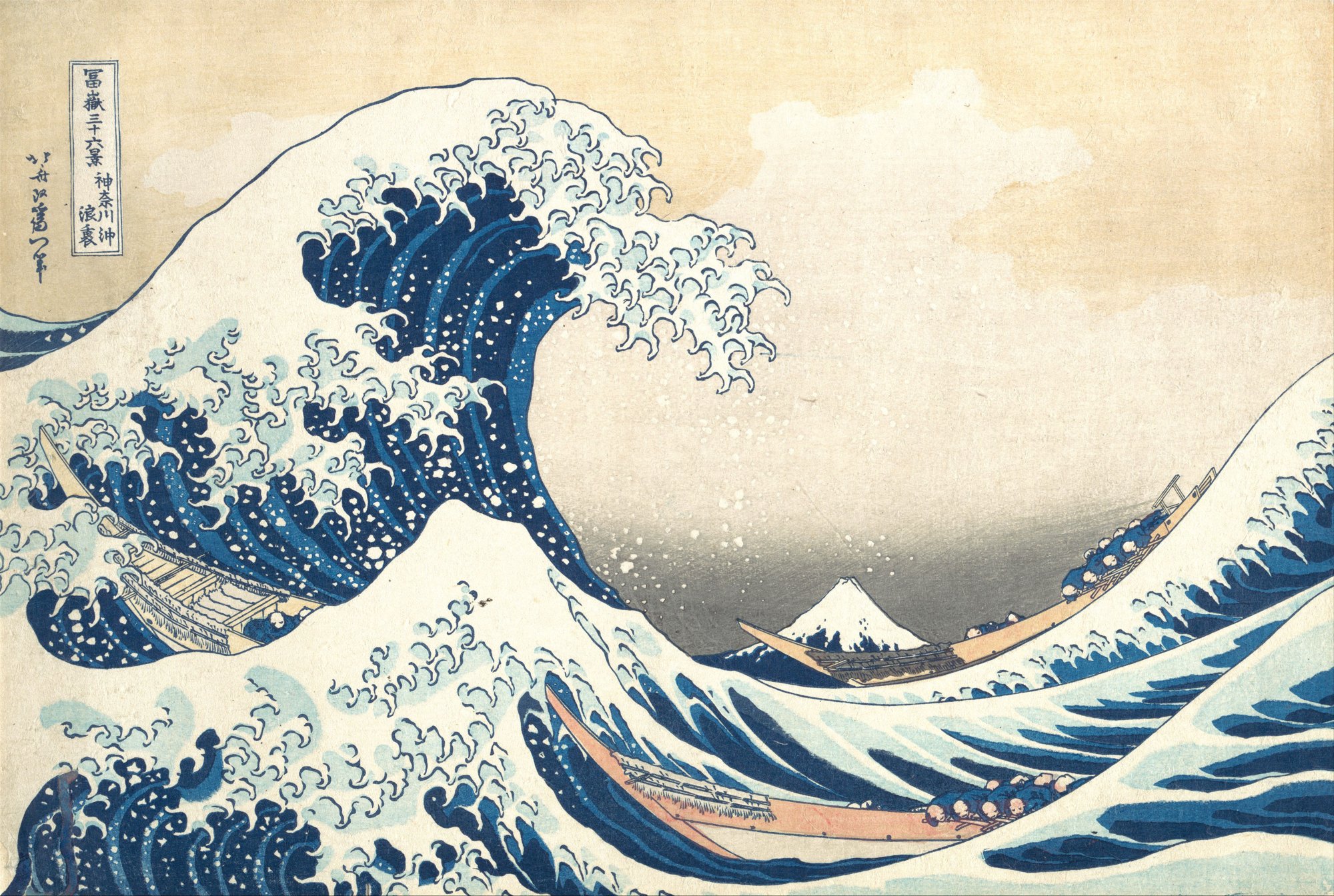
The contrast is extraordinary.
The mountain, traditionally associated with permanence and spiritual significance, becomes a quiet element within a dramatic maritime scene.
Other prints offer very different experiences.
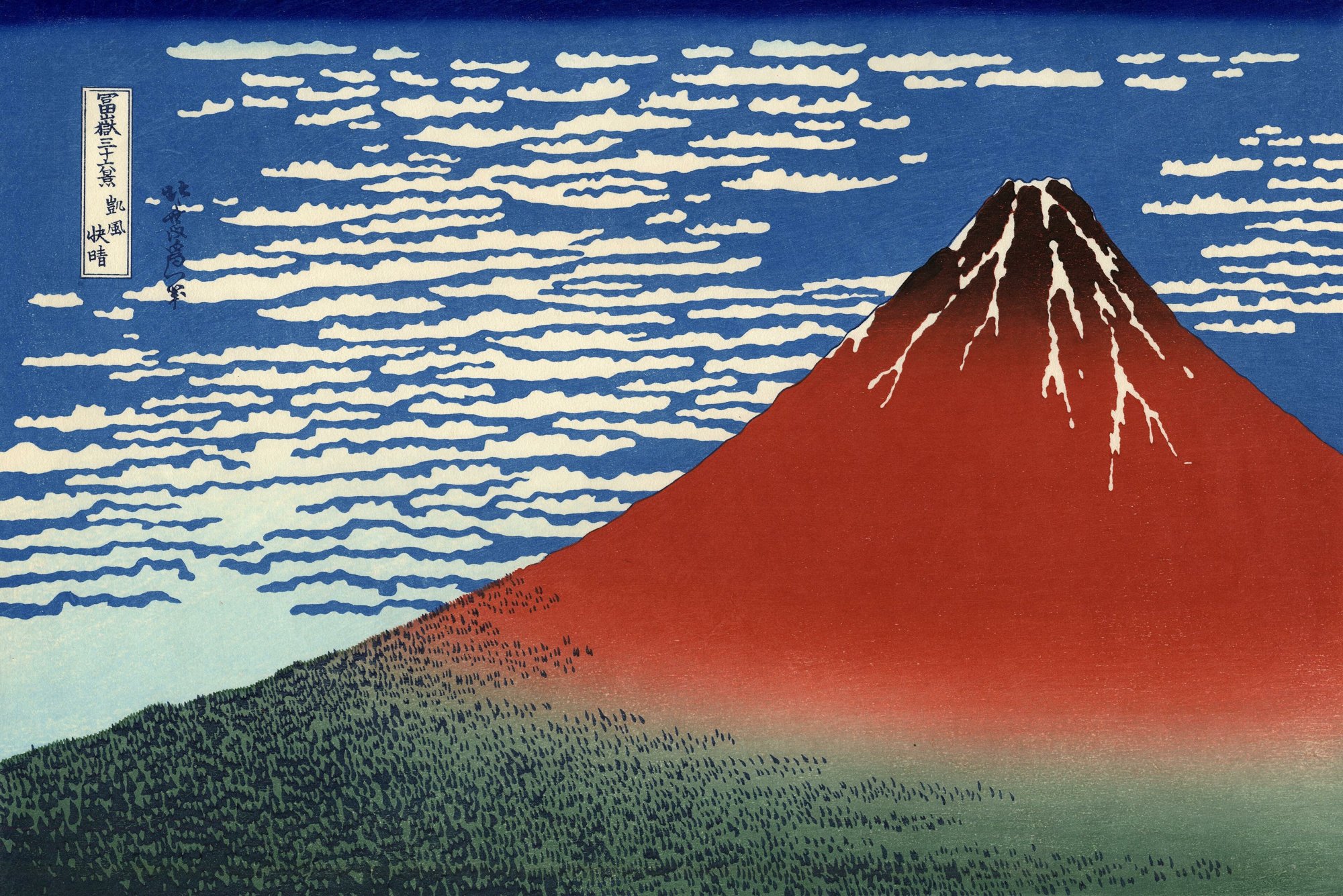
In South Wind, Clear Sky, often called Red Fuji, the mountain dominates the composition, its reddish surface rising beneath a blue sky.
In Hodogaya on the Tōkaidō, travellers and trees occupy much of the foreground while Fuji appears beyond them.
The mountain remains the recurring subject.
Yet the surrounding world continually changes its meaning.
Hokusai's repetition does not simply produce variations of the same image.
It creates a broader portrait of a place and its relationship with the people who inhabit the landscape around it.
The series suggests that no single perspective can fully describe even the most familiar landmark.
To understand something more completely, we may need to approach it from many directions.
The Quiet World of Giorgio Morandi
If Monet found endless variation in changing light, Italian painter Giorgio Morandi discovered it within the confines of a remarkably modest studio.
Born in Bologna in 1890, Morandi became known for still-life paintings featuring ordinary domestic objects.
Bottles, jars, boxes and vases appear repeatedly throughout his work.
His compositions are frequently restrained.
A small group of objects stands against a neutral background. Their colours are muted, often consisting of pale greys, browns, creams and subdued earthy tones.
There is little obvious drama.
The objects do not represent an elaborate narrative or a recognisable public event.
They simply occupy space.
Yet the longer we look, the more subtle the relationships become.
A bottle partially conceals another. Two objects almost touch. A narrow gap interrupts an otherwise continuous arrangement.
The differences between paintings can be remarkably small.
A vessel moves slightly to one side.
The distance between objects changes.
A background becomes warmer or cooler.
Light falls differently across a surface.
For Morandi, these seemingly minor adjustments were enough to create new compositions.
His work demonstrates that artistic variation does not always require dramatic transformation.
Sometimes, changing the relationship between a few familiar objects can alter the entire balance of an image.
Morandi's repeated subjects also encourage a different kind of viewing.
Rather than searching immediately for a story, the viewer becomes attentive to proportion, space and the delicate interaction between forms.
The ordinary objects gradually acquire an unexpected presence.
Their significance comes not from what they represent, but from how carefully they have been observed.
Warhol and the Image That Would Not Go Away
Andy Warhol approached repetition from an entirely different direction.
Where Monet examined natural variation and Morandi explored subtle compositional differences, Warhol became interested in the familiar imagery of modern consumer society.
In 1962, he created Campbell's Soup Cans, a collection of thirty-two paintings depicting the company's commercially packaged soup.
Each canvas presents a remarkably similar image.
The familiar red-and-white label appears against a plain background.
The basic composition remains consistent, with the product name changing to represent a different variety of soup sold at the time.
Presented together, the paintings resemble an arrangement of products in a supermarket.
Their repetition is central to the effect.
The soup can was not an obscure subject.
It was a recognisable commercial product encountered in ordinary American life.
By repeatedly reproducing its appearance, Warhol transformed something commonplace into a subject of artistic attention.
The work also challenged expectations about originality.
Traditionally, a painting was often valued as a unique object expressing the individual vision of its creator.
Warhol's soup cans deliberately resembled the standardised imagery of advertising and mass production.
Although the original thirty-two canvases were painted by hand, their appearance imitated the consistency of commercial reproduction.
Warhol subsequently developed an extensive practice involving photographic screenprinting, allowing images to be repeated and altered through a process closely associated with mass media.
Celebrities, consumer products and familiar public figures became recurring subjects.
His work raised questions that remain relevant today.
What happens when the same image appears so frequently that it becomes impossible to ignore?
Does repetition reduce an image's meaning, or increase its cultural influence?
And when visual culture is dominated by reproduced images, where does originality begin?
For Warhol, repetition was not merely a technique.
It was also a way of examining the society producing and consuming those images.
Repetition Is Not Always Repetition
Although these artists returned to familiar subjects, their reasons were fundamentally different.
Monet used repetition to explore changes that could never be completely controlled.
Hokusai employed a recurring landmark to reveal the variety of the surrounding world.
Morandi investigated the possibilities contained within small differences of arrangement and perception.
Warhol confronted the standardisation and constant reproduction of modern visual culture.
The same broad principle produced remarkably different artistic results.
This distinction matters because repetition is sometimes confused with a lack of imagination.
To repeat something can appear to suggest that no new ideas remain.
But artistic repetition often creates a deliberate set of boundaries.
By holding certain elements constant, an artist can investigate others more carefully.
A familiar landscape allows changes in light to become more apparent.
An established collection of objects places greater emphasis on proportion and spacing.
A repeated commercial image encourages questions about recognition, consumption and cultural influence.
Repetition can therefore become a method of investigation.
The subject is not necessarily the final destination.
It provides a starting point from which new artistic questions emerge.
The Difference Between Looking and Noticing
There is a curious effect that occurs when we encounter similar artworks together.
At first, the repetitions dominate our attention.
We recognise the same mountain, bottle or product label.
The works appear connected by their most obvious similarities.
But after looking for longer, those similarities begin to recede.
Differences become more important.
We notice changes in colour, movement and composition that might otherwise have escaped our attention.
This process is particularly apparent in Monet's paintings.
Viewed individually, a grainstack may seem an ordinary rural subject.
Viewed alongside several others, it becomes a means of understanding how dramatically light can transform our perception of the same environment.
Morandi's still lifes encourage a similar response.
What initially appears to be a collection of nearly identical arrangements gradually reveals an extraordinary sensitivity to small variations.
The effect depends partly on our willingness to spend time with the work.
A brief glance identifies the subject.
Closer observation begins to reveal the artist's decisions.
This is one reason repeated subjects can be especially rewarding in a gallery.
They encourage comparison rather than isolated appreciation.
The viewer begins to participate in the process of recognising what has changed.
When an Image Becomes an Icon
Repetition also influences the relationship between art and cultural memory.
Some artworks become widely recognisable because their images are reproduced far beyond the museums and collections in which they are held.
Hokusai's Great Wave appears on posters, clothing, book covers and countless other objects.
Warhol's soup cans have become familiar symbols of Pop art.
Monet's paintings are reproduced in publications, exhibitions and educational materials around the world.
These reproductions introduce artworks to audiences who may never encounter the originals.
They can also change the way the images are understood.
A painting originally created within a particular artistic or historical context may become a decorative object, a commercial reference or a familiar symbol.
In some cases, the image becomes so recognisable that its original meaning is overshadowed by its later cultural life.
There is an irony here.
An artwork that originally explored repetition can itself become endlessly repeated.
Warhol's soup cans are an especially striking example.
A work questioning mass-produced imagery has become one of the most frequently reproduced symbols of twentieth-century artistic culture.
The boundary between artistic image and commercial object becomes increasingly difficult to separate.
The Value of Returning
Contemporary culture frequently celebrates novelty.
New images, new experiences and new ideas compete continuously for our attention.
The pressure to produce something different can make repetition seem uninteresting or unnecessary.
Yet the history of art suggests another possibility.
Returning to a familiar subject can create opportunities for deeper understanding.
Not every artistic discovery requires a new object, landscape or person.
Sometimes, it requires a different question.
The painter may change the light.
The photographer may adjust the composition.
The sculptor may reconsider the relationship between materials.
The subject remains familiar, but the artist's understanding continues to develop.
This approach also challenges the assumption that creative progress must always involve moving away from previous work.
An artist can advance by returning.
Each encounter may reveal something that was previously overlooked.
The process can continue for years, even decades.
And the resulting body of work may become more meaningful through the relationships between its individual pieces.
Seeing Something New in the Familiar
Monet's grainstacks, Hokusai's mountain, Morandi's bottles and Warhol's soup cans could hardly be more different.
They belong to different periods, artistic traditions and cultural environments.
Yet each demonstrates the remarkable possibilities contained within a familiar subject.
The repetition does not necessarily produce the same experience.
It can reveal change, encourage comparison, challenge assumptions or transform an ordinary image into a cultural symbol.
There is a lesson here that extends beyond the boundaries of art.
Familiarity does not mean that everything has been understood.
The same street can appear different at another hour.
An ordinary object may reveal unexpected qualities when examined more closely.
A landscape visited repeatedly can continue to offer new details.
Artists have long recognised that the world does not need to provide an endless supply of unfamiliar subjects.
Sometimes, the most productive approach is to return to something already known.
To examine it again.
To change the perspective.
To notice what previously went unseen.
Because repetition, in the hands of an artist, is not necessarily the opposite of originality.
Further Reading
The Beauty of the Unfinished
We tend to think of great art as something complete. Yet throughout art history, some of the most compelling works have remained unfinished — and they often reveal more because of it.
By Culturefold Editors
When Art Leaves the Gallery
From Chicago's Cloud Gate to Berlin's East Side Gallery, public art turns streets, parks and squares into places of unexpected encounter.
By Culturefold Editors
The Art of Seeing Differently
A closer look at how creativity changes our understanding of familiar places, everyday objects and the world we inhabit.
By Culturefold Editors