
Behind the Mask: The Many Faces of Identity
From the mysterious streets of Venetian Carnival to Japanese theatre and the colourful world of Mexican wrestling, exploring why masks have helped people transform, perform and express themselves for centuries.
A face is one of the most recognisable things about a person.
We use facial expressions to communicate emotion, recognise familiar people and understand the intentions of those around us.
A smile suggests warmth. A raised eyebrow communicates uncertainty. A familiar expression can reveal someone's mood before a word has been spoken.
But what happens when that face disappears?
For centuries, people around the world have used masks to create extraordinary transformations.
Some conceal identity. Others represent spirits, fictional characters or important figures within cultural traditions.
A mask can turn an ordinary person into a theatrical performer, a mysterious stranger or a celebrated sporting hero.
It can communicate belonging, challenge social expectations or provide a temporary escape from everyday life.
Yet the reasons people wear masks are far from universal.
The elaborate disguises of Venetian Carnival serve a different purpose from the carefully carved wooden masks of Japanese Noh theatre.
Korean mask dances use humour to question authority, while Mexican professional wrestlers have transformed colourful fabric masks into symbols recognised across generations.
These traditions developed in different places and under different circumstances.
But they share an extraordinary understanding of one simple object.
Sometimes, covering a face reveals something that would otherwise remain hidden.
Venice: The Freedom to Disappear
Imagine walking through Venice during the eighteenth century.
The streets are crowded with merchants, travellers, performers and members of the city's wealthy social classes.
Some people wear elaborate costumes.
Others conceal their faces behind simple white masks.
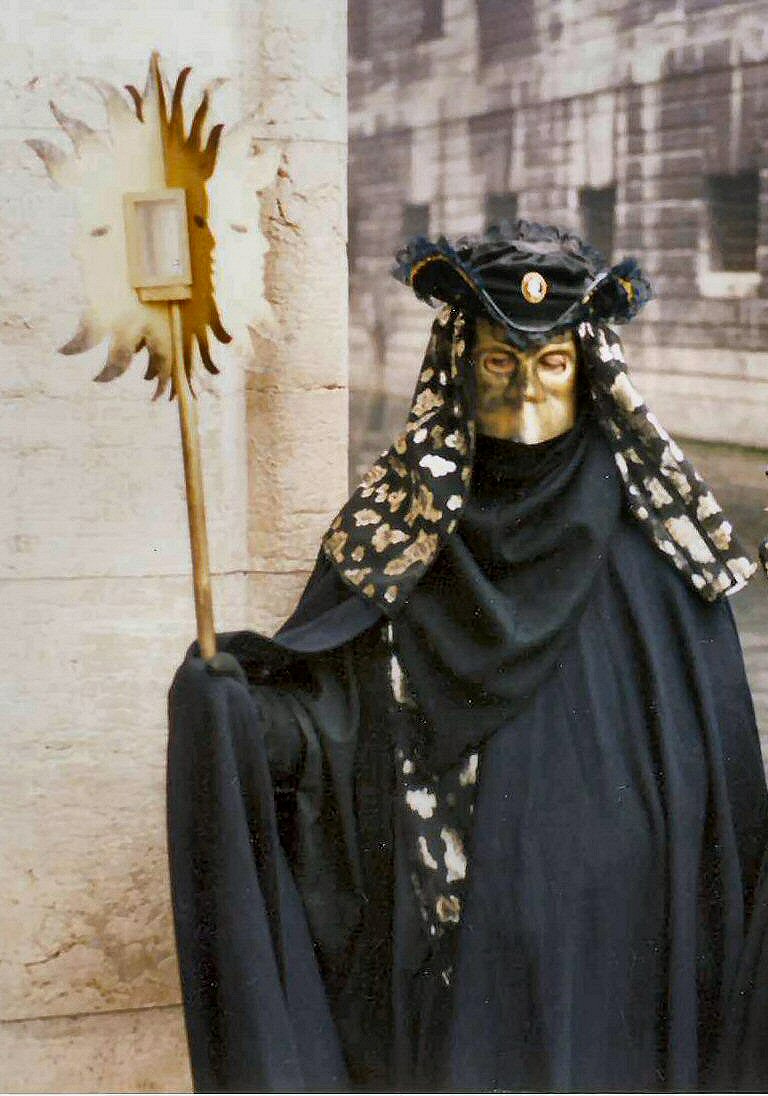
Beneath dark cloaks and traditional three-cornered hats, their identities become difficult to recognise.
For centuries, masks were among the defining features of Venetian Carnival.
But their significance extended beyond an annual celebration.
During the seventeenth and eighteenth centuries, masks were also worn at theatrical performances, social gatherings and other public occasions.
They became familiar elements of Venetian urban life.
Their appeal was closely connected to the city's complex social structure.
Venice was a society in which distinctions of wealth, rank and reputation carried considerable importance.
Masks could temporarily complicate those distinctions.
A person whose identity was concealed might participate in social encounters that would otherwise have been constrained by convention.
The transformation was not absolute.
Social hierarchies did not simply disappear, and disguise could serve many purposes, including deception.
But the mask created an unusual possibility.
For a limited period, a person's public appearance no longer needed to reveal precisely who they were.
The Mystery of the Bauta
One of the most recognisable Venetian disguises was the bauta.
Traditionally, it consisted of a white face mask worn with a dark cloak and a three-cornered hat.
The mask's distinctive projecting shape helped conceal the wearer's features while allowing conversation, drinking and eating without removing it.
Unlike many elaborate Carnival masks familiar today, the traditional bauta could be relatively plain.
Its effectiveness came from the anonymity it created.
The wearer became a recognisable type rather than an identifiable individual.
This produced an interesting contradiction.
Everybody could recognise the costume.
But nobody necessarily knew the person beneath it.
Today, Venetian Carnival is internationally celebrated for extravagant costumes, decorated masks and elaborate public events.
Yet its historical significance reaches beyond visual spectacle.
The tradition reveals how clothing and disguise can influence social behaviour.
A small object covering the face could temporarily change the rules of public interaction.
And an ordinary street could become a stage for another identity.
Japan: A Face That Changes Without Moving
In Japan, masks have developed a very different relationship with performance.
Noh theatre, a classical dramatic tradition refined during the fourteenth and fifteenth centuries, combines music, poetic language and highly controlled movement.
Its performances frequently explore stories involving memory, loss, supernatural beings and encounters between the living and the dead.
Masks are among its most distinctive features.
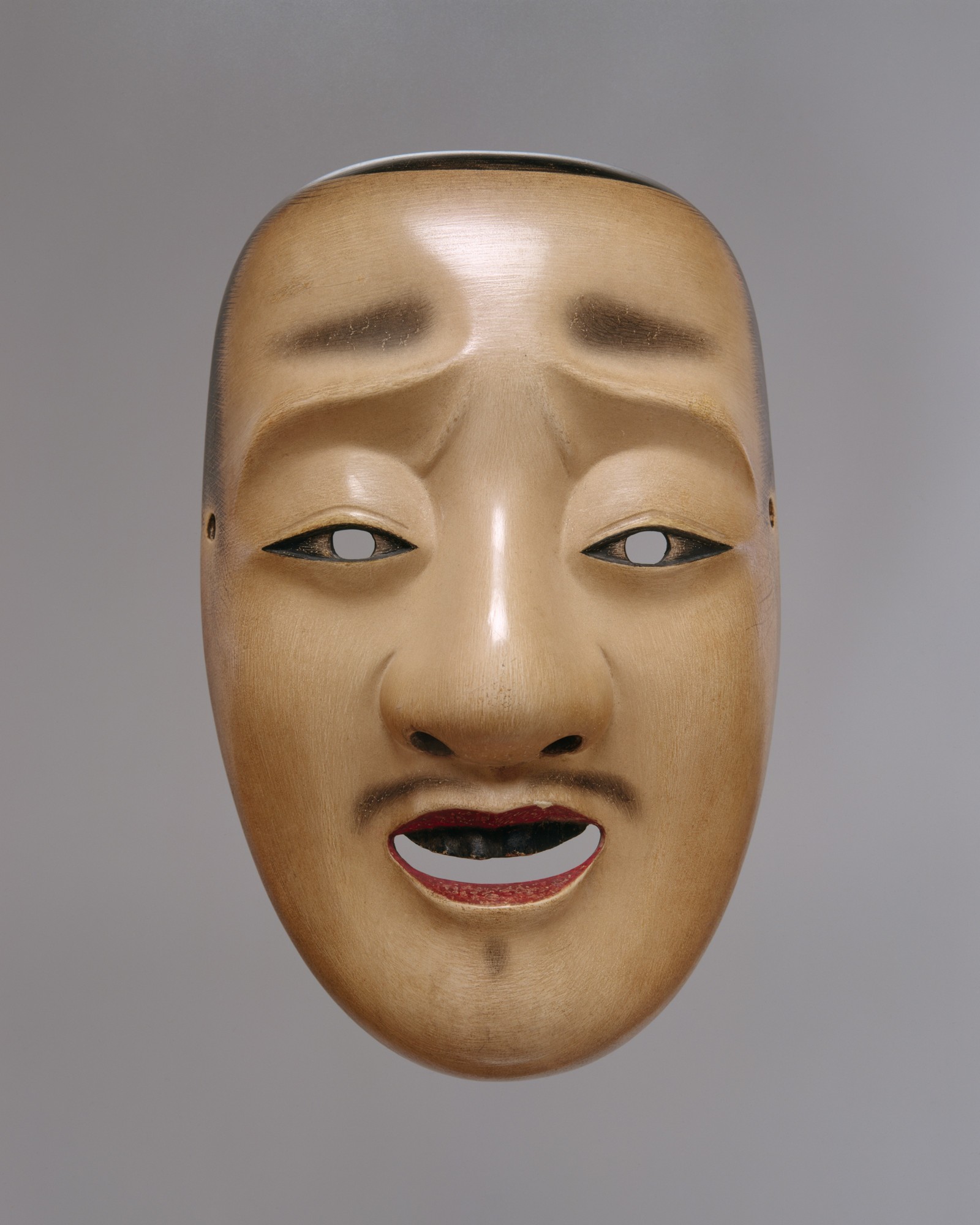
Traditionally carved from wood and carefully painted, they represent different characters and emotional states.
Some depict young women or elderly figures.
Others represent ghosts, spirits, deities or demons.
At first glance, many Noh masks appear remarkably still.
Their expressions can seem almost neutral.
But the performer brings them to life through subtle movements.
A slight change in the angle of the head alters how light falls across the surface.
Tilted upwards, a face can appear brighter.
Tilted downwards, the same mask may seem sorrowful or withdrawn.
The effect is extraordinary.
A fixed object appears to express changing emotions without moving any of its features.
The transformation depends on the skill of the performer and the perception of the audience.
The Art of Doing Less
Noh theatre is often characterised by restraint.
Movements can be slow and carefully measured.
Gestures acquire significance through their precision rather than their scale.
This gives the mask an unusual expressive power.
In conventional theatre, an actor may communicate emotion through changes in facial expression.
In Noh, the performer's real face is hidden.
Emotion must be expressed through movement, posture, voice and the relationship between the mask and light.
The audience participates through interpretation.
A slight gesture may suggest an emotional shift that would be presented much more directly in another theatrical tradition.
The mask does not simply conceal the actor.
It becomes the face of the character.
And through its apparent stillness, it creates opportunities for extraordinarily subtle expression.
This is why historic Noh masks are more than decorative objects.
Many have been carefully preserved and passed down through generations of performers.
Their cultural significance lies not only in their craftsmanship, but in the performances through which they acquire meaning.
Korea: The Mask That Laughs at Authority
Across the sea in Korea, another masked performance tradition developed around a very different kind of theatrical energy.
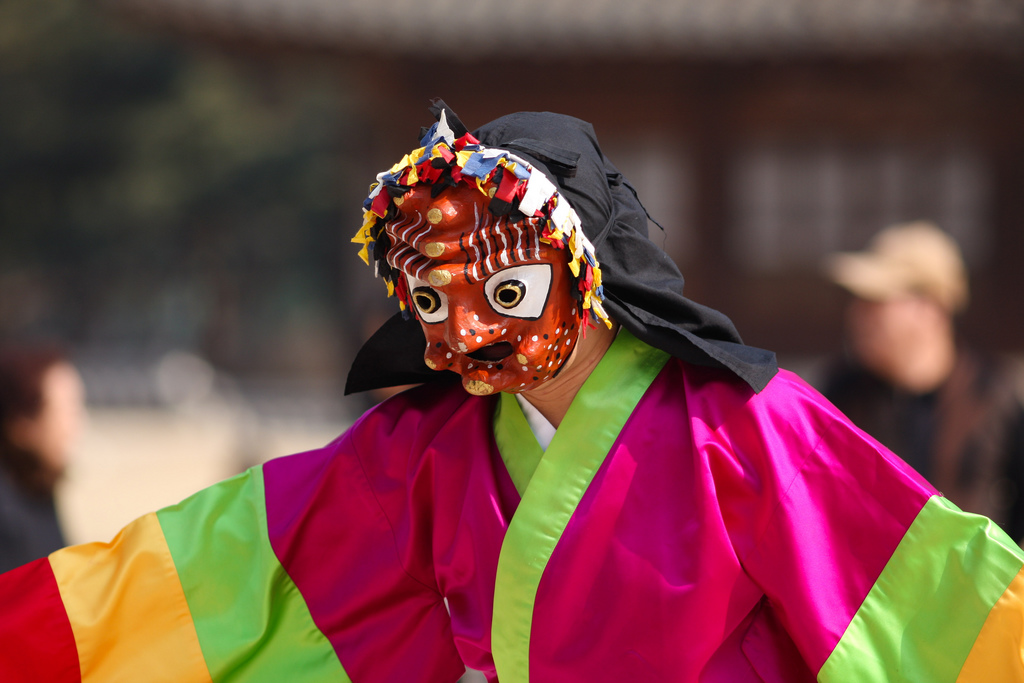
Talchum is a form of mask dance drama that combines music, movement, dialogue and humour.
Performers represent familiar social characters, sometimes exaggerating their appearance and behaviour.
The resulting performances can be lively, playful and openly critical.
Traditional stories frequently question social hierarchy, hypocrisy and abuses of authority.
Powerful figures may be mocked.
Characters who normally command respect can become objects of ridicule.
The masks help create this freedom.
By presenting recognisable social types rather than specific individuals, performers can communicate criticism through comedy.
The audience also plays an important role.
Spectators respond with laughter, cheers and comments, becoming active participants in the performance.
Unlike theatrical traditions requiring elaborate permanent stages, talchum can be performed in open communal spaces.
Its flexibility has helped connect it closely with festivals and local celebrations.
In 2022, UNESCO recognised talchum as part of humanity's intangible cultural heritage.
The designation acknowledged its importance as a living tradition combining artistic expression, social commentary and community participation.
When Humour Becomes Cultural Power
The significance of Korean mask dance extends beyond entertainment.
Humour can provide a powerful way to question established expectations.
A character representing authority may behave foolishly.
A supposedly respectable figure might reveal hypocrisy.
A socially marginalised person may demonstrate greater wisdom than somebody with a higher position.
Through exaggeration, performers allow audiences to reconsider familiar relationships.
The mask creates distance between the individual actor and the character being criticised.
It also establishes a shared visual language.
Audiences recognise the types of characters being presented and understand the social ideas behind their behaviour.
Different regions maintain distinctive variations of talchum, including their own masks, music and performance styles.
These differences are important.
The tradition is not one unchanging performance repeated identically throughout Korea.
It is a family of related cultural practices shaped by local communities.
And its continued vitality depends on people learning, performing and adapting those practices for new generations.
Mexico: The Mask Becomes a Hero
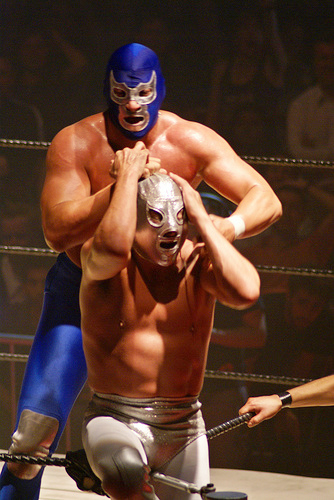
In Mexico, masks have acquired an extraordinary identity through lucha libre, the country's distinctive form of professional wrestling.
Its performers, known as luchadores, combine athletic skill with theatrical characters and dramatic storytelling.
Matches can feature elaborate rivalries, spectacular acrobatics and sharply defined personalities.
The masks are central to this visual culture.
Some feature simple geometric shapes.
Others incorporate elaborate patterns, bright colours and designs inspired by animals or fantastical characters.
Each helps establish the identity of the performer.
A wrestler may wear the same distinctive design for years, making it instantly recognisable to audiences.
The mask becomes almost like a personal emblem.
It appears on posters, photographs, merchandise and promotional artwork.
Yet its meaning extends beyond branding.
Within lucha libre, the mask can represent honour, reputation and the identity a performer has built inside the ring.
In certain matches, wrestlers risk losing their masks.
The prospect of revealing the person behind the character can become one of the most dramatic moments in the sport.
What might appear to be an ordinary piece of fabric carries enormous symbolic importance.
The Legend of El Santo
Few figures demonstrate the cultural power of the wrestling mask more clearly than El Santo.
Born Rodolfo Guzmán Huerta in 1917, he became one of Mexico's most celebrated professional wrestlers.
His silver mask established an instantly recognisable identity.
But his influence extended far beyond the ring.
Beginning in the middle of the twentieth century, El Santo appeared in comic books and films, becoming a heroic character who confronted criminals, monsters and supernatural enemies.
His image connected sport with popular entertainment.
The silver mask appeared across different media, creating a figure familiar to audiences who might never have attended a wrestling match.
El Santo became an enduring symbol of Mexican popular culture.
His appeal demonstrates how a mask can transform a performer into something approaching a fictional character while remaining connected to a real person.
The mask did not merely hide Rodolfo Guzmán Huerta.
It helped create El Santo.
And that identity became larger than any single performance.
Today, his legacy is preserved through exhibitions, photographs, film material and museum collections.
The silver mask remains one of the most recognisable objects in the history of Mexican entertainment.
A Mask Is Never Just an Object
Consider the enormous differences between these traditions.
The Venetian bauta provides anonymity.
A Noh mask helps an actor embody a character through restrained movement.
Korean talchum uses exaggerated faces to support humour and social criticism.
A lucha libre mask establishes an identity that can become inseparable from a performer's public life.
The materials, appearances and purposes vary considerably.
Yet the mask is never meaningful through its physical design alone.
Its significance develops through the customs surrounding it.
A beautifully carved Noh mask placed inside a museum can be appreciated as an example of craftsmanship.
But its theatrical meaning becomes fully apparent during performance.
Similarly, a Mexican wrestling mask may appear decorative when displayed on a shelf.
Inside the ring, it becomes part of a complex relationship between performer, audience and tradition.
The cultural context gives the object its power.
Without that context, much of its meaning can be lost.
The People Who Make the Masks
Behind many masking traditions are skilled craftspeople whose work contributes directly to their survival.
In Venice, specialist mask makers continue producing traditional and contemporary designs using techniques involving moulding, painting and decoration.
In Japan, Noh mask carving requires a sophisticated understanding of wood, proportion and surface finishing.
The smallest changes in shape can influence how a mask appears under stage lighting.
Korean mask-making traditions involve different materials and approaches according to the region and form of performance.
Mexican wrestling masks require another kind of expertise.
They must establish a recognisable visual identity while accommodating the physical demands of an athletic performance.
The craft is both artistic and practical.
These different traditions remind us that cultural heritage depends on people who make things, not only those who perform with them.
Knowledge passes between generations through instruction, observation and repeated practice.
The finished object is only one part of that process.
The skills required to create it are equally important.
The Desire to Become Somebody Else
Masks have a particular fascination because they allow us to imagine another version of ourselves.
For a performer, the transformation may be part of a carefully established artistic tradition.
For somebody attending a celebration, it might offer a temporary opportunity to behave differently.
For a wrestler, it can establish a public identity maintained over an entire career.
The experience is not identical across these circumstances.
But it reveals something about how identity works.
We often think of identity as something stable and entirely personal.
Yet the way we present ourselves changes according to our surroundings.
We behave differently at work, among friends or within unfamiliar social environments.
Clothing, language and behaviour all contribute to these changes.
A mask makes that transformation visible.
It draws a clear boundary between the familiar person and the character or role being presented.
And because the transformation is so immediate, it can be especially powerful.
What Happens When the Mask Comes Off?
The removal of a mask can be just as significant as putting it on.
In theatre, the performer returns to their ordinary identity.
At Carnival, the temporary freedom of disguise comes to an end.
In lucha libre, losing a mask can represent a dramatic change in a wrestler's career.
These moments reveal the tension between concealment and recognition.
The mask allows somebody to become less identifiable.
But it can also create a second identity that is more recognisable than the person underneath.
El Santo's silver mask offers perhaps the clearest example.
His concealed face became the foundation of an image known throughout Mexico.
The public recognised the mask even when the person behind it remained largely unseen.
An object intended to conceal identity had created one of the strongest identities in popular culture.
The Faces We Choose to Show
Today, questions about identity and public appearance have acquired new forms.
Digital profiles, avatars and online personas allow people to present carefully selected versions of themselves.
These are not equivalent to historic masking traditions, each of which has its own cultural meaning.
But they suggest that the relationship between appearance and identity remains deeply relevant.
People continue to experiment with how they are recognised.
Sometimes they seek visibility.
Sometimes anonymity.
And sometimes the freedom to behave differently from the expectations attached to their everyday lives.
Masks provide a particularly striking historical expression of those desires.
Across centuries, they have allowed performers to communicate emotion, communities to question authority and individuals to explore unfamiliar identities.
Their continued importance suggests that the fascination is unlikely to disappear.
More Than a Hidden Face
A Venetian mask, a Japanese Noh mask, a Korean theatrical mask and a Mexican wrestling mask might look completely different when placed beside one another.
Their histories are distinct.
Their purposes are not interchangeable.
Yet each demonstrates how an ordinary human face can become the starting point for extraordinary cultural expression.
Through concealment, a person can become mysterious.
Through performance, a still expression can communicate emotion.
Through humour, a mask can help challenge authority.
And through popular culture, a simple piece of fabric can become a symbol recognised by millions.
The power does not come from hiding the face alone.
It comes from everything that the mask allows people to imagine.
Perhaps that is why these traditions remain so fascinating.
They remind us that identity is more complicated than appearance.
And sometimes, we learn something unexpected about human behaviour when the familiar face is no longer there.
The mask conceals.
But the culture behind it reveals.
Further Reading
More Than Water: The Culture of the Public Bath
From Japanese sentō and Ottoman hammams to Finnish saunas and Icelandic swimming pools, exploring why the simple act of bathing has brought communities together for centuries.
By Culturefold Editors
The Places That Bring Us Together
Cafés, libraries and everyday gathering places rarely appear in guidebooks, yet they sustain community, belonging and cultural identity.
By Culturefold Editors
The Power of the Small Press
How handmade magazines, underground publications and independent voices helped shape culture — and why the humble zine still matters.
By Culturefold Editors