
Objects of Hope: Why We Carry Lucky Charms
From Japan's beautifully woven omamori to the blue glass eyes of Türkiye and the tiny silver offerings of Mexico, exploring why ordinary objects have carried extraordinary meaning across generations.
Before an important examination, somebody places a small fabric charm inside their bag.
A driver hangs a blue glass ornament from the rear-view mirror.
Another person touches a pendant before leaving home, repeating a gesture learned from a parent many years earlier.
These actions may appear insignificant.
The objects themselves are often inexpensive, small enough to fit inside a pocket or hang from a keyring.
Yet their owners may attach considerable meaning to them.
For centuries, people have carried objects associated with good fortune, protection and personal hope.
Some belong to established religious traditions. Others reflect regional customs, family beliefs or habits passed quietly between generations.
They take remarkably different forms.
Embroidered pouches, pieces of jewellery, painted symbols and small metal figures can all become objects through which people express their hopes for the future.
Their significance cannot be explained entirely through their appearance.
A charm is meaningful because of the history, belief or personal experience attached to it.
And although the traditions surrounding them differ enormously, they reveal something familiar about human life.
We cannot control everything that happens to us.
But sometimes, carrying a small object makes uncertainty feel a little easier to face.
Japan: A Little Protection to Carry
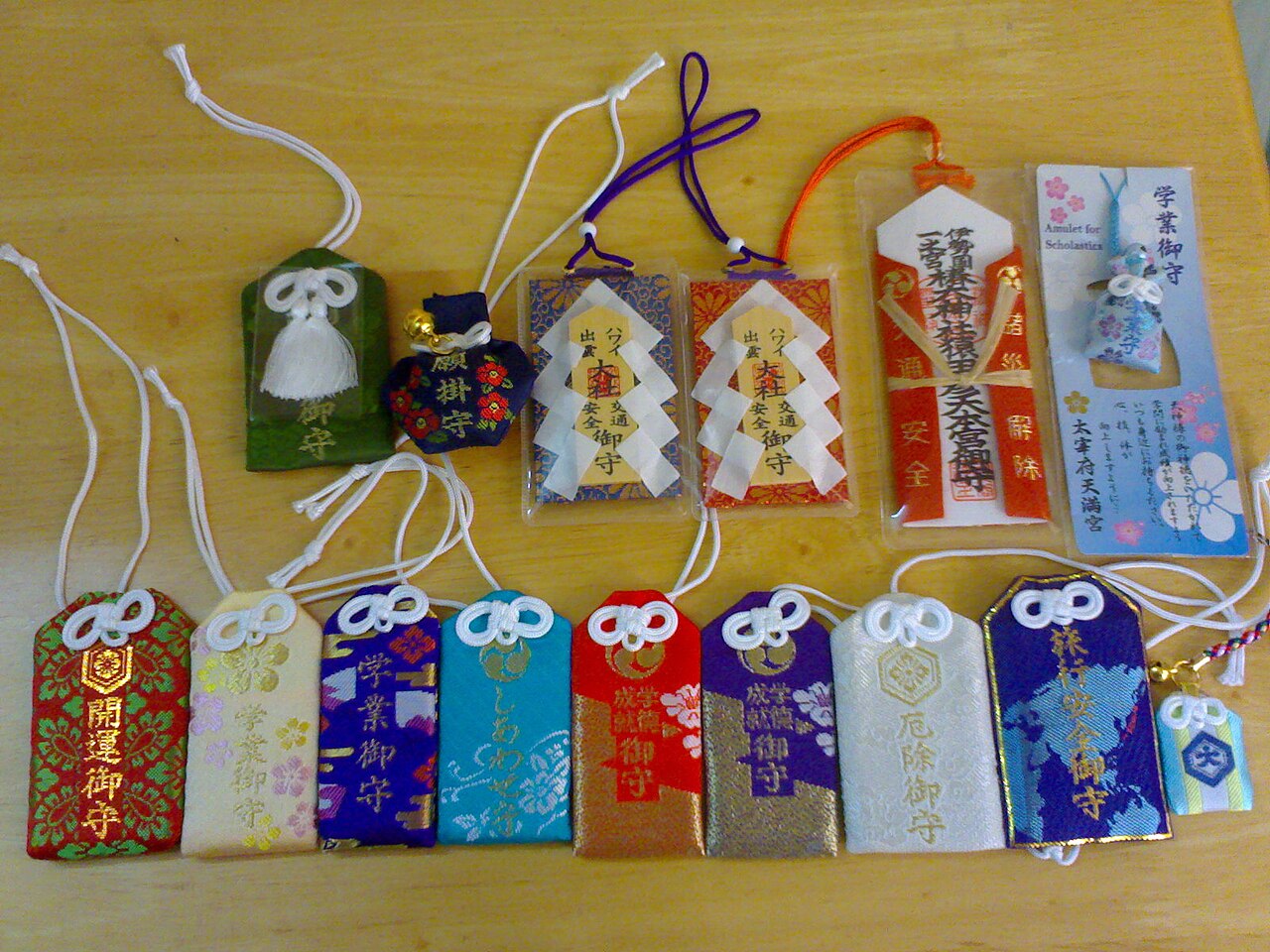
At Shinto shrines and Buddhist temples across Japan, visitors encounter colourful objects known as omamori.
These protective amulets frequently take the form of small fabric pouches decorated with intricate patterns and Japanese characters.
Some are red or gold.
Others feature subtle colours, embroidered flowers or designs associated with a particular shrine.
Their purpose varies.
An omamori may be associated with safe travel, success in education, good health, family wellbeing or protection against misfortune.
Students sometimes carry charms when preparing for examinations.
Drivers may keep one in a vehicle.
Travellers attach them to bags.
Although the exterior can be beautiful, the most significant element is often concealed inside.
The pouch traditionally contains a sacred inscription or object associated with the shrine or temple.
It is generally considered inappropriate to open it.
The charm's value lies partly in keeping that protected interior intact.
This creates an interesting relationship between the visible and invisible.
The colourful fabric communicates the object's purpose and origin.
But its spiritual meaning is not something intended to be inspected like an ordinary manufactured product.
The omamori becomes a small connection between the person carrying it and the religious institution from which it came.
The Meaning of a Gift
Omamori are not always acquired for personal use.
They are also given to other people.
A parent might provide one to a child preparing for an important examination.
A friend could offer a travel-safety charm before a long journey.
A family member might choose one associated with health or wellbeing.
In these circumstances, the object communicates something beyond its traditional religious significance.
It becomes an expression of care.
The person receiving it understands that somebody has considered the uncertainty surrounding an important moment in their life.
Even if the recipient does not share every aspect of the underlying belief, the gesture may remain meaningful.
The charm represents a wish for things to go well.
Japanese customs surrounding omamori also reflect the importance of renewal.
Some people return older charms to shrines or temples, often around the New Year, where they can be respectfully disposed of through established practices.
The object is not necessarily intended to remain unchanged or be kept forever.
Its relationship with the owner may belong to a particular period of life.
An examination passes.
A journey ends.
A new year begins.
And another small object may accompany whatever comes next.
Türkiye: The Eye That Watches Back
Travel through Türkiye and another distinctive symbol appears almost everywhere.
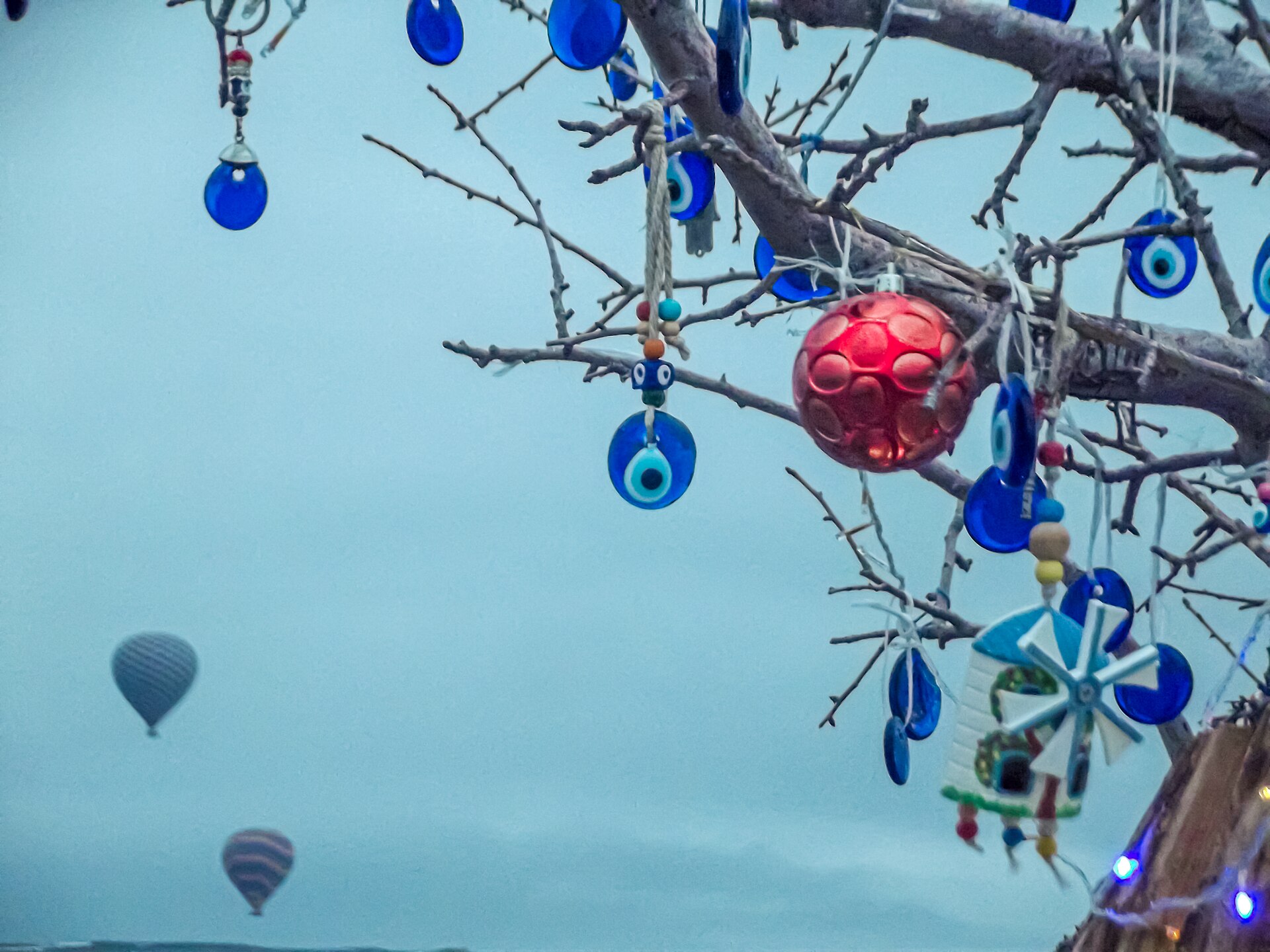
A circular blue glass ornament, decorated with concentric rings of white, pale blue and dark blue.
It resembles an eye looking directly towards the viewer.
Known as a nazar boncuğu, it is traditionally associated with protection against the evil eye.
The belief in the evil eye exists across many cultures, particularly around the Mediterranean, the Middle East and neighbouring regions.
Its meanings and customs vary.
Broadly, it involves the idea that a harmful gaze, sometimes associated with envy or excessive admiration, may bring misfortune.
The blue glass charm is used by some people as a protective symbol against that possibility.
It may hang inside a home, appear above a doorway or be attached to a vehicle.
Smaller versions become necklaces, bracelets and other personal accessories.
The design is remarkably direct.
An eye-like object is intended to respond symbolically to the danger of another gaze.
Its visual simplicity has helped make it instantly recognisable.
But behind the familiar appearance lies a tradition of craftsmanship.
The People Who Make the Blue Glass
Traditional nazar beads are produced through specialised glassmaking techniques.
In parts of western Türkiye, particularly around İzmir, artisans continue working with molten glass to create the familiar concentric patterns.
The process requires skill and careful timing.
Glass is heated until it becomes workable.
Different colours are added and shaped to produce the layered eye motif.
The completed object gradually cools into its final form.
Although mass-produced versions are now widely available, traditional glassmaking remains an important aspect of the bead's cultural history.
Villages such as Nazarköy and Görece have established associations with the craft.
The techniques have traditionally passed between experienced makers and apprentices.
This reveals another dimension of the charm.
Its significance is not limited to the beliefs of the person who owns it.
It also exists in the knowledge required to manufacture it.
An object associated with protection can simultaneously be an example of regional craftsmanship.
Its visual identity connects the wearer with a much longer tradition of making things by hand.
Italy: The Little Red Horn
In parts of Italy, particularly southern Italy, a different protective object has become familiar.
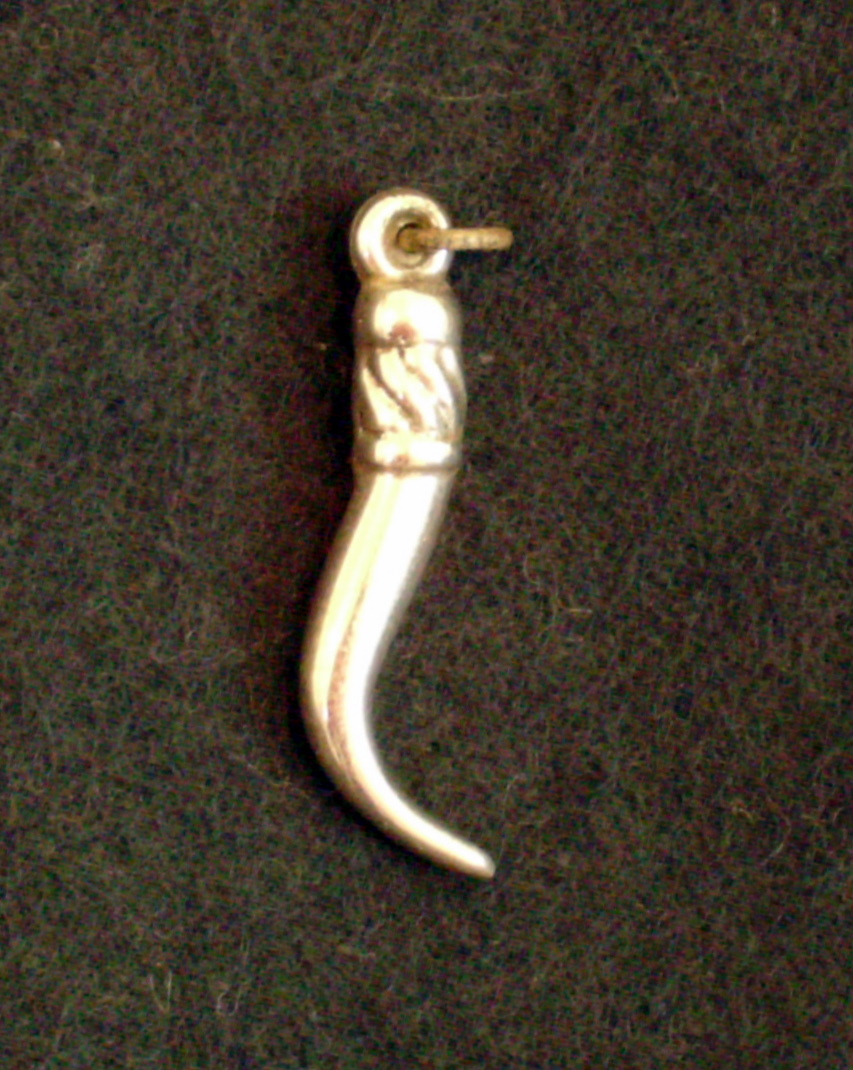
The cornicello is a small horn-shaped charm, often made from red coral, gold, silver or other materials.
Its curved, tapering form resembles a tiny horn or chilli pepper.
The charm is commonly associated with protection against bad luck and the evil eye.
Some people wear it as jewellery.
Others receive one as a gift or keep it among personal possessions.
The tradition is closely connected to southern Italian folklore, although its historical origins and interpretations are complex.
Historic examples demonstrate that horn-shaped protective amulets were used long before they became fashionable contemporary accessories.
The Science Museum Group in Britain, for example, holds an Italian silver horn-shaped amulet dated to the eighteenth century and associated with protection against the evil eye.
What makes the cornicello particularly interesting is how an object connected to folk belief can also become a symbol of regional identity.
For some owners, it carries genuine protective significance.
For others, it represents family tradition, affection or a connection with southern Italian heritage.
A person may continue wearing one without necessarily accepting every belief historically associated with it.
The meaning changes.
The object remains.
Mexico: Tiny Symbols of Gratitude
In Mexico, small metal objects known as milagros demonstrate another relationship between personal hope and material culture.
The Spanish word milagro means miracle.
These charms often take the form of miniature hearts, arms, legs, eyes, animals or other recognisable objects.
Many are made from thin metal.
They may be attached to religious images, crosses, shrines or altars.
Unlike an ordinary good-luck pendant, a milagro is frequently connected to a particular prayer or expression of thanks.
Someone might leave a small metal heart when praying for a loved one.
An image representing part of the body may relate to a request for healing.
Other forms can express gratitude for an outcome that the person associates with divine help.
The tradition reflects a combination of European Catholic votive practices and the wider cultural history of Mexico.
Its meaning depends on the circumstances in which the object is used.
A collection of milagros displayed together can be visually extraordinary.
Dozens of tiny metal shapes catch the light.
Hearts overlap with figures, hands and animals.
The arrangement can resemble an elaborate artwork.
Yet the objects are not necessarily intended as decoration.
Each may represent an individual concern, promise or act of gratitude.
The collection becomes a record of private experiences made visible through small physical forms.
Objects That Speak Without Words
One of the fascinating qualities of these traditions is how effectively objects can communicate meaning without requiring a written explanation.
An omamori represents a particular wish or form of protection.
A blue glass eye communicates a familiar belief about harmful attention.
A horn-shaped pendant can express a connection with Italian cultural tradition.
A metal milagro may represent a personal request or expression of thanks.
The object becomes a form of symbolic language.
Its shape, material and context provide clues about its significance.
But this language is not universal.
A symbol that feels immediately familiar to somebody raised within a particular tradition may appear mysterious to another person.
Even within the same community, meanings can differ.
One person may consider a charm spiritually important.
Another may value it primarily as a family keepsake.
A third might appreciate its craftsmanship or visual appearance.
The physical object does not change.
Its meaning depends on the relationship people develop with it.
Why We Give Meaning to Things
Human beings have always attached emotional significance to objects.
A photograph can remind us of somebody we love.
A watch inherited from a parent may become more valuable through its history than through its materials.
An ordinary ticket kept from a memorable journey can preserve a moment that would otherwise be difficult to revisit.
Lucky charms belong partly to this wider relationship between memory, emotion and physical possessions.
But they also address something particularly difficult.
Uncertainty.
People encounter situations whose outcomes cannot be guaranteed.
Examinations, journeys, illnesses and important life decisions can all produce anxiety.
A familiar ritual or meaningful object may provide a sense of reassurance.
This does not demonstrate that the charm itself can alter external events.
Its cultural importance lies in what people believe, practise and experience.
The object gives a hope or concern a physical form.
Something abstract becomes something that can be held.
And that can make the object feel personally significant.
When Tradition Becomes Fashion
Today, symbols historically associated with protection frequently appear in jewellery, clothing and interior decoration.
Blue eye motifs are used on necklaces and bracelets.
Horn-shaped pendants appear in contemporary accessory collections.
Traditional patterns are reproduced on bags, keyrings and decorative objects.
Their visual appeal is easy to understand.
Many are small, distinctive and immediately recognisable.
But their commercial popularity introduces a complicated relationship between cultural heritage and fashion.
An object that carries religious or regional significance may be purchased primarily because somebody likes its appearance.
Sometimes, this creates greater awareness of a tradition.
It can also support artisans who continue producing objects through established techniques.
At other times, mass-produced products may be separated from their origins entirely.
The symbol survives while the people and beliefs behind it become less visible.
Understanding the cultural context does not mean that every object must be treated in precisely the same way by every person.
Traditions change.
People adapt familiar designs.
New meanings develop.
But recognising where an object comes from adds depth to the way we appreciate it.
A beautiful charm can also be an opportunity to learn something about the community that gave it meaning.
The Difference Between Luck and Hope
It is tempting to place every protective object into one category.
Lucky charms.
But that description can overlook important distinctions.
An omamori may be closely connected to a religious institution and established devotional practices.
A milagro can express a specific request or gratitude within Catholic tradition.
A nazar bead reflects beliefs about the evil eye and protection against harm.
A cornicello may carry folk significance, family history or a sense of regional belonging.
These practices are not interchangeable.
They developed through different cultural circumstances and continue to mean different things to the people who use them.
Yet there is a shared human quality worth recognising.
Each offers a way of responding to circumstances that may feel beyond personal control.
Sometimes that response takes the form of religious belief.
Sometimes it is a familiar family custom.
And sometimes it is simply the comfort of carrying something received from somebody important.
Hope can be expressed in many ways.
Not all of them require words.
The Things We Choose to Keep
Consider the objects people carry through an ordinary day.
Keys, cards, phones and other practical possessions occupy most of the available space.
But mixed among them may be something with no obvious functional purpose.
A small pendant.
A faded ribbon.
A charm attached to a bag.
Its material value might be insignificant.
It may not be particularly rare or beautifully made.
Yet its owner continues carrying it, year after year.
Perhaps it was given by a grandparent.
Perhaps it accompanied an important journey.
Or perhaps it belongs to a tradition that has been part of family life for generations.
These small objects reveal something interesting about cultural continuity.
Traditions do not survive only through books, monuments or formal institutions.
They are also preserved through ordinary habits.
A parent gives a child a charm.
A family repeats a familiar custom.
An artisan teaches somebody how to create an object whose design has remained recognisable for centuries.
The practice continues because people find meaning in it.
More Than Good Fortune
The cultural history of lucky charms is really a history of the extraordinary meanings people attach to ordinary things.
A fabric pouch in Japan.
A glass bead in Türkiye.
A small horn-shaped pendant in Italy.
A metal heart left at a shrine in Mexico.
Their materials and appearances are different.
So are the beliefs and customs surrounding them.
Yet each demonstrates how a modest physical object can become connected to something much larger.
Faith.
Memory.
Identity.
Affection.
The desire to protect somebody we love.
Or the simple hope that an uncertain future will bring something good.
We cannot know what tomorrow will hold.
That uncertainty has always been part of human life.
But across cultures and generations, people have found ways to give their hopes a shape.
Sometimes it is a prayer.
Sometimes a tradition.
And sometimes, it is something small enough to carry in a pocket.
Further Reading
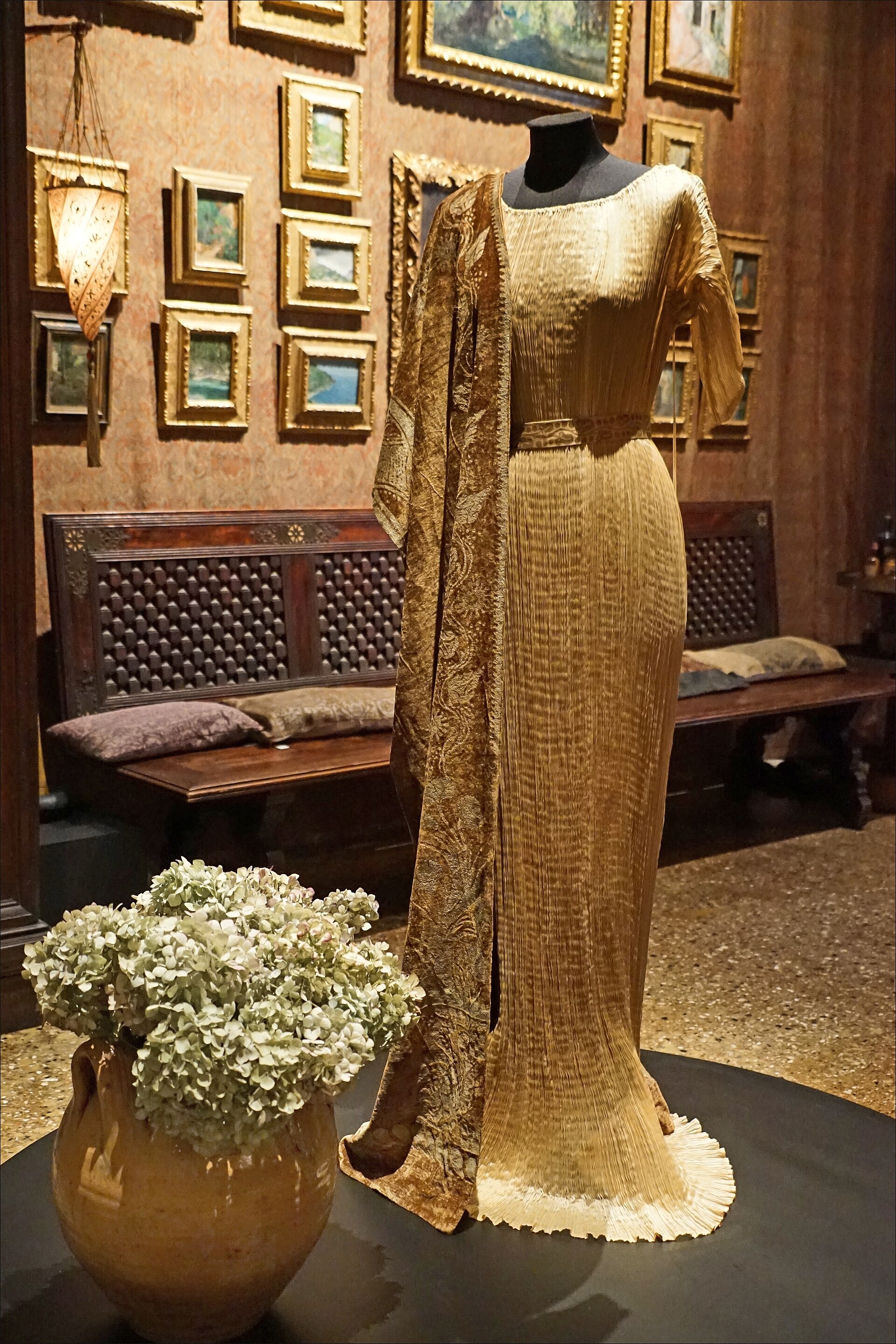
The Art of the Fold: How Pleating Transformed Fashion
Explore the history of pleating in fashion, from ancient Egyptian linen and Fortuny's Delphos dress to Madame Grès and Issey Miyake.
By Culturefold Editors
Behind the Mask: The Many Faces of Identity
From the mysterious streets of Venetian Carnival to Japanese theatre and the colourful world of Mexican wrestling, exploring why masks have helped people transform, perform and express themselves for centuries.
By Culturefold Editors
More Than Water: The Culture of the Public Bath
From Japanese sentō and Ottoman hammams to Finnish saunas and Icelandic swimming pools, exploring why the simple act of bathing has brought communities together for centuries.
By Culturefold Editors