
The Art of the Fold: How Pleating Transformed Fashion
From the linen garments of ancient Egypt to the sculptural dresses of Mariano Fortuny and Issey Miyake, exploring how a simple fold became one of fashion's most extraordinary techniques.
Take a piece of fabric and place it on a table.
Its surface is flat. Its shape is uncomplicated. There is little to suggest that it could become anything particularly extraordinary.
Now begin folding it.
A small crease introduces a change in direction. Another creates a line of shadow. Repeat the process, and the fabric gradually develops a structure of its own.
What was once a flat surface begins to acquire depth.
It expands, contracts and responds differently to movement.
This is the remarkable possibility of pleating.
For thousands of years, people have used folds to shape clothing, create volume and introduce decoration.
The technique has appeared in ancient linen garments, traditional ceremonial dress and some of the most innovative fashion collections of the modern era.
Yet its basic principle remains surprisingly simple.
A piece of material is folded into a particular arrangement.
What makes pleating fascinating is the extraordinary variety of things designers have discovered they can do with that arrangement.
A fold can create structure without adding another piece of fabric.
It can make a garment appear sculptural while allowing it to move freely.
It can transform an ordinary textile into something that seems almost architectural.
And sometimes, an entire fashion innovation begins with the decision to fold something differently.
Ancient Egypt: Fashion in Fine Linen
The history of pleating reaches back thousands of years.
In ancient Egypt, linen was one of the most important materials used for clothing.
Produced from flax, it was well suited to the country's climate and developed into a fabric closely associated with Egyptian dress.
Surviving garments demonstrate the considerable skill involved in preparing, weaving and shaping it.
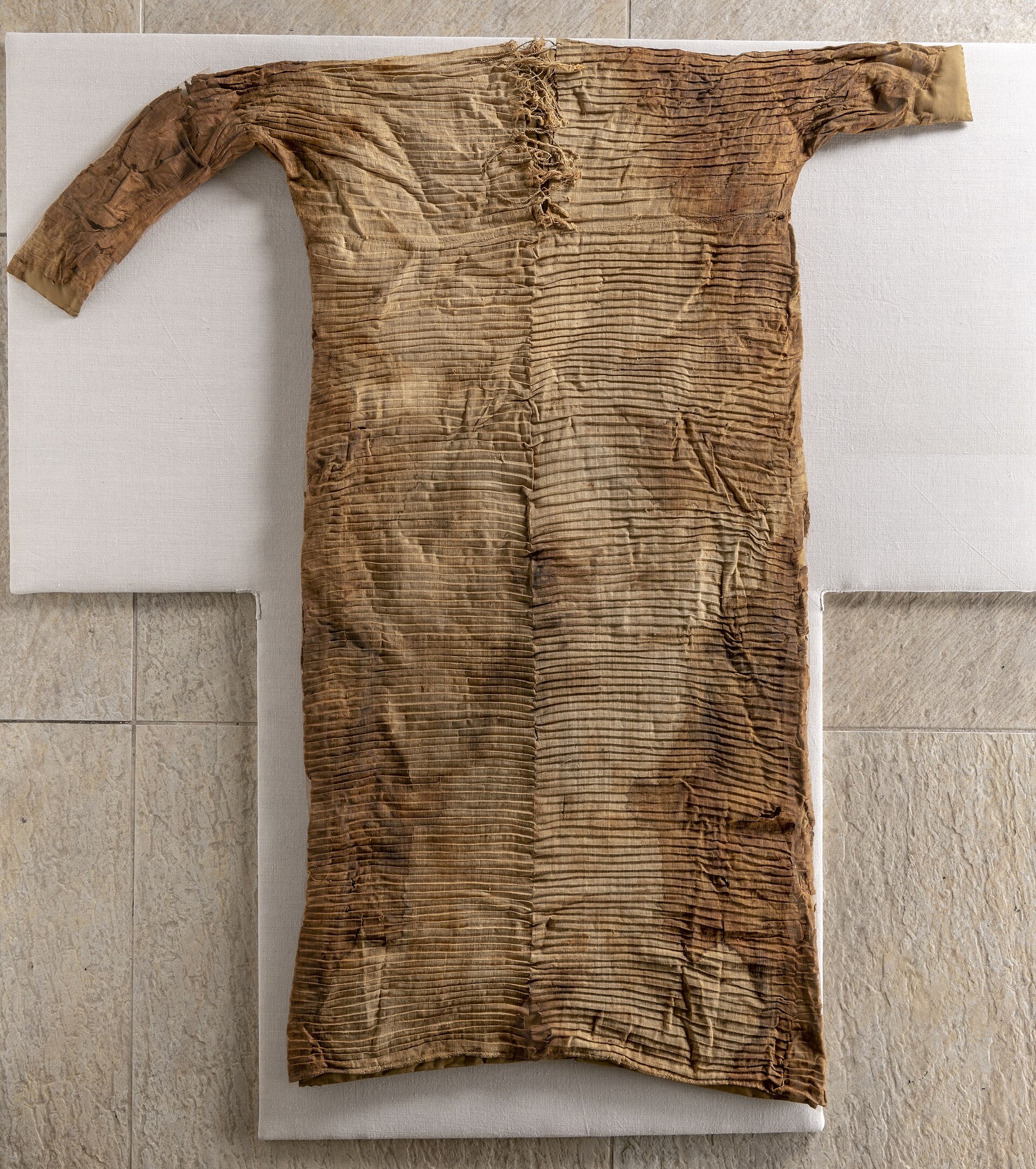
One remarkable example is the Tarkhan Dress, preserved at University College London's Petrie Museum.
Recovered from an ancient Egyptian tomb, it is among the oldest surviving woven garments.
The dress shows evidence of carefully arranged pleating around its neckline and sleeves.
Its construction reveals that clothing could be shaped and decorated through the manipulation of fabric long before modern fashion manufacturing existed.
Other surviving Egyptian garments demonstrate more extensive pleating.
The Museo Egizio in Turin holds a pleated linen tunic dating to approximately 2435–2118 BCE.
The precise techniques used to establish and maintain folds could vary.
Linen's natural properties, along with moisture, pressure and other treatments, provided opportunities to shape the material.
The result was not simply practical clothing.
Pleating could contribute visual rhythm, refinement and distinction.
Even thousands of years ago, a fold was capable of becoming a design feature.
The Beauty of Cloth in Motion
Pleating is closely related to another important element of dress: draping.
In ancient Greece, garments such as the chiton and peplos were created through arrangements of cloth wrapped, fastened and gathered around the body.
These were not always permanently pleated garments in the modern sense.
Their visual character often emerged from the natural folds created by fabric, gravity and movement.
The resulting forms became important subjects within Greek sculpture.
Carved stone figures appear dressed in garments that flow around the body.
Deep folds create shadows.
Thin sections suggest the shape beneath.
The sculptor transforms rigid stone into something that appears soft and flexible.
This visual language would influence designers many centuries later.
The appeal was not simply the resemblance to ancient clothing.
It was the relationship between structure and movement.
A garment could appear elegant without relying entirely on rigid construction.
The fabric itself could create the form.
And the body could influence how that form changed.
Venice: The Secret of the Delphos Dress
At the beginning of the twentieth century, an extraordinary experiment took place in Venice.
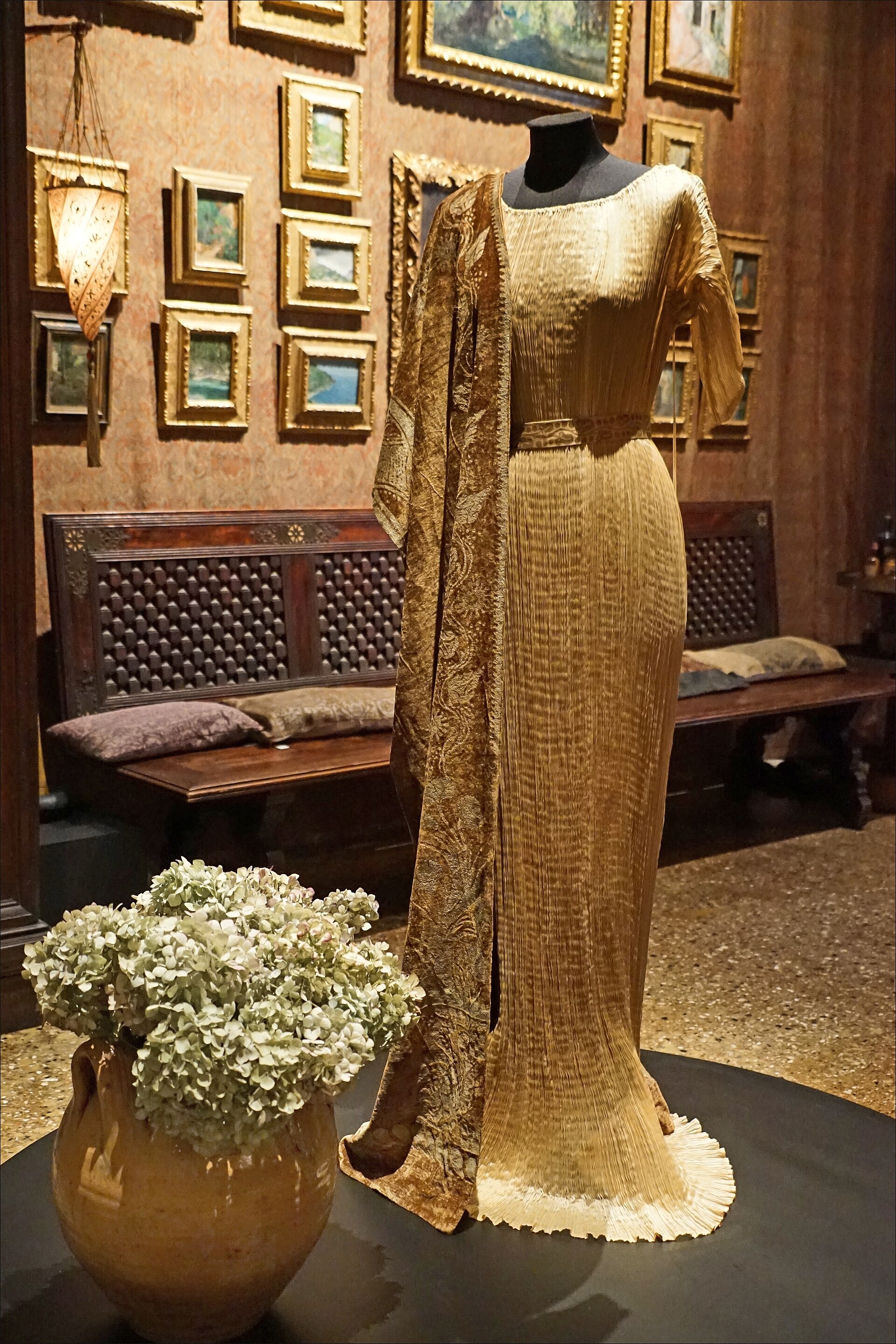
Artist and designer Mariano Fortuny and his collaborator Adèle Henriette Nigrin developed a dress that challenged established ideas about fashionable clothing.
Known as the Delphos, the gown was introduced around 1909.
Its form was remarkable.
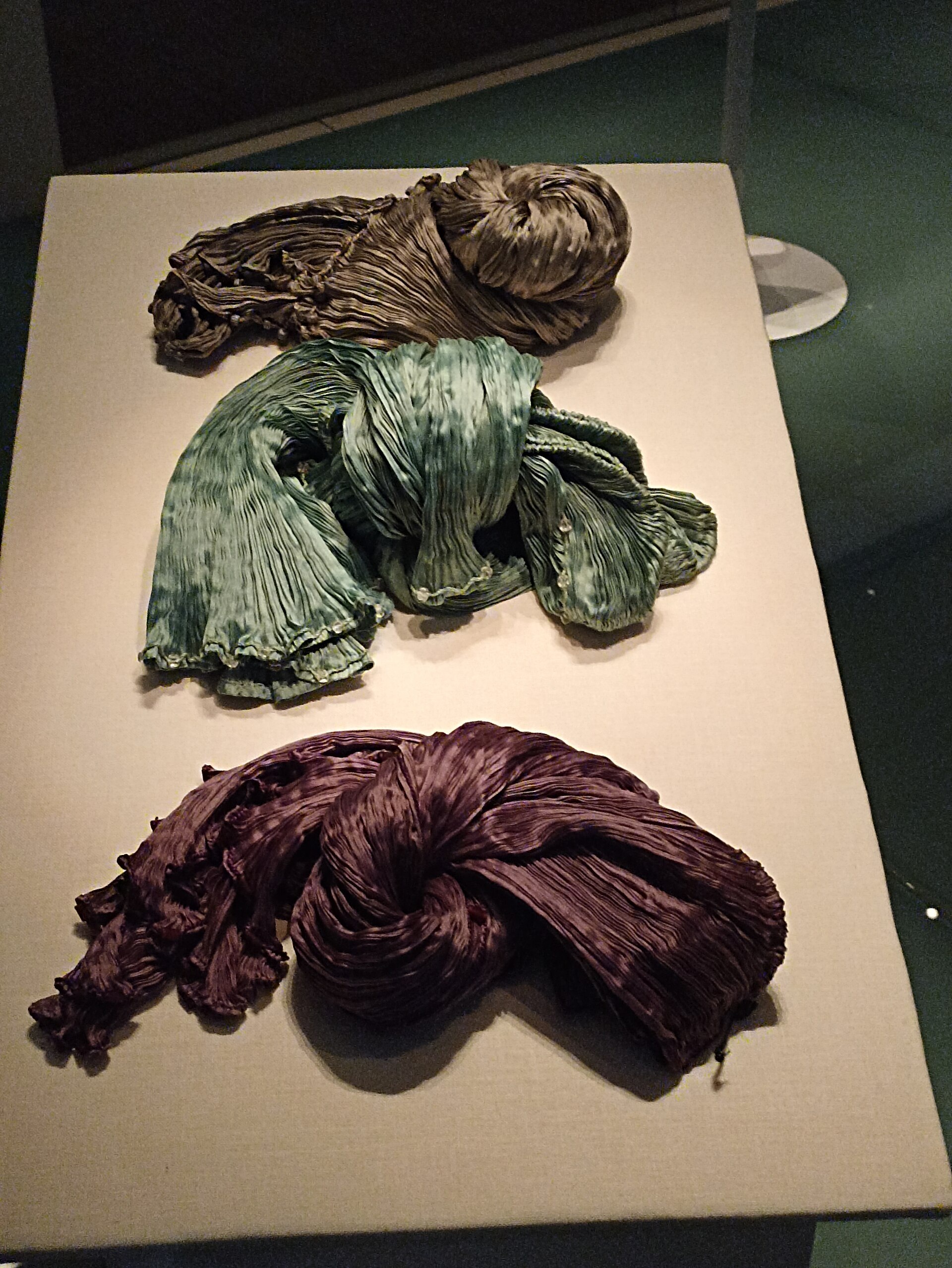
Fine silk was arranged into exceptionally narrow, irregular pleats running vertically along the garment.
The resulting dress appeared almost like a column of shimmering material.
It followed the body without relying on the elaborate tailoring and restrictive structures associated with much fashionable dress of the period.
The pleats allowed the fabric to expand and contract.
When the wearer moved, the surface responded.
Light travelled across the tiny ridges, creating constantly changing highlights and shadows.
The effect was extraordinary.
The dress seemed simultaneously simple and incredibly sophisticated.
Its construction required technical knowledge that remained closely guarded.
Although Fortuny patented aspects of the process, the complete method used to create the distinctive vertical pleats was never fully disclosed.
For decades, the precise technique remained part of the mystique surrounding the gown.
The Woman Behind the Innovation
The Delphos has frequently been discussed primarily through the work of Mariano Fortuny.
But the contribution of Adèle Henriette Nigrin deserves equal attention.
Research documented by the Metropolitan Museum of Art identifies Nigrin as an inventor of the pleating method.
Fortuny's 1909 patent specifically acknowledged her contribution.
The detail matters.
Fashion history has often celebrated the names associated with particular houses while giving less attention to collaborators responsible for important technical developments.
The Delphos was not simply the result of an artistic vision.
It required experimentation with materials, processes and the physical behaviour of silk.
The finished dress was beautiful because its construction was extraordinary.
Originally associated with informal dressing at home, the Delphos later became important within evening wear.
Its elegance appealed to women interested in clothing that offered a different relationship with the body.
The dress was not revolutionary because it introduced an enormous new silhouette.
Its innovation lay in the behaviour of the fabric.
A series of tiny folds transformed the entire experience of wearing it.
The Pleat as a Form of Identity
Not every pleated garment belongs to the world of experimental couture.
Some have become powerful expressions of cultural identity.
The Scottish kilt offers a familiar example.
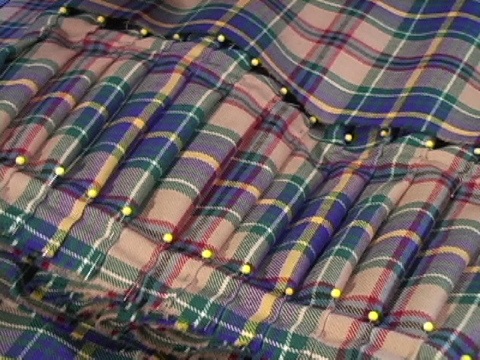
Its history developed from earlier forms of Highland dress, including the belted plaid, in which a substantial length of woollen cloth was gathered and arranged around the body.
The smaller, tailored kilt emerged during the eighteenth century.
Over time, stitched pleats became an important part of its recognisable construction.
The folds provided fullness and allowed the garment to move.
But their significance eventually extended beyond practical considerations.
Combined with tartan patterns, the kilt became associated with Scottish identity, military traditions, ceremonial occasions and changing expressions of national culture.
Its history also involved reinvention.
A garment rooted in particular regional circumstances became a wider symbol of heritage.
During the nineteenth and twentieth centuries, it acquired new meanings through formal dress, public celebrations and popular fashion.
Today, the kilt can appear in traditional ceremonies or contemporary styling.
The pleated structure remains recognisable, even as the circumstances surrounding it change.
This reveals another possibility of clothing design.
A particular construction technique can become part of a community's visual identity.
Madame Grès: Sculpting With Fabric
In twentieth-century Paris, another designer developed an extraordinary relationship with pleating.
Madame Grès, born Germaine Émilie Krebs, became celebrated for dresses that appeared almost sculptural.
Her work was closely associated with silk jersey and the careful manipulation of fabric around the body.
Rather than beginning with elaborate decorative elements, Grès frequently developed garments through draping, gathering and pleating.
Her gowns often contained exceptionally fine folds arranged across the bodice.
The fabric might fit closely around the torso before falling into softer, more generous forms below.
The effect was both architectural and fluid.
A fitted upper section established structure.
The lower fabric introduced movement.
Grès was fascinated by classical forms, and her work frequently recalled the draped garments represented in ancient sculpture.
But the construction was distinctly modern.
She manipulated fabric directly, allowing its weight, flexibility and texture to influence the design.
In some garments, extensive lengths of silk were carefully arranged with surprisingly few interruptions.
The pleats performed much of the work that conventional tailoring might otherwise have achieved through numerous separate pieces.
Her dresses demonstrated that craftsmanship could be expressed through restraint.
The complexity existed within the folds.
When Fabric Becomes Architecture
There is a close relationship between pleating and architectural thinking.
Both involve the arrangement of materials to create form, stability and space.
A flat sheet can become significantly more structured when folded.
Repeated ridges introduce changes in how a surface responds to pressure.
In clothing, these qualities can influence both appearance and movement.
A knife pleat folds fabric consistently in one direction.
A box pleat creates fullness through folds arranged towards or away from one another.
Accordion pleats produce a repeated pattern that can open and close as the garment moves.
Each technique creates different visual and practical possibilities.
The choice depends on the fabric, the desired silhouette and how the clothing will be worn.
A pleated skirt can expand during movement before returning towards its original arrangement.
A finely pleated dress can accommodate the shape of the body without relying entirely on fitted seams.
A structured pleated panel can create dramatic volume.
The technique allows designers to control the relationship between a flat material and a three-dimensional form.
And few designers explored those possibilities more radically than Issey Miyake.
Issey Miyake: A Different Way of Making Clothes
During the late twentieth century, Japanese designer Issey Miyake developed an approach to pleating that transformed modern fashion.
Rather than treating folds simply as decorative details, Miyake explored how they could influence the construction and everyday use of garments.
His experiments became particularly influential during the late 1980s and early 1990s.
In 1993, he introduced the Pleats Please line.
The concept was remarkable because it reversed a familiar manufacturing process.
Traditionally, fabric might be pleated before being cut and assembled into clothing.
Miyake developed a system in which garments were first cut and sewn at considerably larger dimensions than their intended finished size.
They were then carefully arranged, folded and placed between sheets of paper.
Heat-setting processes established permanent pleats within the completed garments.
The result was a collection of lightweight clothing capable of stretching and responding to movement.
The pieces could be washed and allowed to dry while retaining their distinctive forms.
They were practical.
But they were also visually extraordinary.
Clothing That Changes With the Body
The most fascinating quality of Pleats Please was not simply its unusual manufacturing process.
It was the way the finished clothing behaved.
A garment could appear compact when laid flat.
Put it on, and its pleated structure expanded to accommodate the wearer.
The material responded to movement, creating new arrangements of folds and shadows.
Unlike tightly structured garments designed around a relatively fixed silhouette, the pleated pieces allowed considerable freedom.
Miyake's approach reflected a wider interest in the relationship between fabric, the body and the space around it.
A garment did not need to imitate the body's exact shape before being worn.
Its form could emerge through use.
The resulting pieces sometimes resembled abstract sculptures when displayed on mannequins.
Bright colours and unusual proportions reinforced their experimental character.
Yet the clothing was intended to be worn in ordinary life.
This combination was central to its significance.
Miyake demonstrated that technical innovation and practical comfort could support extraordinary artistic expression.
The clothes were sophisticated without necessarily being restrictive.
The Value of Movement
Pleating changes the way a garment behaves when somebody walks.
A flat surface may move as a relatively continuous sheet.
A pleated surface contains repeated areas that can expand, contract and create additional movement.
The effect depends on the material and construction.
Some pleats are soft and fluid.
Others remain sharply defined.
A finely pleated skirt can produce a sense of rhythm as the wearer moves.
A structured garment may open into an unexpectedly generous form before settling back into its original shape.
The relationship between stillness and movement is part of what makes pleated clothing compelling.
Photographed on a mannequin, the garment communicates one identity.
Seen in motion, it may reveal another.
The design exists through both experiences.
This also explains why pleating has remained attractive across very different periods of fashion.
It offers designers a way to control how clothing occupies space without making the form entirely rigid.
The fabric retains an element of independence.
It moves with the wearer.
But not always in precisely the same way.
Craftsmanship in a Technological Age
The history of pleating demonstrates how traditional skills and industrial technology can approach similar problems through different methods.
Fortuny and Nigrin developed an intricate process for creating exceptionally fine folds in silk.
Madame Grès relied upon extraordinary manual skill to arrange fabric directly around the body.
Miyake introduced industrial techniques that made permanently pleated clothing more practical for everyday use.
Their methods differed.
But the underlying fascination was remarkably consistent.
How can a flat piece of cloth become something more complex?
Today, designers continue exploring pleating through specialised machinery, digital pattern development and experiments with different textiles.
New approaches make it possible to achieve precise arrangements on a larger scale.
Yet the most sophisticated technique is not automatically the most appropriate.
Hand pleating allows particular forms of variation and control.
Industrial processes offer consistency and different practical advantages.
The choice depends on what the designer wishes to create.
It also depends on the experience of the person who will wear the garment.
Good clothing must exist beyond the workshop or runway.
It has to function in everyday life.
More Than Decoration
A pleat can appear to be a relatively small detail.
One fold in a skirt.
A series of ridges across a dress.
A carefully arranged section of fabric around a waist.
But its purpose can extend far beyond appearance.
Pleating can create volume without requiring a garment to remain permanently expanded.
It can introduce flexibility and movement.
It can influence fit, produce sculptural forms and establish a distinctive visual identity.
In some traditions, it becomes associated with cultural heritage.
In others, it provides opportunities for technical experimentation.
These possibilities explain why pleating has remained relevant for thousands of years.
The technique does not belong exclusively to one fashion period or a particular designer.
It has been continually reconsidered.
Its history connects ancient textiles with contemporary manufacturing.
And its future remains open to new interpretations.
The Extraordinary Possibility of a Simple Fold
The development of pleating reveals something fundamental about fashion.
Innovation does not always require an entirely new material.
Sometimes, it begins by looking differently at something familiar.
Ancient Egyptian craftspeople developed methods for shaping linen.
Fortuny and Nigrin transformed fine silk into flowing columns of fabric.
Madame Grès used carefully arranged folds to create garments that resembled sculpture.
Issey Miyake reimagined the manufacturing process itself, allowing pleated clothing to become both expressive and practical.
Each approached fabric with a different understanding of its possibilities.
Yet they were all exploring the relationship between material, form and the human body.
A piece of cloth is inherently flexible.
It can be stretched, gathered, folded and arranged.
The designer decides how those qualities should be used.
And the wearer completes the experience through movement.
Perhaps that is what makes pleating so fascinating.
It creates a structure that is never entirely static.
Even the most carefully arranged folds respond to the body, light and surrounding environment.
The garment changes without losing its identity.
And something as ordinary as a piece of fabric becomes an extraordinary expression of craftsmanship and design.
All because somebody decided to fold it.
Further Reading

Objects of Hope: Why We Carry Lucky Charms
Explore the cultural history of lucky charms, from Japanese omamori and Turkish evil eye beads to Italian cornicelli and Mexican milagros.
By Culturefold Editors
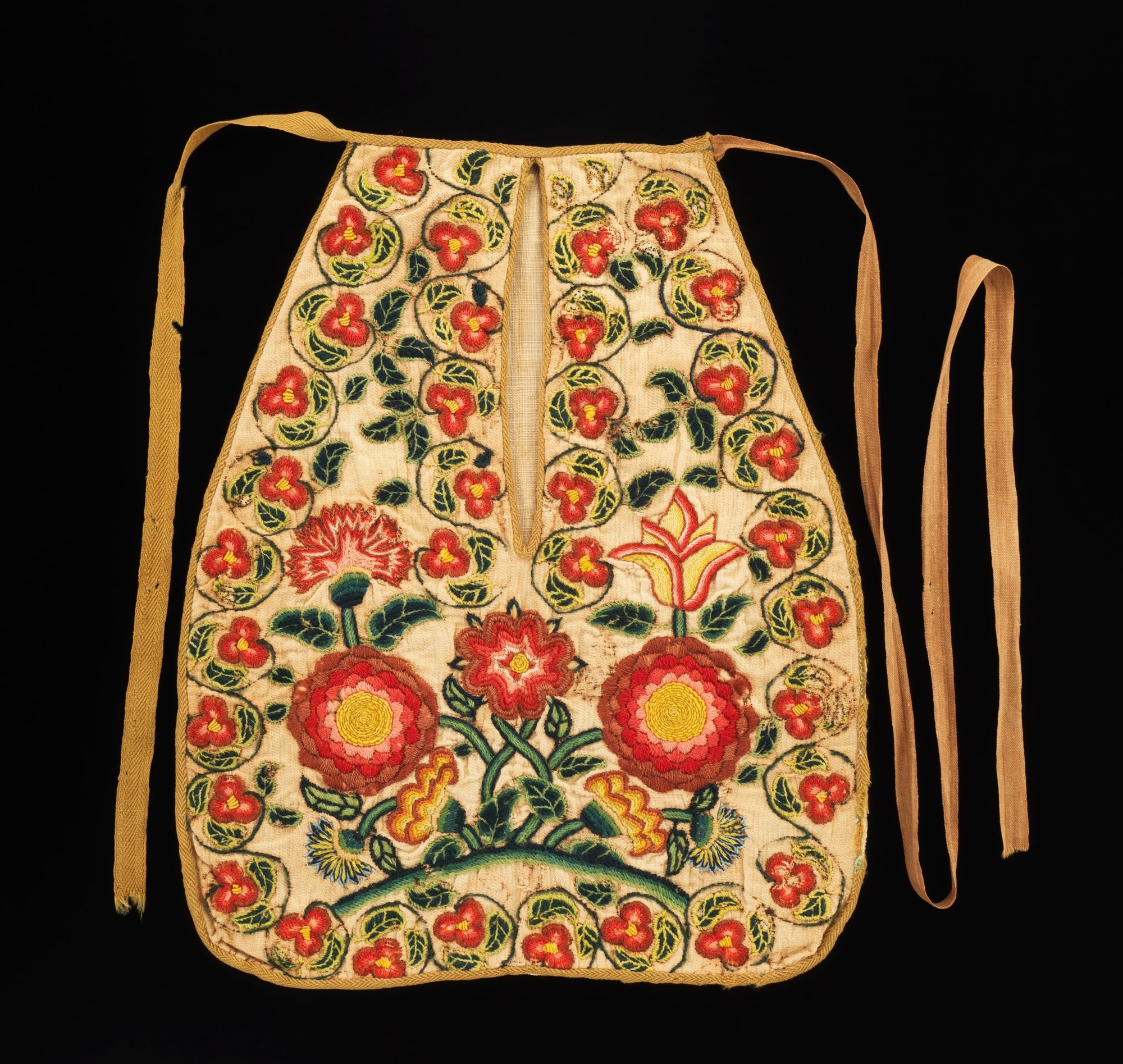
The Pocket: Fashion's Smallest Revolution
From embroidered pouches hidden beneath eighteenth-century skirts to the riveted denim of American workwear, the humble pocket reveals a surprising history of style, independence and everyday freedom.
By Culturefold Editors
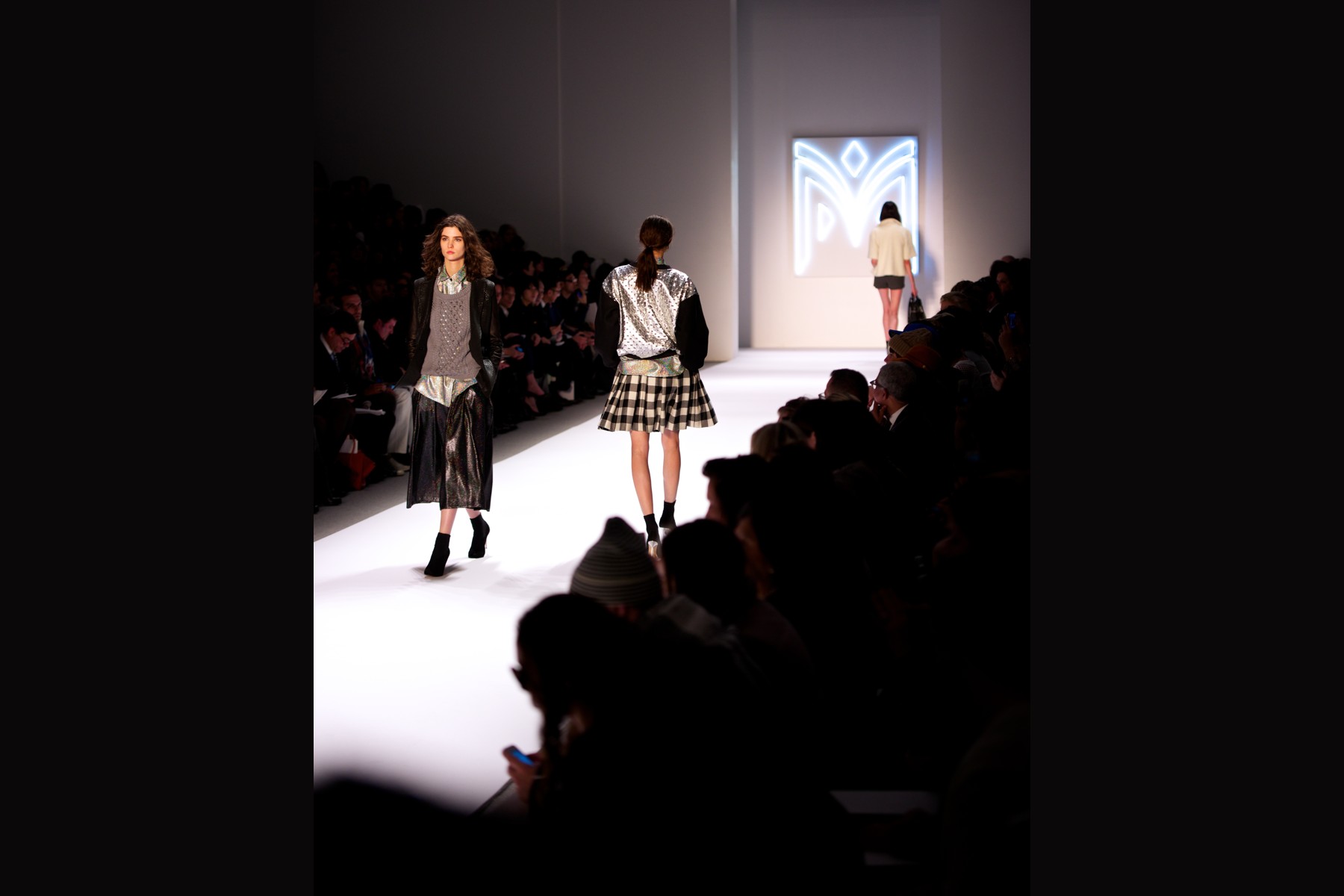
Beyond the Runway: When Fashion Became a Spectacle
From intimate Parisian salons to theatrical productions watched around the world, how the fashion show evolved into one of the most influential stages in contemporary culture.
By Culturefold Editors