
The Design of Listening
How the record player, Walkman and iPod changed not only the objects we used, but the way music fits into everyday life.
There was a time when listening to music meant going somewhere.
Perhaps it was the living room, where a record player occupied a cabinet beside the furniture. Maybe it was a bedroom, with a collection of records carefully arranged on shelves and a stereo system positioned beneath the window.
Music had a physical presence.
Records were removed from sleeves. Needles were lowered onto spinning surfaces. Buttons clicked, switches moved and the mechanical operation of the equipment became part of the experience.
Today, the same activity might involve little more than placing a pair of wireless earphones into our ears.
The music begins almost instantly.
There are no records to handle, tapes to rewind or discs to organise. An enormous collection of recorded sound can be accessed through a device already used for dozens of other purposes.
The transformation has been extraordinary.
Yet the history of personal audio is not simply a story of increasingly sophisticated technology.
It is also a story about design.
The shape, size and operation of music-playing devices have influenced where we listen, how we discover new sounds and the relationship we develop with the music itself.
Over the past century, designers have repeatedly reconsidered what a listening device should be.
And in doing so, they have changed far more than its appearance.
When Music Was Part of the Furniture
During the early twentieth century, recorded music became an increasingly familiar feature of domestic life.
But the equipment required to play it was often substantial.
Early phonographs and gramophones could include prominent horns, mechanical components and cabinets that occupied significant space within the home.
As manufacturers developed more refined products, many began integrating sound reproduction equipment into furniture.
The Victrola, introduced by the Victor Talking Machine Company in 1906, helped establish the popularity of the cabinet-style phonograph.
Its sound-producing mechanism was housed within a wooden enclosure, with the horn concealed inside the cabinet rather than projecting visibly into the room.
The design reflected the expectations of domestic interiors.
A music player needed to coexist with tables, chairs, decorative objects and other furniture.
Its appearance was therefore often influenced by established cabinetmaking traditions.
Wood finishes, decorative detailing and carefully proportioned enclosures helped the equipment become an acceptable part of the home.
The result was something more than a machine.
It was a piece of furniture with a musical function.
This relationship influenced how recorded sound was experienced.
Music was generally associated with particular rooms and shared environments.
Listening could become a social activity, with family members or guests gathering around the same piece of equipment.
The device helped determine the setting.
Music was not yet something most people could carry casually through their day.
It belonged to a place.
Braun and the Reinvention of the Record Player
By the middle of the twentieth century, industrial designers were beginning to challenge the idea that audio equipment needed to resemble traditional furniture.
One of the most influential examples emerged from Germany in 1956.
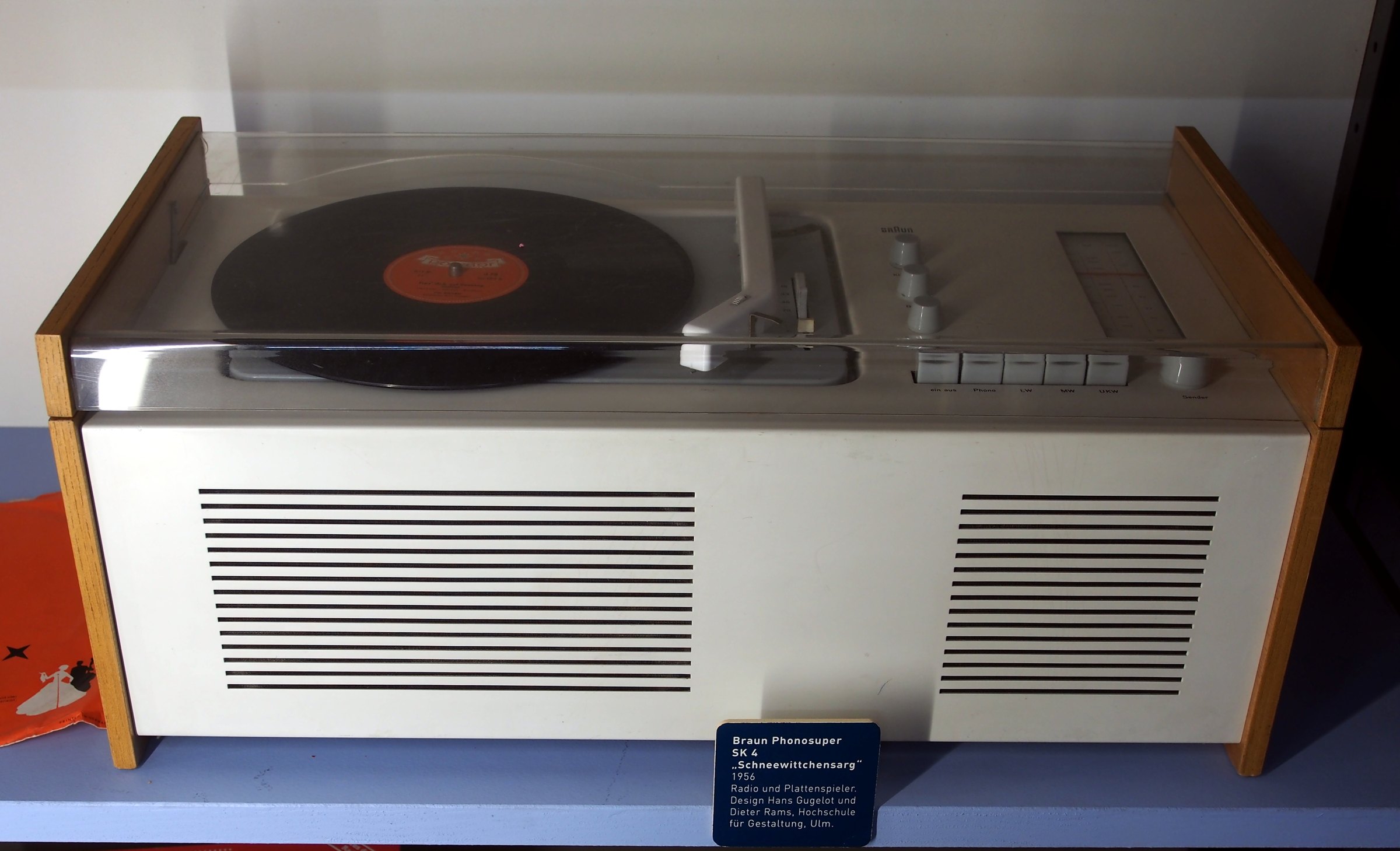
The Braun SK4 radio-phonograph, developed by Hans Gugelot and Dieter Rams, introduced a strikingly different approach.
Its appearance was remarkably restrained.
A white metal body was framed by pale wooden side panels. Controls were arranged clearly across the upper surface. A transparent acrylic lid revealed the turntable beneath it.
The design became known as Snow White's Coffin, a nickname inspired by its pale appearance and transparent cover.
What made the SK4 significant was its rejection of conventional decorative styling.
Rather than attempting to disguise the technology within an elaborate wooden cabinet, the designers allowed the device to express its function.
The controls were visible.
The mechanical components could be seen.
The overall form was reduced to a simple, coherent arrangement.
This represented an important shift in industrial design.
Technology no longer needed to hide behind the appearance of traditional furniture.
It could possess a visual identity of its own.
The SK4 also reflected ideas associated with the Ulm School of Design, where systematic thinking, functionality and clear communication became central principles.
Its influence extended beyond audio equipment.
The restrained surfaces, clear controls and carefully considered proportions anticipated approaches that would later become familiar across consumer electronics.
The object was designed to be understood.
And its appearance emerged from that purpose.
When Music Left the Room
For much of the twentieth century, recorded music remained closely connected to particular devices and locations.
Portable radios had already demonstrated the appeal of taking sound beyond the home.
But the development of compact cassette technology created new possibilities for listening to personally selected recordings.
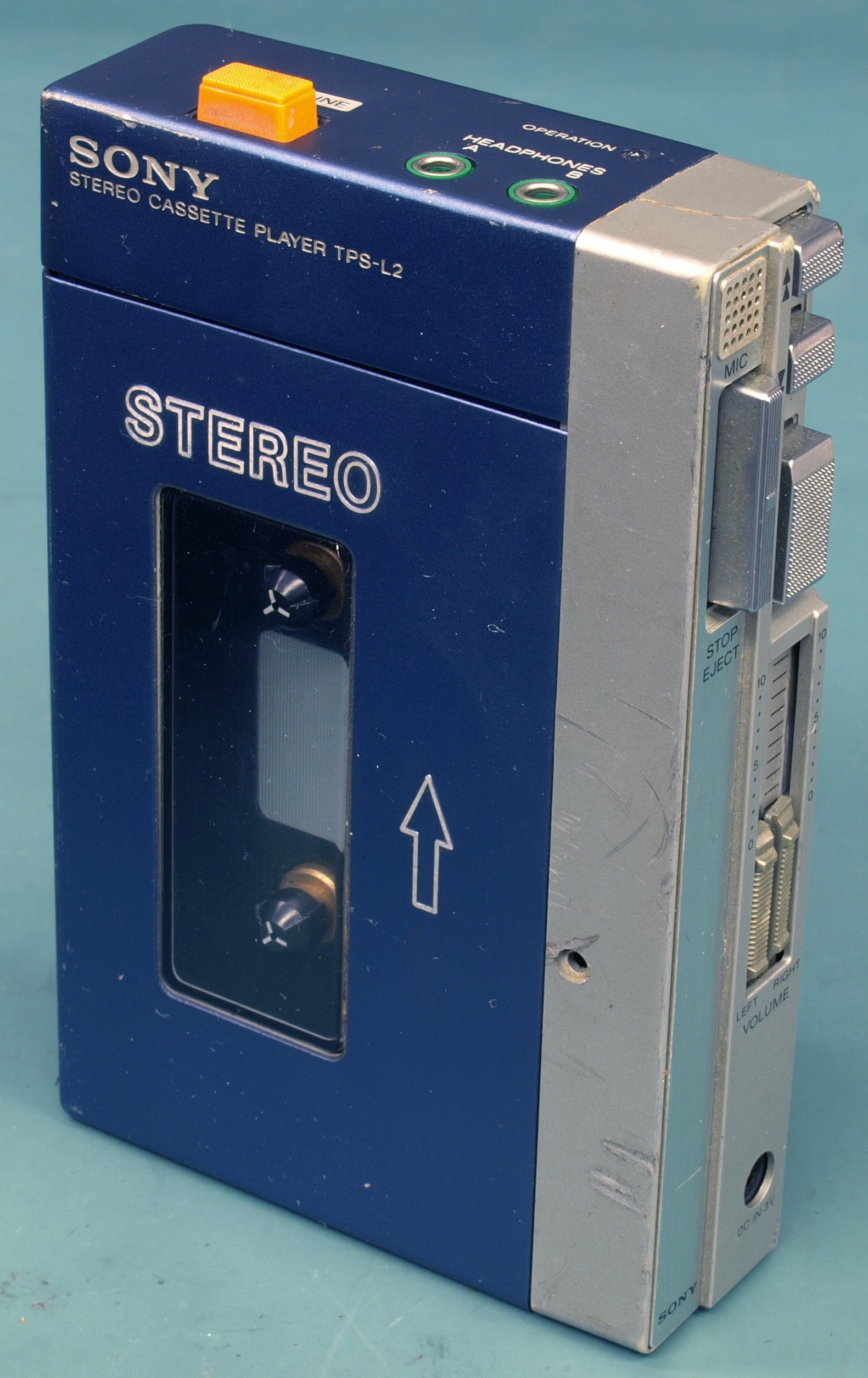
In 1979, Sony introduced the TPS-L2 Walkman.
The device was a compact stereo cassette player designed primarily for listening through lightweight headphones.
Its blue-and-silver body was small enough to carry while walking, travelling or commuting.
The concept was remarkably straightforward.
Rather than creating a machine capable of both recording and playback, Sony concentrated on providing a portable listening experience.
The decision was initially controversial.
Some questioned whether consumers would purchase a cassette player without recording functionality.
But the product became an enormous commercial success.
The Walkman was not simply smaller than a traditional stereo.
It changed the circumstances in which recorded music could be enjoyed.
A person could select an album, place the cassette into the player and carry that recording through the city.
Music no longer needed to remain in a room.
It could accompany movement.
And the headphones created something particularly significant: a private listening experience within public space.
A Personal Soundtrack
The cultural consequences of portable listening extended far beyond the practical advantages of a smaller device.
Before personal stereo players became widespread, music heard in public was often part of a shared environment.
A radio played in a shop.
A car passed with its windows open.
Music filled a café, a workplace or a public gathering.
The Walkman introduced a different relationship between the individual and their surroundings.
A person could walk through a crowded street while listening to music that nobody else could hear.
The external environment remained visible.
But the experience of moving through it could be shaped by a private soundtrack.
A familiar journey might feel completely different depending on the music being played.
An ordinary train ride could become an opportunity for reflection.
A walk through the city could acquire an emotional atmosphere that existed primarily for the person listening.
This was an unusual achievement for an industrial product.
Its design influenced the relationship between personal identity and public space.
Headphones also became important visual objects.
Their presence communicated that somebody was engaged in an experience separate from the surrounding environment.
Portable listening offered freedom and individuality, but it also introduced new forms of separation.
The same technology that made music more personal could reduce spontaneous interaction with people nearby.
Neither effect was inevitable.
But both demonstrated that the design of a product can influence behaviour in ways extending far beyond its original technical purpose.
The Compact Disc Changes the Object
The arrival of the compact disc introduced another important chapter in the evolution of music players.
The format became commercially available in 1982, promising digital sound reproduction through a smaller and more durable medium than traditional vinyl records.
But early CD players were still primarily associated with home audio systems.
Sony challenged this limitation in 1984 with the introduction of the D-50, its first portable CD player.
The machine was compact by the standards of its time, approximately the size of four stacked CD cases.
Yet it remained significantly larger than the smallest cassette players and required careful consideration of power supply and portability.
The device demonstrated the technical ambition of the period.
Digital audio could be removed from the living room and experienced in more flexible settings.
The design also reflected the physical characteristics of the compact disc itself.
Unlike a cassette, which could be enclosed within a relatively narrow rectangular player, a CD required space for a circular disc to rotate.
The resulting products developed their own recognisable shapes.
Portable CD players frequently adopted flat, rounded enclosures with hinged lids and clearly arranged controls.
These forms were not purely aesthetic choices.
They emerged partly from the dimensions and mechanical requirements of the recording medium.
The relationship between music format and product design remained closely connected.
The object used to store music continued to influence the shape of the technology needed to play it.
A Thousand Songs in Your Pocket
By the beginning of the twenty-first century, digital files were beginning to challenge the physical relationship between music and its storage medium.
In October 2001, Apple introduced the original iPod.
Its central promise was memorable: a device capable of carrying approximately one thousand songs in a pocket.
The concept was not entirely new.
Portable digital music players already existed.
But Apple's approach brought together storage capacity, physical design and a relatively simple interface in a particularly influential combination.
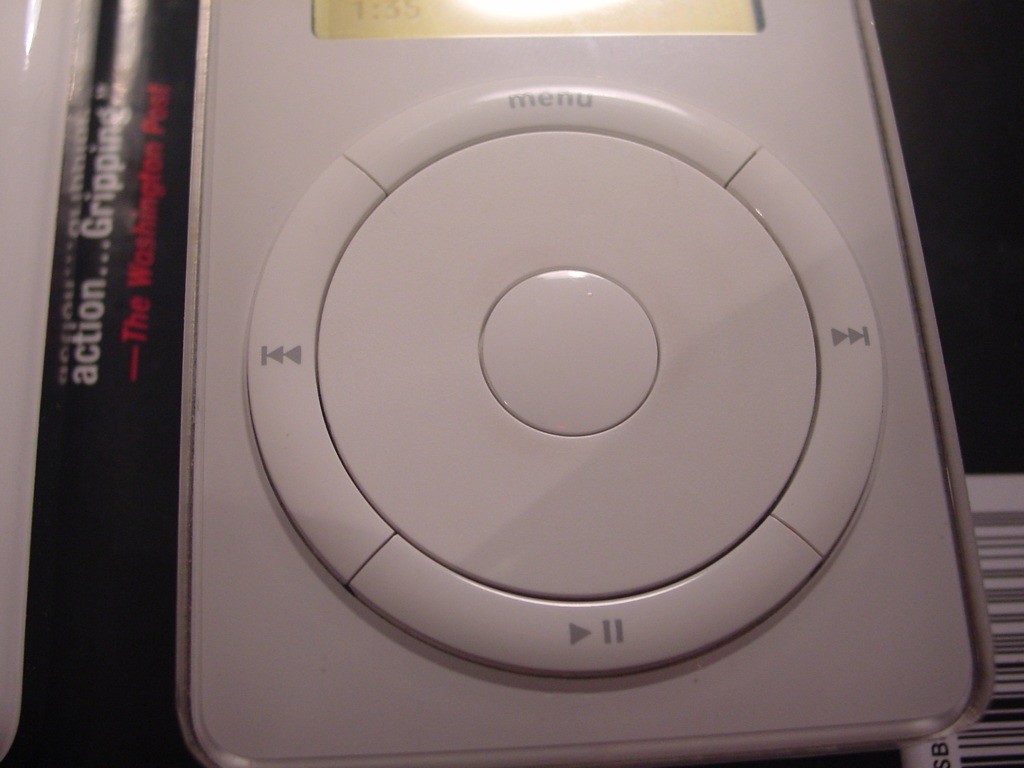
The original iPod featured a white front surface, a small monochrome screen and a mechanical scroll wheel.
Its appearance was restrained.
Rather than presenting users with a complicated collection of buttons, the design concentrated on navigating a large digital music library.
This was a different challenge from operating a cassette player.
A Walkman needed controls for familiar mechanical actions: play, stop, rewind and fast-forward.
The iPod needed to make hundreds of albums and thousands of individual tracks accessible through a small device.
The interface became central to the product's identity.
In 2004, Apple's iPod mini introduced a touch-sensitive Click Wheel that combined scrolling and buttons within one circular control.
The feature subsequently appeared on the fourth-generation iPod.
It became one of the most recognisable interfaces in consumer electronics.
The wheel offered a tactile method of moving through digital information.
A simple circular gesture could navigate an enormous collection of music.
The achievement was not only technical.
It demonstrated how thoughtful interaction design could make a complicated digital system feel manageable.
The Disappearing Music Player
The development of smartphones and streaming services eventually transformed the listening experience again.
Dedicated music players became less essential as phones acquired increasingly sophisticated audio capabilities.
Streaming platforms reduced the need to store large personal collections of music files directly on a device.
Spotify, launched in several European countries in 2008, was among the services that helped establish on-demand music streaming as a mainstream activity.
Over time, access became as important as ownership.
A listener no longer needed to purchase an entire album, transfer files from a computer or organise a physical collection before hearing a particular recording.
Music could be searched for and played through an application.
The design challenge shifted accordingly.
The physical machine became less visible.
The interface became more important.
Album artwork, search functions, playback controls and recommendation systems began shaping the way people encountered recorded music.
The relationship between design and listening had not disappeared.
It had moved from the exterior of a dedicated object to the software operating inside a multipurpose device.
Today, many people spend considerably more time interacting with a music application's interface than considering the hardware responsible for playing the sound.
The music player, once a substantial object occupying space within the home, has become almost invisible.
Its functions are distributed between phones, wireless headphones, speakers and digital services.
The object has changed.
The design decisions remain influential.
The Experience of Touch
Something interesting happens when we compare the physical controls of older music players with modern digital interfaces.
A record player requires a sequence of deliberate actions.
A vinyl record is removed from its sleeve, placed onto the turntable and played through the careful positioning of a stylus.
A cassette must be inserted into a machine.
A CD player requires the disc to be positioned correctly before playback begins.
The original iPod introduced a different but still distinctly physical relationship.
Its scroll wheel provided tactile feedback as the user moved through a digital library.
These experiences required interaction with recognisable objects.
Streaming removes many of those steps.
Music can begin with a tap, a voice instruction or an automated suggestion.
This increased convenience is an extraordinary achievement.
But it has also altered the rituals associated with listening.
The physical experience of selecting and handling a record has become optional rather than necessary.
For some listeners, that represents welcome freedom.
For others, the disappearance of these actions removes something valuable.
The appeal of vinyl records and dedicated audio equipment partly reflects an interest in experiences that remain connected to physical objects.
A record collection occupies space.
Album artwork can be examined at a larger scale.
A turntable requires the listener to participate in the process of playback.
These qualities do not automatically make the listening experience superior.
But they make it different.
And that difference reveals how product design can influence the emotional relationship between people and technology.
Why Objects Become Cultural Icons
Certain music players have acquired a significance extending far beyond their original commercial purpose.
The Braun SK4 is celebrated as a landmark of industrial design.
The Sony Walkman became a symbol of personal freedom and portable entertainment.
The iPod established a recognisable visual identity for an emerging era of digital music.
Each product reflects the technologies and cultural expectations of its time.
But their influence also came from how effectively they connected those technologies with everyday experience.
The SK4 suggested that modern electronics could be elegant and understandable.
The Walkman demonstrated that personal listening could become part of almost any activity.
The iPod made large digital collections accessible through a compact, carefully designed interface.
These were not simply improvements in performance.
They were changes in the way people related to music.
That is one reason certain products become important design objects.
Their significance comes not only from their appearance, but from the experiences they make possible.
A successful design can establish new expectations that eventually become so familiar we forget they once represented radical changes.
What Happens Next?
The future of listening is likely to involve further changes in the relationship between physical devices and digital experiences.
Wireless technology has already made headphones more compact and convenient.
Voice interaction allows playback without directly touching a screen.
Adaptive audio systems can respond to different surroundings, while personalisation tools influence what listeners discover.
Yet these developments introduce familiar design questions.
How much control should the listener retain?
Should technology anticipate what we want, or encourage us to make deliberate choices?
Can a product become more convenient without becoming unnecessarily complicated?
And how can designers ensure that new technology remains accessible, repairable and comfortable to use?
The environmental consequences of consumer electronics also deserve consideration.
Smaller devices are not necessarily more sustainable.
Battery life, repairability, material selection and replacement cycles all influence their long-term impact.
As listening technology continues to evolve, good design will require balancing convenience with durability and meaningful user control.
The most successful products may not be those offering the greatest number of features.
They may be those that understand which features genuinely improve the experience.
The Shape of Sound
Look back across the history of music players and the transformation is remarkable.
A wooden phonograph cabinet gives way to a restrained modernist record player.
A cassette machine becomes small enough to carry through a city.
Digital technology places an enormous music collection inside a pocket-sized object.
Eventually, the dedicated player largely disappears into the functions of another device.
Each transition involved advances in technology.
But each also required designers to reconsider how people should interact with recorded sound.
The size of a device influenced where it could be used.
Its controls determined how easily music could be selected.
Its appearance shaped whether it belonged in a living room, a pocket or the palm of a hand.
These decisions affected the cultural experience of listening itself.
Music became more portable, more personal and increasingly accessible.
At the same time, the physical rituals surrounding recorded sound gradually changed.
The experience of handling a record is different from scrolling through a digital library.
Listening privately through headphones is different from sharing music through speakers in a room.
Neither experience can fully replace the other.
They simply represent different relationships between people, objects and sound.
And perhaps that is the most interesting lesson contained within the history of audio design.
The objects we create do not merely respond to the way we live.
Sometimes, they help determine how we live.
A record player brought music into the home.
A Walkman carried it into the streets.
An iPod placed an entire collection in our pockets.
And today, the technology has become so familiar that we rarely consider the extraordinary design journey behind it.
The music continues.
Only the way we reach it has changed.
Further Reading
The Quiet Intelligence of Everyday Objects
OXO Good Grips, Harry Beck's Tube map and the Anglepoise lamp reveal how the best everyday design makes its effort almost impossible to notice.
By Culturefold Editors

Finding Our Way: The Art of Wayfinding
From New York's subway to Munich 1972 and Schiphol, how wayfinding design quietly guides millions of people through complex spaces.
By Culturefold Editors
The Poster: Design Made Public
From Parisian streets to Swiss typography and Polish cinema, how the poster became one of design’s most powerful cultural mediums.
By Culturefold Editors