
Matera: Life Carved into Stone
Once associated with poverty and abandonment, this extraordinary city in southern Italy has become a symbol of cultural renewal. But beneath its beautiful limestone streets lies a much more complicated story.
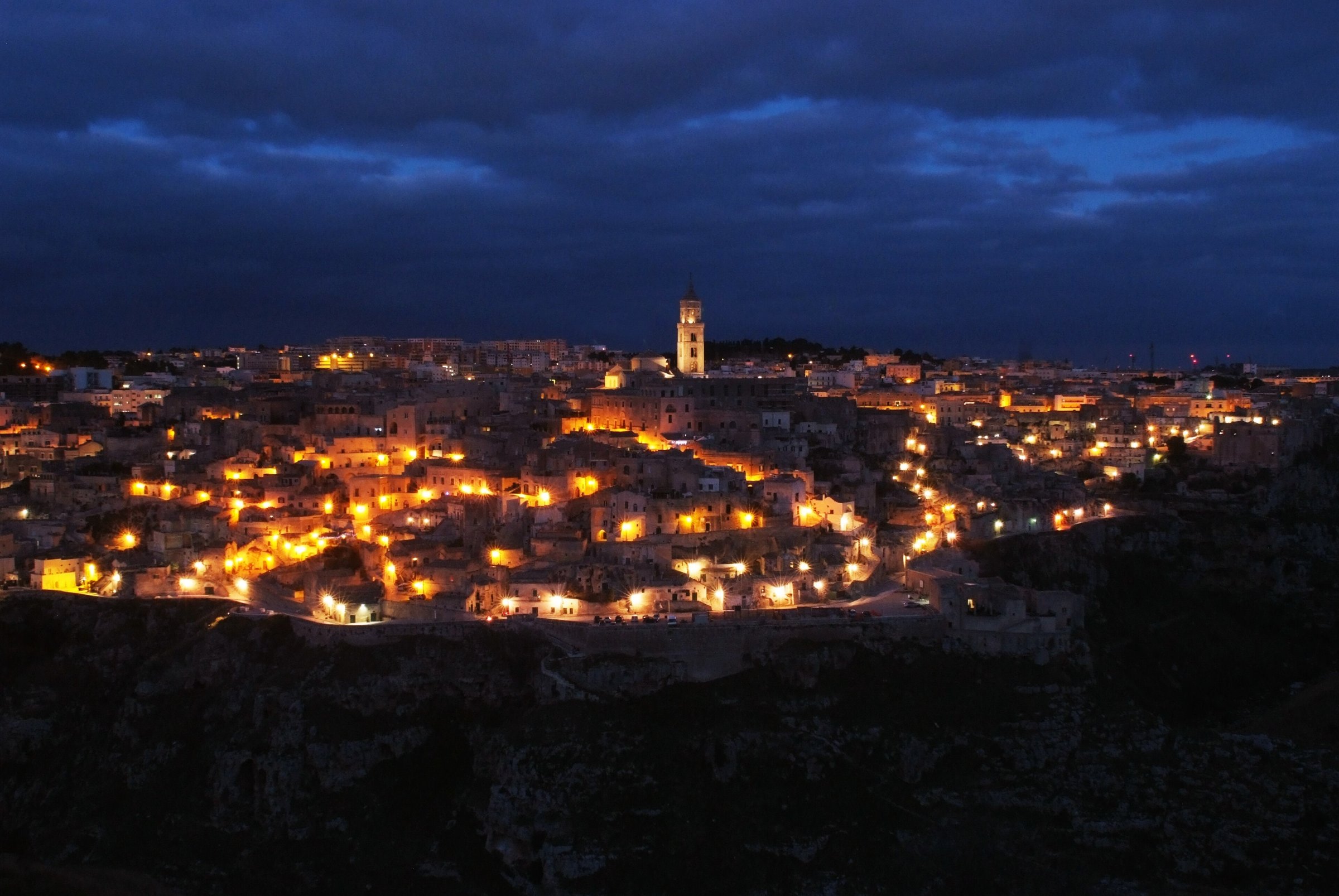
From a distance, Matera appears almost impossibly old.
Pale stone buildings descend across a hillside in southern Italy, their rooftops overlapping in an intricate arrangement of terraces, staircases and narrow streets. Church towers rise above the surrounding architecture, while dark openings reveal rooms carved directly into the rock.
There is something unusual about the landscape.
The buildings appear less like structures placed upon the hillside and more like extensions of the ground itself.
Some have conventional stone facades concealing rooms excavated deep into the rock. Others occupy natural cavities that have been enlarged, adapted and inhabited over generations.
Walk through the historic districts, known as the Sassi, and the distinction between building and landscape becomes increasingly difficult to identify.
A street may pass above somebody else's former home. A staircase might follow the roofline of another structure. An apparently ordinary doorway can lead into a sequence of underground rooms.
Yet Matera's remarkable appearance tells only part of its story.
For much of the twentieth century, these same districts were associated with severe poverty and overcrowded living conditions.
Thousands of residents were relocated, leaving large sections of the historic city abandoned.
Today, the Sassi are internationally celebrated for their architecture and cultural heritage.
The transformation is extraordinary.
But understanding Matera means looking beyond its restored facades and beautiful photographs.
It means considering the lives that shaped the city, the circumstances that almost emptied it and the complicated process of bringing it back.
A City Built from Its Own Landscape
Matera lies in Basilicata, a region of southern Italy characterised by hills, rocky plateaus and dramatic natural landscapes.
Its historic settlement developed along the sides of a deep ravine known as the Gravina.
The area's relatively workable limestone provided opportunities for people to create shelters directly within the rock.
Over time, natural caves were enlarged and adapted into dwellings, workshops, storage spaces and places of worship.
The excavated stone could then be used to construct walls and facades outside the openings.
This created a distinctive relationship between the built environment and the natural landscape.
The material removed to make an interior could become part of its exterior.
Buildings developed through both excavation and construction.
The resulting architecture was shaped by centuries of practical decisions rather than a single comprehensive plan.
The two principal historic districts, Sasso Caveoso and Sasso Barisano, contain layers of development reflecting changing needs, construction techniques and social circumstances.
Some dwellings occupy deep caves.
Others combine excavated rooms with substantial masonry structures.
Paths, steps and terraces connect the different levels.
The arrangement can appear chaotic when viewed from above, but it reflects a remarkably close adaptation to the surrounding terrain.
Matera's history includes evidence of human occupation dating back to prehistoric times, although the buildings visible today developed across many different periods.
The result is not a single ancient settlement preserved unchanged.
It is a place repeatedly altered by the people who lived there.
The Streets Above the Houses
Perhaps the most fascinating characteristic of the Sassi is their unusual relationship with public space.
In a conventional city, streets are generally understood as routes between buildings.
Matera frequently challenges that distinction.
The roof of one structure may form part of a terrace or pedestrian route serving the buildings above it.
Exterior staircases connect different levels, while narrow passages follow the contours of the hillside.
Moving through the Sassi becomes an experience of constant changes in elevation.
A doorway that appears to lead into a modest ground-floor room may open into a surprisingly deep interior.
A small courtyard can reveal views towards other structures rising above it.
The landscape is experienced gradually, through a sequence of spaces that rarely reveal themselves all at once.
These characteristics contribute to Matera's extraordinary visual appeal.
But they also reflect practical responses to difficult terrain and limited resources.
The dense arrangement allowed buildings to develop within a landscape where conventional construction was not always straightforward.
The architectural result is remarkable because it emerged through adaptation.
Generations of inhabitants altered existing spaces, extended buildings and developed connections between different parts of the settlement.
The city became a record of accumulated human decisions.
Its beauty was not necessarily the original objective.
The Hidden Architecture of Water
Matera's historic survival depended on more than the ability to carve shelter from stone.
Water was another essential challenge.
The surrounding landscape experiences seasonal variations in rainfall, making the collection and storage of water particularly important.
Over centuries, inhabitants developed systems of channels, cisterns and underground reservoirs to capture and preserve available supplies.
These structures formed an essential part of the settlement's infrastructure.
Rainwater could be directed from rooftops and other surfaces towards underground storage spaces.
Cisterns were carved into the rock and waterproofed using specialised materials.
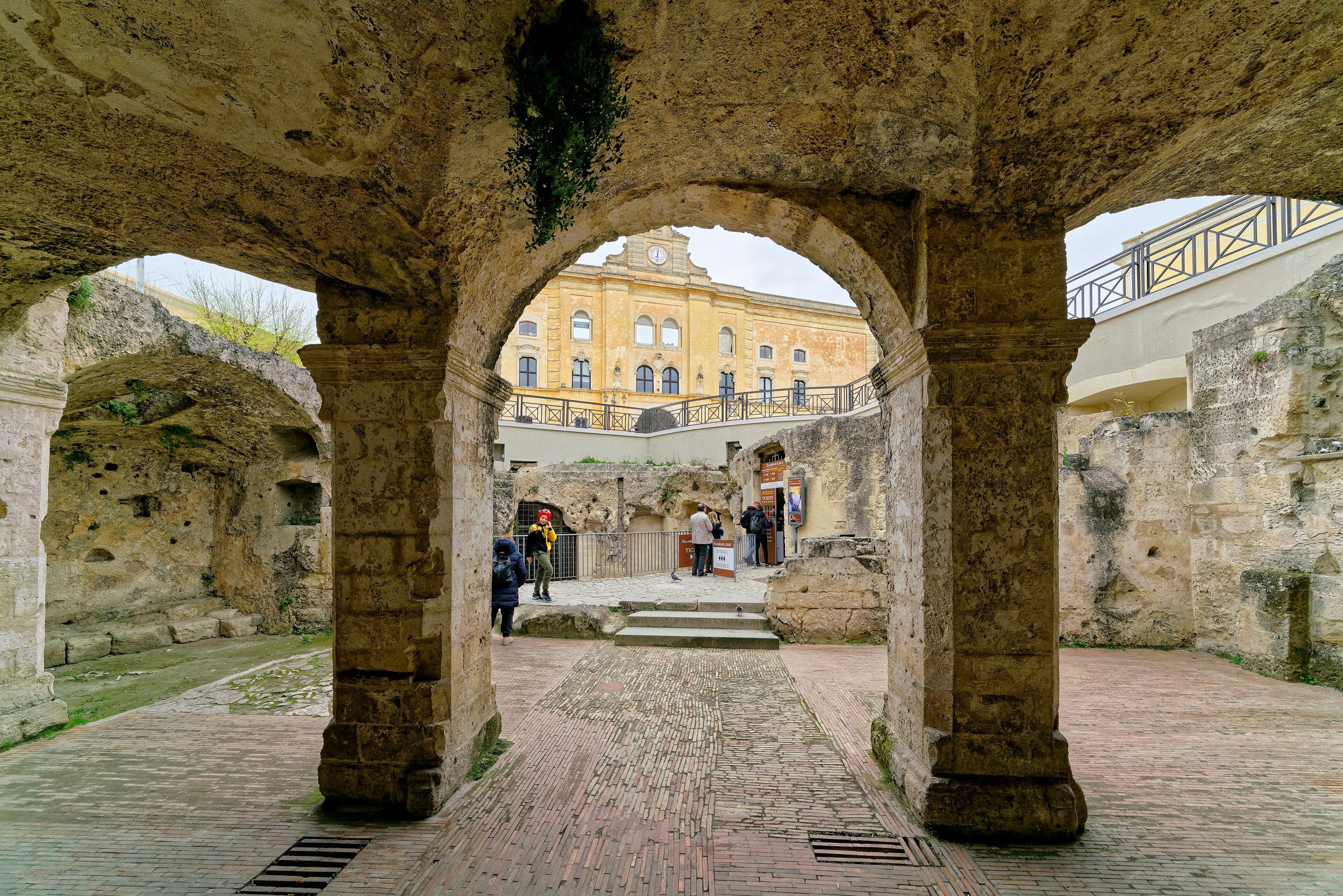
One of the most impressive examples is the Palombaro Lungo, an enormous underground reservoir beneath Piazza Vittorio Veneto.
Developed and enlarged over several centuries, it eventually reached a capacity of approximately five million litres.
Its vast stone interior reveals the extraordinary engineering effort involved in maintaining a reliable water supply.
Today, the reservoir offers a very different perspective on Matera's architecture.
Above ground, the city is celebrated for its buildings and picturesque streets.
Below the surface lies evidence of the practical systems that made settlement possible.
The Palombaro Lungo reminds us that historic architecture is not simply about appearances.
It also reflects the ingenuity required to manage the ordinary necessities of life.
Faith Within the Rock
Matera's limestone landscape also became home to an extraordinary collection of religious spaces.
Churches, chapels and monastic environments were carved directly into the surrounding rock.
Some developed during the medieval period and reflect traditions associated with different phases of Christian history in southern Italy.
The Park of the Rupestrian Churches, together with the Sassi, contains more than 150 rock-cut religious sites.
Their architecture varies considerably.
Some are modest spaces with simple interiors.
Others contain elaborate arrangements of rooms, carved architectural details and surviving wall paintings.
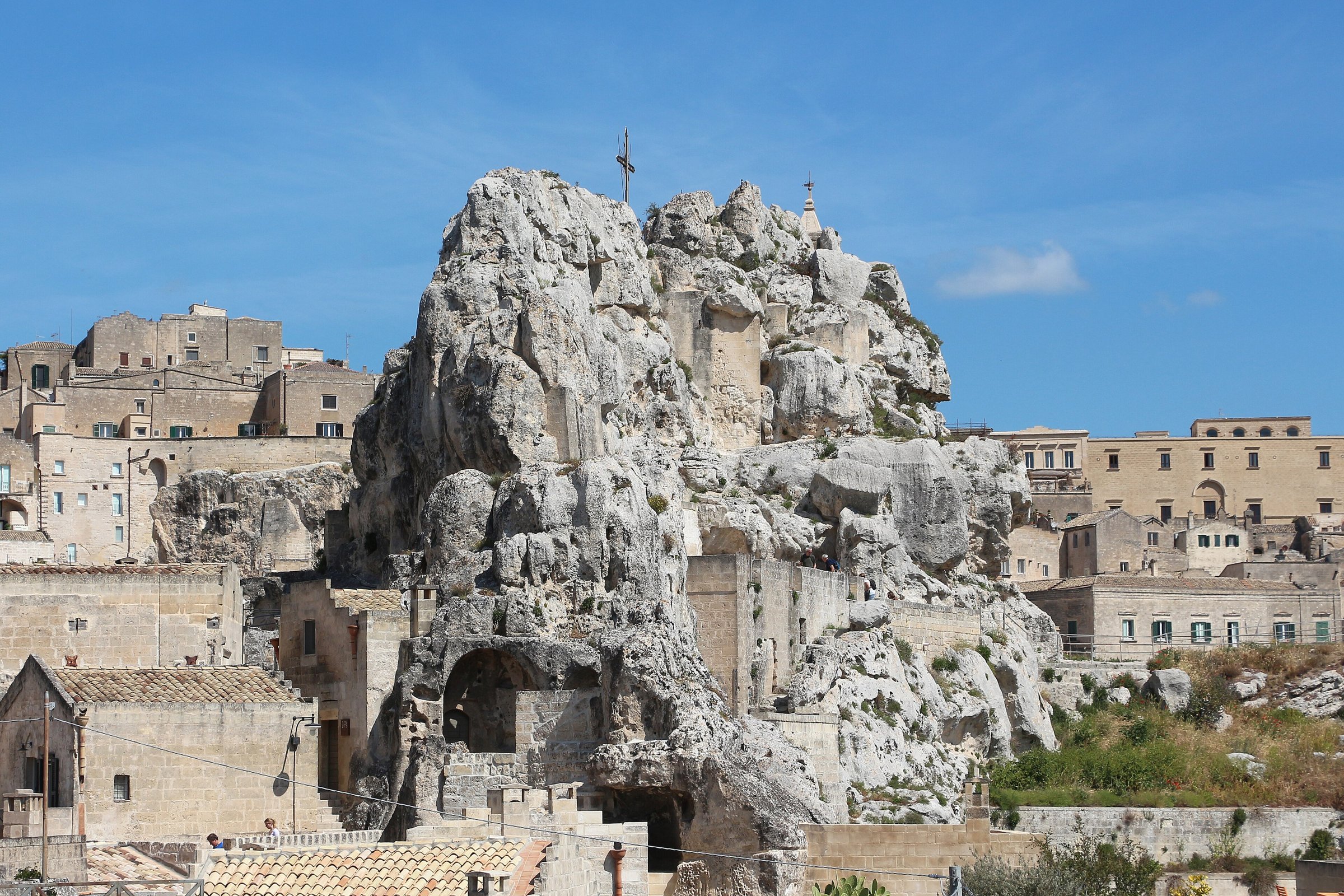
The church of Santa Maria de Idris is among the most recognisable.
Positioned on a rocky outcrop above Sasso Caveoso, it appears almost inseparable from the stone beneath it.
Its interior connects with the nearby rock church of San Giovanni in Monterrone, where historic frescoes preserve traces of religious artistic traditions.
These spaces create an unusual relationship between architecture and spirituality.
Rather than erecting a monumental building above the ground, their creators shaped places of worship within the rock itself.
The surrounding material becomes the walls, ceiling and structure.
The result can feel remarkably intimate.
It also demonstrates the range of purposes for which Matera's distinctive geology was used.
The same landscape that provided homes and storage spaces also became a setting for artistic and religious expression.
The City That Was Emptied
Matera's contemporary reputation makes it easy to overlook one of the most difficult chapters in its history.
By the twentieth century, living conditions in many parts of the Sassi had become deeply problematic.
Poverty, overcrowding and inadequate sanitation affected numerous households.
Some families occupied small cave dwellings without the facilities expected of modern housing.
People and livestock could share confined spaces.
The conditions attracted increasing attention from writers, politicians and social reformers.
In 1945, Carlo Levi published Christ Stopped at Eboli, drawing upon his experiences of political exile in southern Italy during the 1930s.
His account helped bring wider attention to the poverty and social inequalities affecting the region, including the conditions in Matera.
The Sassi subsequently became associated with the phrase vergogna nazionale, or national shame.
In 1952, the Italian government introduced legislation intended to address the area's severe housing conditions.
Residents of dwellings considered unsuitable for habitation were transferred into newly developed neighbourhoods and housing.
The relocation improved living conditions for many people.
But it also disrupted longstanding social relationships and transformed the character of the historic settlement.
Families left homes associated with generations of personal history.
Neighbourhood networks were broken apart.
Buildings that had been occupied for centuries gradually fell empty.
The Sassi entered a period of abandonment and deterioration.
For many former residents, the memory of the area was complicated.
The architecture that visitors now admire had once been associated with considerable hardship.
Its beauty could not be separated from the circumstances of those who lived within it.
From Abandonment to Recognition
The rediscovery of Matera's architectural significance did not happen overnight.
During the later twentieth century, growing interest in historic preservation encouraged new discussions about the future of the Sassi.
Rather than treating the abandoned districts solely as evidence of an outdated way of living, architects, historians and local advocates began recognising their exceptional cultural value.
Restoration and rehabilitation projects gradually reintroduced activity into parts of the settlement.
In 1986, new Italian legislation provided an important framework for conservation and recovery.
A major milestone followed in 1993, when UNESCO added the Sassi and the Park of the Rupestrian Churches of Matera to the World Heritage List.
The designation recognised the settlement's remarkable adaptation to its natural environment and its significance as evidence of different stages of human history.
International recognition helped transform perceptions of the city.
Buildings once associated primarily with deprivation became important examples of architectural heritage.
Former dwellings were restored and adapted for new purposes.
Cultural spaces, accommodation and businesses began occupying parts of the historic districts.
Another milestone arrived in 2019, when Matera served as a European Capital of Culture.
The title brought increased attention to the city's artistic activities, creative communities and wider cultural identity.
Within several decades, Matera had moved from a symbol of social hardship to an internationally recognised cultural destination.
Yet the transformation also introduced new questions.
When Heritage Becomes a Destination
Walking through Matera today, it is possible to encounter beautifully restored cave interiors, small galleries, restaurants and accommodation occupying spaces originally created for entirely different purposes.
The transformation demonstrates the possibilities of adapting historic buildings.
But it also reveals the challenges involved in turning cultural heritage into a visitor economy.
A cave dwelling can become a distinctive hotel room.
A former workshop may become a restaurant or gallery.
These changes can provide opportunities for investment, employment and restoration.
They can also alter the relationship between historic neighbourhoods and the people who live there.
As buildings acquire commercial value, decisions about their future increasingly involve tourism, property investment and visitor expectations.
The question becomes more complicated when the architecture itself is the principal attraction.
How much change is acceptable?
What should be preserved?
And how can the historic districts remain meaningful places rather than becoming a collection of carefully restored settings?
There are no simple answers.
Preservation requires resources, and new uses can help maintain buildings that might otherwise deteriorate.
But cultural heritage is more than a visual asset.
The history of the Sassi belongs to the families, communities and workers whose lives shaped them.
A successful future must recognise those relationships alongside the economic opportunities created by international interest.
The Landscape Beyond the City
One of the most revealing perspectives on Matera comes from looking back towards the city from the opposite side of the Gravina.
Across the ravine lies the Murgia plateau, a landscape of rocky slopes, caves and historic paths.
From here, the Sassi appear as an enormous arrangement of pale stone descending towards the valley.
The relationship between settlement and landscape becomes unmistakable.
The buildings follow the contours of the hillside, while the surrounding cliffs reveal the geological environment that made their construction possible.
The view also places Matera within a much larger history.
The city did not develop independently of its surroundings.
Agriculture, pastoral activity, water management and religious communities all contributed to the relationship between people and this landscape.
The rock churches scattered across the surrounding area reinforce that connection.
Their presence suggests a wider network of activity extending beyond the familiar historic districts.
Matera's importance is therefore not confined to its most photographed streets.
It belongs to the relationship between the city and the environment that sustained it.
A Different City After Dark
Matera changes character as daylight begins to disappear.
During the afternoon, the pale limestone reflects the sun, revealing details in the walls, steps and surrounding structures.
As evening approaches, shadows deepen within the narrow streets.
The landscape becomes less defined by individual buildings and more by the arrangement of their forms.
Then the lights begin to appear.
Small illuminated windows punctuate the hillside.
Streetlights reveal staircases and terraces.
The historic districts gradually become a collection of warm points of light against the darker stone.
From a distance, the effect can be extraordinary.
The city appears almost theatrical, its architecture arranged across the landscape like an elaborate stage.
But this beautiful view contains a history that should not be forgotten.
Many of the spaces now admired for their atmosphere were once homes occupied under difficult conditions.
Others stood abandoned for decades.
Their current appearance is the result of preservation, investment and changing attitudes towards cultural heritage.
Matera's beauty is real.
So is the complexity behind it.
More Than a Beautiful Ruin
It would be easy to describe Matera simply as a city rescued from abandonment.
The story is more interesting than that.
Its original development reflected extraordinary adaptation to a challenging landscape.
Its decline revealed the social inequalities and inadequate living conditions affecting many residents.
The relocations of the twentieth century improved housing for many families while disrupting established communities.
Later preservation efforts recognised the architectural and cultural value of places that had once been dismissed.
And the contemporary visitor economy has introduced both opportunities and new pressures.
Each stage contributes to Matera's identity.
The city cannot be understood through its ancient origins alone.
Nor can it be explained entirely through its remarkable transformation into an internationally celebrated destination.
Its significance lies in the relationships between these different histories.
Matera reminds us that buildings are never only physical structures.
They contain evidence of work, family life, belief, hardship and human ambition.
Their meanings can change dramatically as society changes around them.
A place once considered unsuitable for modern living can later become an object of international admiration.
That transformation raises important questions about how we judge architecture and whose experiences shape those judgements.
Perhaps the most valuable way to encounter Matera is to appreciate its extraordinary appearance while remaining curious about the lives behind it.
The city was not created to become a beautiful photograph.
It developed because generations of people needed somewhere to live.
They carved rooms into stone, built walls, collected water and adapted their surroundings to changing circumstances.
Those ordinary human decisions produced something remarkable.
And centuries later, they continue to shape the identity of one of Italy's most extraordinary places.
Further Reading
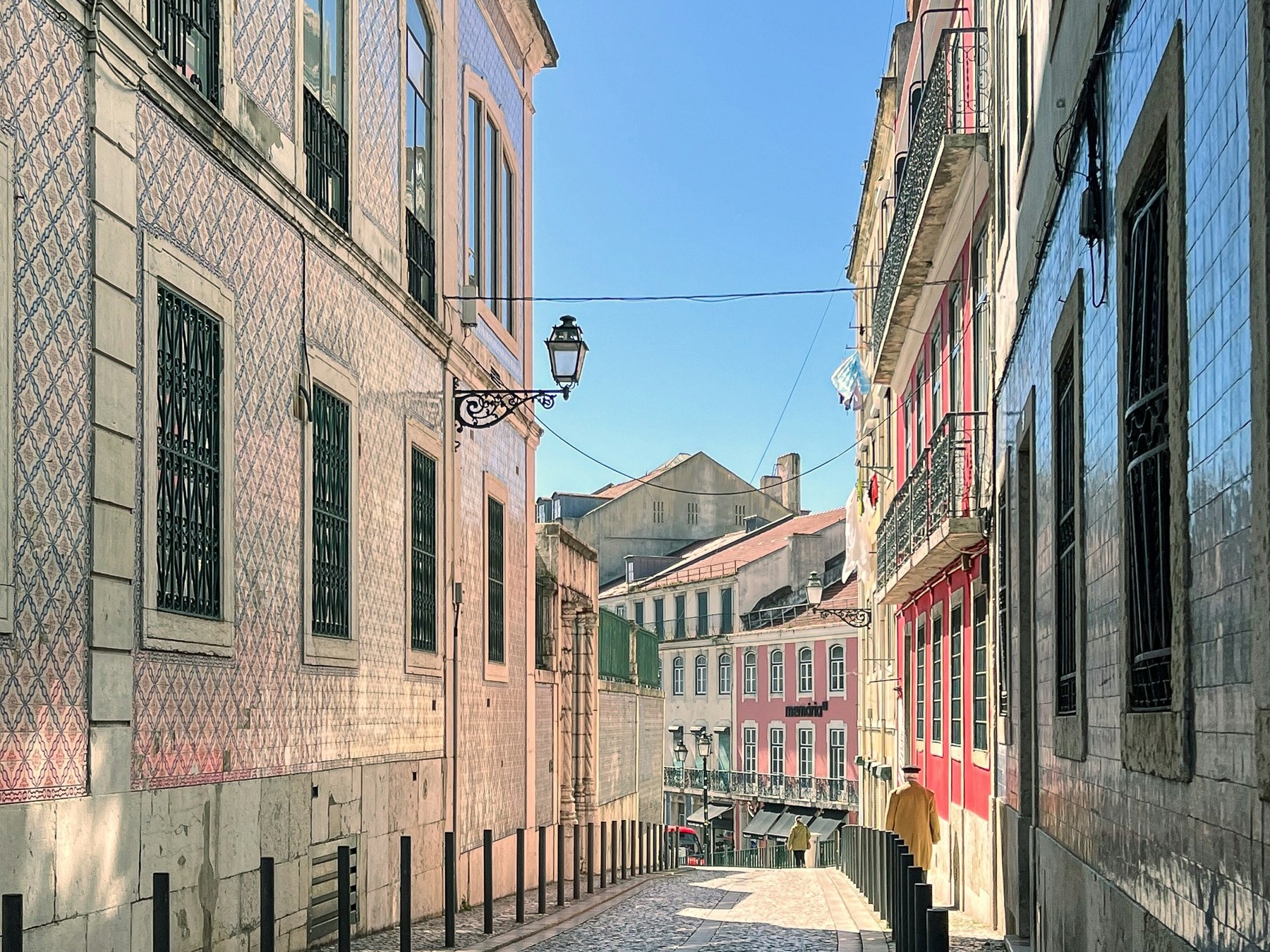
Lisbon: A City Written in Tiles
From azulejo-covered facades and Alfama’s winding streets to MAAT’s waterfront architecture, discovering the histories and everyday life that shape Lisbon.
Istanbul: Life Between Two Shores
Ferries, historic neighbourhoods and centuries of cultural exchange. Discovering a city whose identity has always been shaped by the water.
By Culturefold Editors
Mexico City: A City of Many Lives
From ancient Tenochtitlan to Bellas Artes, Barragán and the canals of Xochimilco, Mexico City reveals itself in layers.
By Culturefold Editors