
Valparaíso: A City Painted on the Hills
Colourful houses, extraordinary street art and century-old hillside lifts define this Chilean port city. But beyond its vibrant appearance lies a fascinating history of trade, creativity and resilience.
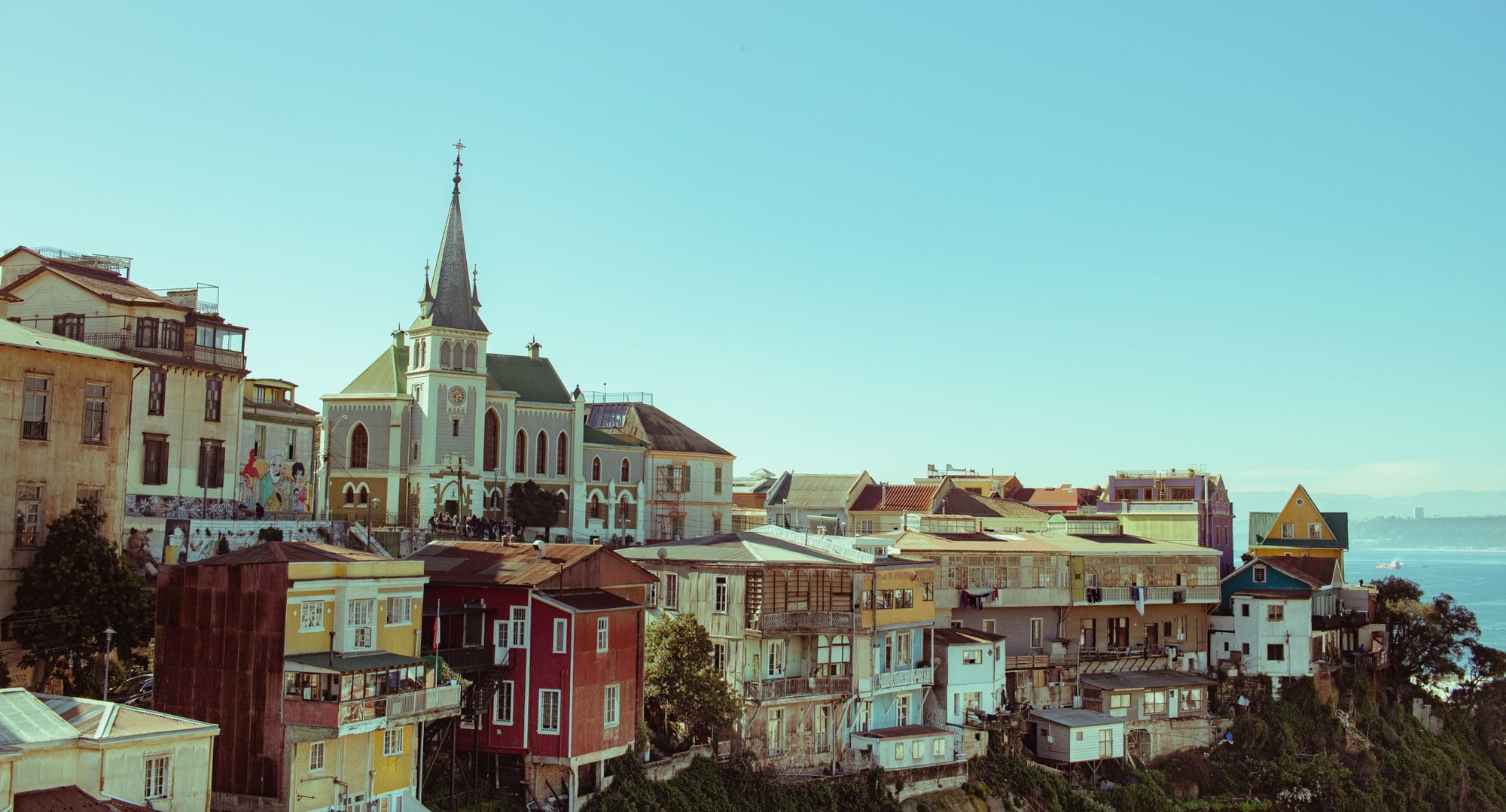
From the waterfront, Valparaíso rises like an enormous collection of colourful building blocks.
Houses painted blue, red, yellow and green occupy the steep hills surrounding the bay. Narrow staircases disappear between buildings, while old hillside lifts climb towards neighbourhoods overlooking the Pacific Ocean.
The city appears almost impossible to organise.
Buildings stand at unexpected angles. Streets bend around the contours of the landscape. Rooftops, terraces and balconies overlap in a constantly changing arrangement.
Yet what initially looks chaotic has developed through generations of adaptation.
Valparaíso is one of Chile's most distinctive cities, shaped by its maritime history, extraordinary geography and a creative culture that has transformed many of its walls into public artworks.
Its historic quarter became a UNESCO World Heritage Site in 2003.
But Valparaíso is not a perfectly preserved historic settlement.
It is a working port, a university city and a place where architectural beauty exists alongside social and economic challenges.
Some buildings have been carefully restored.
Others reveal decades of wear.
And throughout its streets, the city's identity continues to change.
To understand Valparaíso, it helps to begin with the landscape.
A City Without Straight Lines
Valparaíso occupies a natural amphitheatre overlooking the Pacific Ocean.
A narrow coastal plain provides space for the port and commercial districts, while steep hills rise sharply behind it.
The arrangement has shaped almost every aspect of the city's development.
Unlike cities built across relatively flat terrain, Valparaíso could not expand through a simple network of regularly arranged streets.
Its neighbourhoods developed around the contours of the hills.
Buildings were constructed on narrow plots, often requiring foundations and supporting structures adapted to steep ground.
Staircases connected different levels.
Small passages followed routes between existing properties.
Houses appeared above, below and beside one another in arrangements that can seem almost improvised.
The result is a remarkable urban landscape.
From certain viewpoints, buildings appear to be stacked directly upon their neighbours.
A narrow street may end in a staircase.
An ordinary doorway can open onto a terrace with an extraordinary view across the bay.
The relationship between architecture and geography is impossible to ignore.
Valparaíso does not simply occupy the surrounding hills.
Its entire identity has developed through the challenge of living upon them.
The Port That Connected Two Oceans
During the nineteenth century, Valparaíso became one of the most important commercial ports on the Pacific coast of South America.
Its strategic position made it a significant destination for ships travelling between the Atlantic and Pacific oceans around the southern tip of the continent.
Before the opening of the Panama Canal, international maritime routes frequently passed around Cape Horn or through the Strait of Magellan.
Valparaíso benefited from this movement.
Merchants, sailors and entrepreneurs arrived from different parts of the world.
Commercial activity supported the development of warehouses, financial institutions, businesses and substantial residential neighbourhoods.
The city acquired a distinctly international character.
British, German and other immigrant communities contributed to its architecture, commercial life and cultural development.
European building traditions appeared alongside construction methods adapted to local conditions.
Cerro Alegre and Cerro Concepción, two of the city's most recognisable historic neighbourhoods, developed particularly strong connections with these immigrant communities.
Their streets contain architectural influences that distinguish them from other parts of the city.
The opening of the Panama Canal in 1914 significantly altered international shipping routes.
Valparaíso's position within global trade began to change.
Yet the buildings, streets and infrastructure established during its period of commercial prominence remained.
Today, that history is visible throughout the city.
The architecture tells the story of a port that once occupied an exceptionally important position within international maritime trade.
The Houses That Became a Landmark
Perhaps Valparaíso's most recognisable characteristic is its colour.
Entire hillsides appear covered in painted surfaces.
Bright facades stand beside muted pastels. Corrugated-metal cladding contrasts with timber details and plastered walls.
The variety creates an extraordinary visual texture.
But the city's appearance is not the result of a single architectural style.
Its buildings developed across different periods, using materials and techniques appropriate to changing circumstances.
Timber construction and lightweight metal cladding became familiar features of the hillside neighbourhoods.
These materials could be adapted to difficult sites and varied building forms.
The painted facades give individual properties distinctive identities within densely built streets.
One building may use several contrasting colours.
Another relies on a single bold surface.
Balconies, doors and window frames introduce further variation.
The effect is especially striking when viewed from a distance.
Individual architectural decisions combine into something resembling an enormous composition.
Yet the buildings are not decorative objects created solely for visitors.
They are homes, businesses and workplaces.
Their colours contribute to the city's famous appearance, but their primary purpose remains deeply ordinary.
People live behind those painted walls.
And the character of Valparaíso depends as much on their everyday lives as on the colours surrounding them.
The Ascensores: Moving Between Two Worlds
Valparaíso's steep geography produced one of its most distinctive forms of transport.
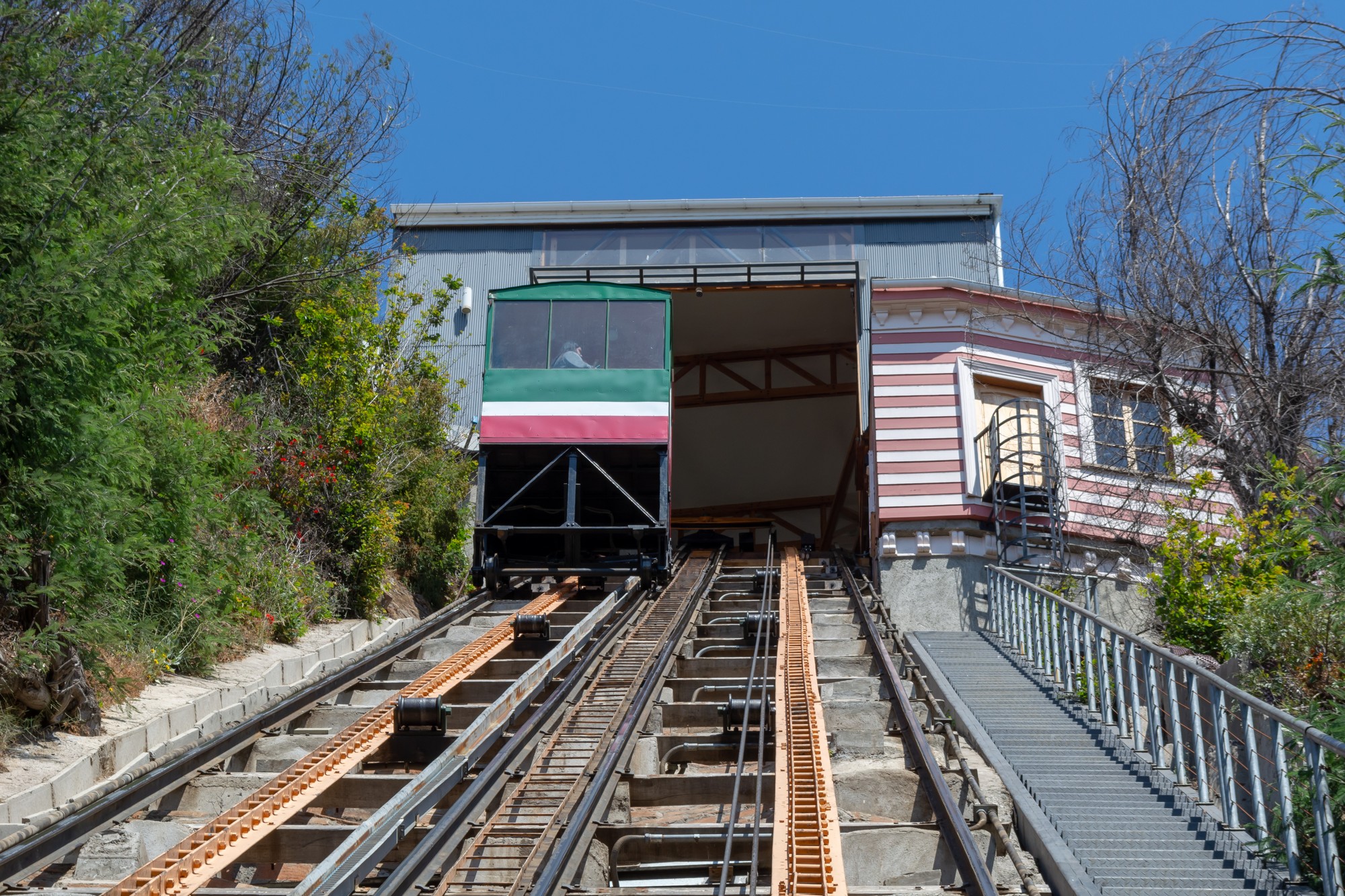
The ascensores are hillside lifts, many operating as funicular railways, designed to connect the lower commercial districts with residential neighbourhoods above.
The first, Ascensor Concepción, was introduced in 1883.
Its construction reflected a practical problem.
As the city expanded up the hillsides, residents needed more efficient ways to travel between home and the commercial waterfront.
Climbing the steep streets could be physically demanding, particularly for people making repeated journeys during the working day.
The ascensores offered a solution.
Small passenger cars travelled along inclined tracks, carrying people between different levels of the city.
Their mechanisms and structures became familiar parts of the urban landscape.
Over time, additional lifts were constructed in different neighbourhoods.
Some remain operational, while others have experienced closures, deterioration and restoration efforts.
Today, the surviving ascensores are celebrated as important elements of Valparaíso's heritage.
Their appeal is easy to understand.
A journey may last only a short time, but it reveals the relationship between the coastal plain and the hillside settlements.
Buildings slide past the windows.
The view opens towards the harbour.
And within moments, the city is experienced from an entirely different elevation.
These machines are more than picturesque attractions.
They are examples of infrastructure designed around the particular demands of a place.
Cerro Alegre and Cerro Concepción
Two of Valparaíso's most celebrated neighbourhoods occupy the hills above the historic commercial centre.
Cerro Alegre and Cerro Concepción contain a remarkable collection of historic buildings, narrow streets, viewing terraces and public staircases.
Their architecture reflects the city's nineteenth-century prosperity and the influence of immigrant communities.
Some buildings feature elaborate timber details.
Others display decorative metalwork, projecting balconies or carefully proportioned facades.
The surrounding streets reveal how these architectural traditions were adapted to an unusually steep landscape.
Small public spaces appear unexpectedly between houses.
Narrow pedestrian routes connect different levels.
From elevated promenades, visitors can look across the rooftops towards the harbour and the hills beyond.
The neighbourhoods have also become important centres of cultural and commercial activity.
Independent galleries, cafés, restaurants and small businesses occupy restored buildings.
Their popularity has introduced new investment and opportunities for preservation.
But it has also raised questions about affordability and the changing identity of historic residential areas.
The character that attracts visitors depends partly on the continued presence of ordinary neighbourhood life.
Without that, a beautiful historic district risks becoming a setting rather than a community.
The City as an Open-Air Gallery
Art is an essential part of Valparaíso's visual identity.
Murals appear on retaining walls, staircases, building facades and other surfaces throughout the hills.
Some are carefully planned works of public art.
Others emerge through independent street-art practices.
Their subjects vary enormously.
Abstract patterns sit alongside portraits, political messages, imaginative characters and scenes inspired by local life.
Colour becomes another layer of the urban environment.
But Valparaíso's mural tradition is more than a recent response to tourism.
Its history includes organised artistic projects developed decades earlier.
On Cerro Bellavista, the Museo a Cielo Abierto — or Open-Air Museum — was established in 1992.
The project developed from earlier mural initiatives associated with the Catholic University of Valparaíso.
Artists and students helped transform walls across the neighbourhood into a public exhibition.
The resulting collection includes twenty major murals.
Rather than placing art inside a conventional museum, the project made the surrounding streets part of the experience.
Visitors encounter the works while walking through an ordinary residential environment.
There are no conventional gallery rooms.
The architecture provides the surfaces.
The neighbourhood becomes the exhibition space.
Art That Belongs to the Street
The appeal of Valparaíso's street art comes partly from its relationship with the surrounding buildings.
A painted figure may occupy the side of a narrow staircase.
An abstract composition might extend across several sections of a retaining wall.
A mural can transform an otherwise overlooked surface into a focal point.
Unlike works displayed in controlled museum environments, street art changes with its surroundings.
Sunlight alters the colours.
Weather affects the materials.
Buildings are repaired, repainted or modified.
Some artworks are preserved.
Others disappear.
This temporary quality can be part of their character.
But it also creates difficult questions about conservation.
The Museo a Cielo Abierto has required maintenance and restoration because of environmental exposure and deterioration.
Preserving public art is rarely as straightforward as protecting a painting within a museum.
The work belongs to a changing physical environment.
There is also a difference between art created with community participation and imagery introduced primarily to attract visitors.
Both can produce impressive visual results.
But their relationships with the city are not necessarily identical.
The strongest examples of Valparaíso's mural culture offer more than colourful backgrounds for photographs.
They communicate something about the people, histories and ideas that exist within the streets.
Pablo Neruda's House Above the Harbour
Valparaíso's creative identity also extends into literature.
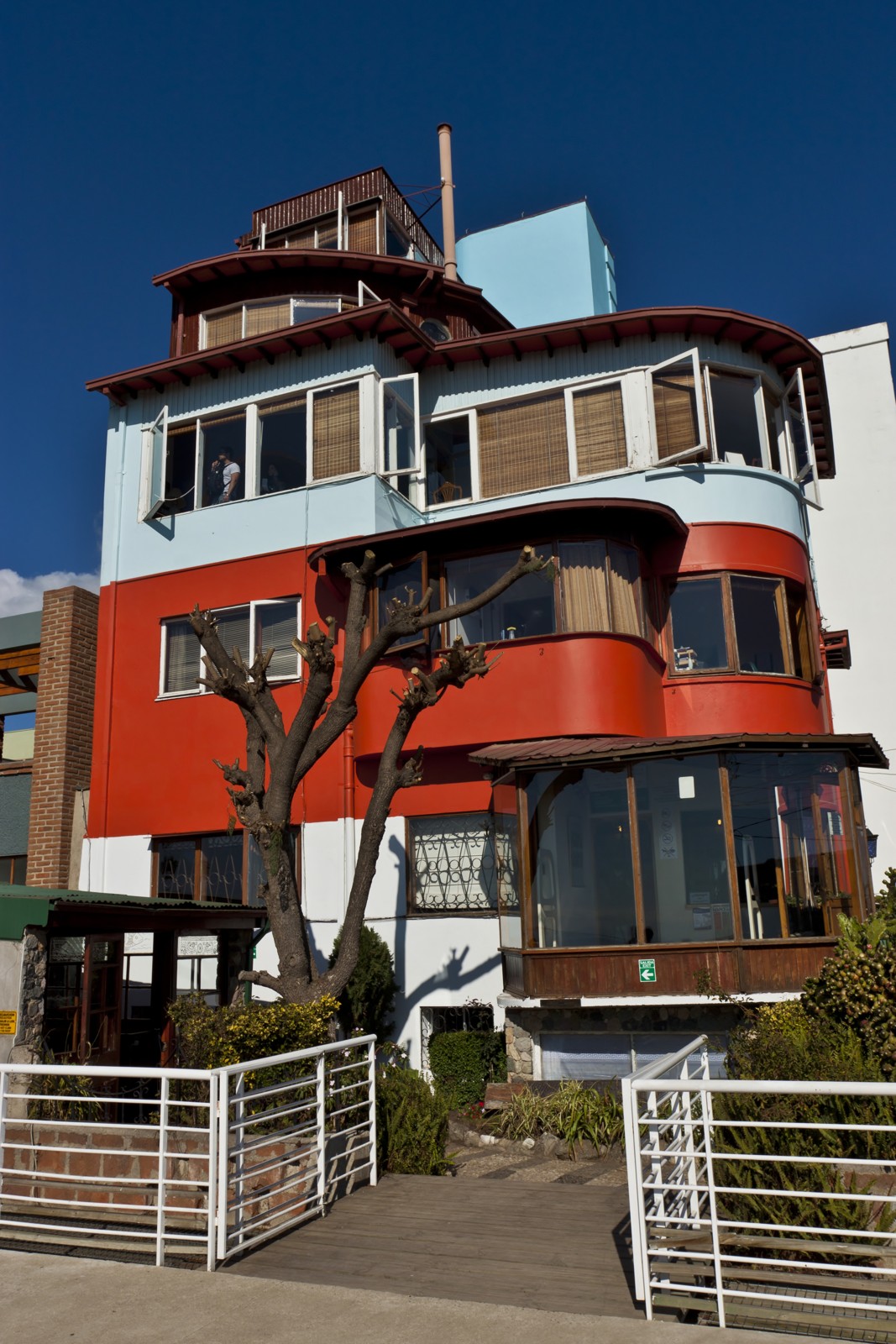
One of its most recognisable cultural landmarks is La Sebastiana, the former home of Chilean poet Pablo Neruda.
Located on Cerro Florida, the house occupies an elevated position overlooking the city and harbour.
Neruda acquired the property in the late 1950s and developed it into a remarkably personal living environment.
Its architecture is unusual.
The narrow, multi-level structure contains rooms arranged around changing views and unexpected spaces.
Windows frame the surrounding landscape.
Staircases connect different levels.
Collections of objects, artworks and furnishings contribute to an atmosphere that reflects the poet's distinctive interests.
La Sebastiana is now a house museum.
Its importance lies not simply in its association with an internationally celebrated writer.
It also demonstrates how personal creativity can influence the arrangement of domestic space.
The house offers a different perspective on Valparaíso.
From its windows, the city appears as a vast composition of hills, rooftops and water.
The relationship between interior and exterior becomes central to the experience.
It is easy to understand why such a setting might appeal to somebody whose work depended upon observation and imagination.
A Beautiful City With Difficult Realities
Valparaíso's extraordinary appearance can sometimes obscure the practical challenges of living there.
Its steep terrain creates difficulties for transportation, infrastructure and access.
Maintaining buildings on narrow or unstable sites can require substantial investment.
Some historic properties suffer from deterioration, while parts of the city experience significant economic pressures.
The hills also present serious environmental risks.
In April 2014, a devastating fire spread through several hillside neighbourhoods.
More than 2,900 homes were destroyed, fifteen people lost their lives and thousands of residents were affected.
The disaster revealed the vulnerability of communities living within densely developed terrain exposed to wildfire risk.
Reconstruction required more than replacing damaged buildings.
It involved addressing infrastructure, access, housing conditions and longer-term safety.
The tragedy is an important reminder that the city's topography is not only a source of beauty.
It also shapes the challenges faced by residents.
A staircase that appears picturesque to a visitor may form part of a demanding daily journey.
A hillside location offering spectacular views can also create serious difficulties during an emergency.
Understanding Valparaíso requires recognising these contrasting experiences.
Preserving a Living City
When UNESCO recognised Valparaíso's historic quarter in 2003, the designation celebrated its exceptional relationship between architecture, geography and maritime history.
But international recognition does not automatically solve the problems of preservation.
Historic buildings require maintenance.
Infrastructure needs investment.
Residential areas must adapt to contemporary expectations without losing their character.
Tourism can create employment and support restoration, but excessive commercial pressure may also affect long-established communities.
The challenge is particularly significant in a place where so much of the architectural identity developed through ordinary use.
Valparaíso was not planned as a unified collection of picturesque streets.
Its distinctive appearance emerged through commercial activity, migration, construction and adaptation.
Preserving the city therefore involves more than protecting individual facades.
It means maintaining the wider relationships that make the urban environment meaningful.
The port remains important.
The ascensores connect different parts of the city.
The neighbourhoods continue to support social and cultural life.
And the buildings must remain useful to the people who occupy them.
A historic city cannot survive as architecture alone.
It needs a future as well as a past.
The View From Above
One of the most memorable experiences of Valparaíso is looking back across the city from one of its elevated streets.
The colourful buildings spread across the hills in every direction.
Staircases and narrow roads create lines through the landscape.
Church towers rise above residential rooftops.
Beyond them, the Pacific Ocean opens towards the horizon.
From this distance, the apparent disorder begins to form a recognisable whole.
The different architectural styles, colours and elevations become part of the same visual composition.
Yet the most interesting aspect is not simply how beautiful the city appears.
It is the knowledge that this extraordinary landscape developed through countless practical decisions.
Families built homes wherever suitable space was available.
Businesses occupied the streets connecting the hills with the harbour.
Engineers constructed lifts to overcome difficult terrain.
Artists transformed walls into places of expression.
Generations of residents adapted buildings and public spaces to meet changing needs.
The result was not the work of one architect or a single ambitious urban plan.
It was created collectively, over time.
A City That Refuses to Be Ordinary
Valparaíso is not an easy city to reduce to a single description.
It is colourful, but sometimes visibly worn.
Historic, yet constantly changing.
Celebrated for its artistic culture while facing serious challenges involving housing, infrastructure and preservation.
Its identity emerges from these contradictions.
The port connects it to a long history of international trade.
The hills have produced an extraordinary urban environment.
The ascensores reveal inventive responses to difficult geography.
And the murals demonstrate how public space can become a place for creative expression.
Together, these elements form a city unlike almost any other.
What makes Valparaíso particularly compelling is that its character was not created through the pursuit of architectural perfection.
Its appearance developed through adaptation.
Materials were selected according to practical circumstances.
Buildings followed the shape of the land.
Neighbourhoods grew in unexpected directions.
Over time, ordinary decisions produced an extraordinary place.
Perhaps that is the most interesting lesson Valparaíso offers.
A city does not need to be perfectly ordered to possess a strong identity.
Sometimes, its imperfections, variations and unexpected relationships are what make it memorable.
Valparaíso has never been a city of straight lines.
Its history is too complex, its terrain too demanding and its character too varied for that.
Instead, it continues to unfold across the hills overlooking the Pacific.
A place shaped by movement, imagination and the people who call it home.
And one where the streets themselves seem to have become a work of art.
Further Reading
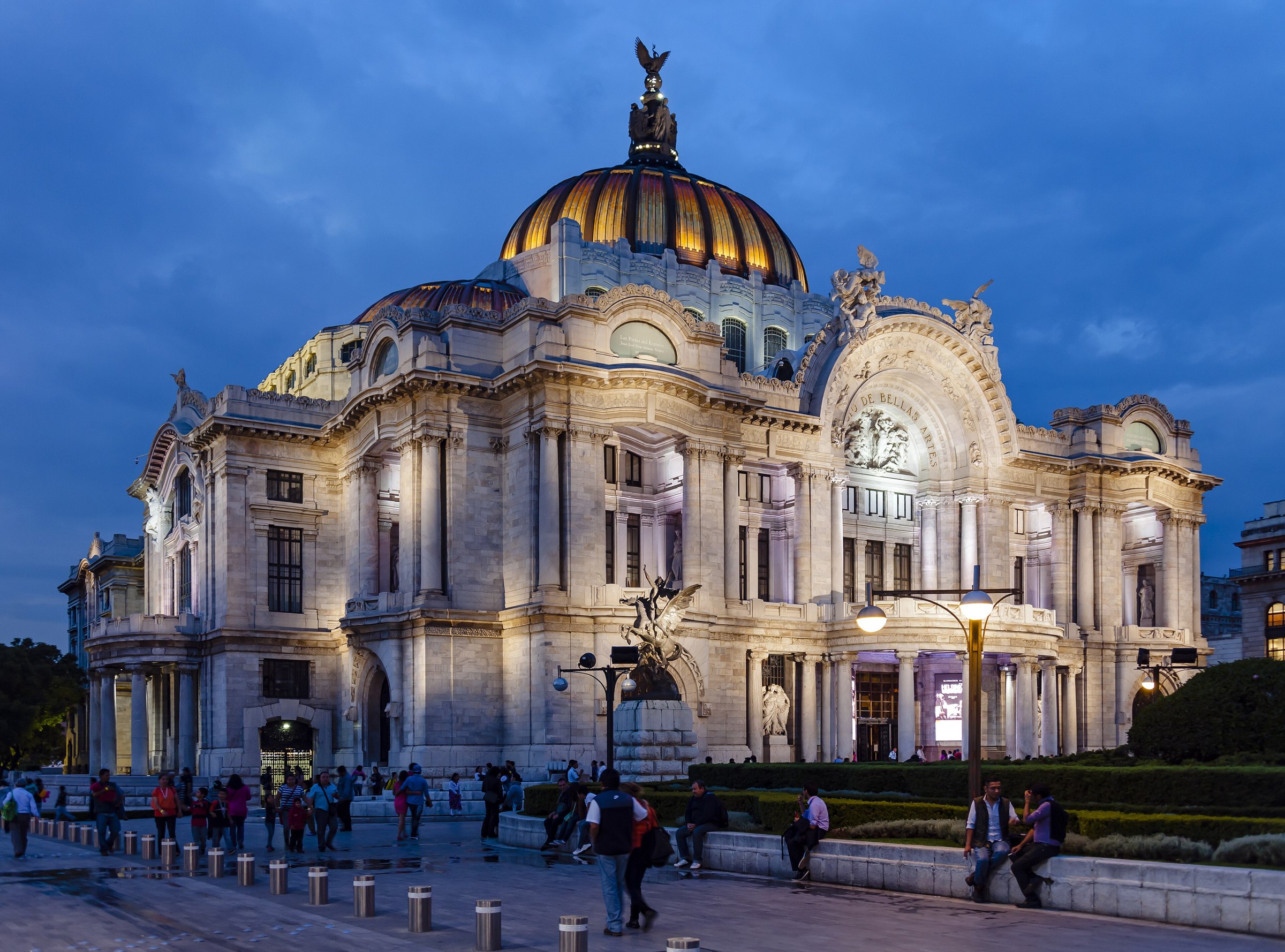
Mexico City: A City of Many Lives
From ancient Tenochtitlan to Bellas Artes, Barragán and the canals of Xochimilco, Mexico City reveals itself in layers.
By Culturefold Editors
Lisbon: A City Written in Tiles
From azulejo-covered facades and Alfama’s winding streets to MAAT’s waterfront architecture, discovering the histories and everyday life that shape Lisbon.
Istanbul: Life Between Two Shores
Ferries, historic neighbourhoods and centuries of cultural exchange. Discovering a city whose identity has always been shaped by the water.
By Culturefold Editors